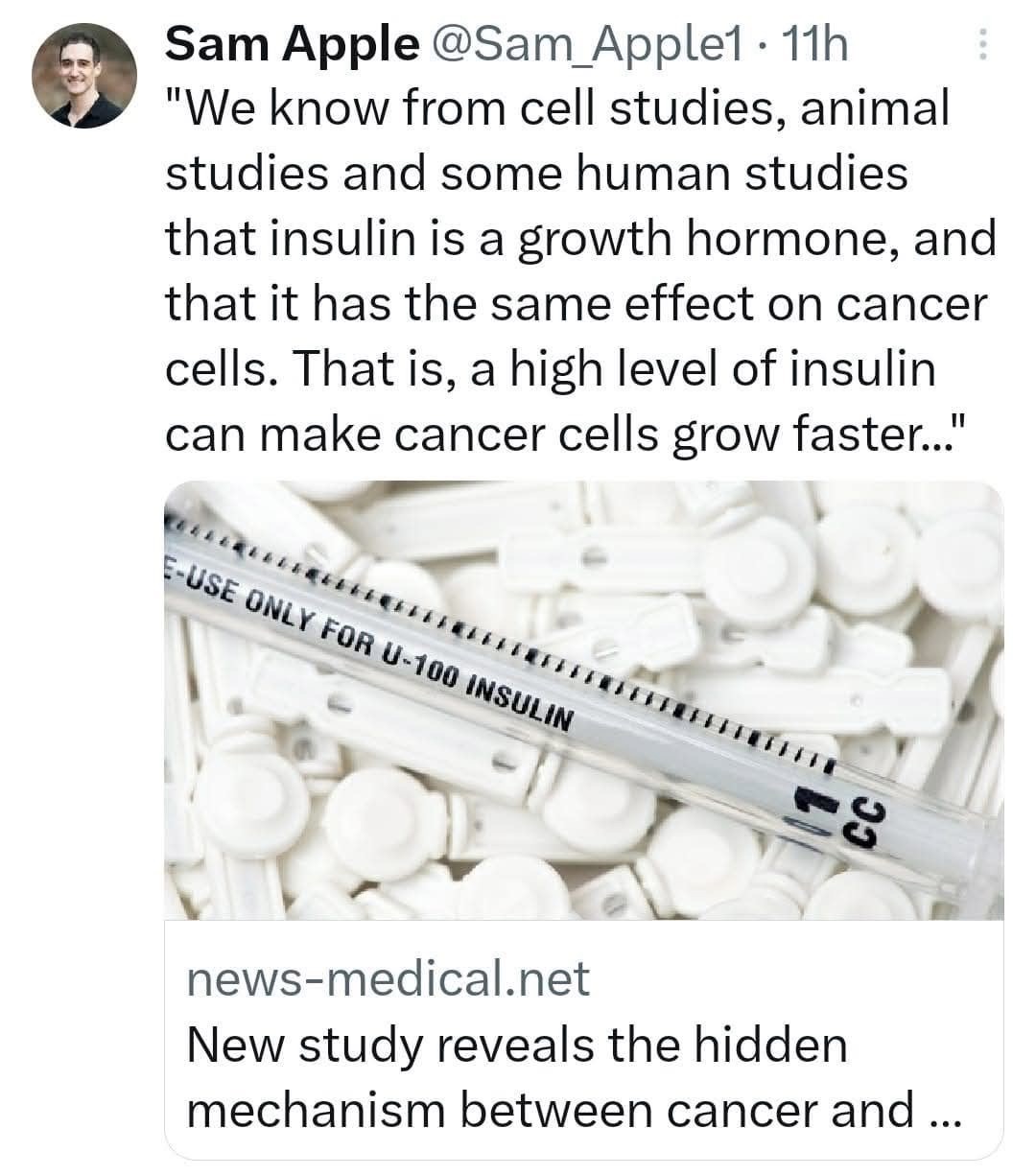

A groundbreaking systematic review and meta-analysis published in Acta Oncologica has shed light on an often-overlooked issue in cancer care: insulin resistance . Most people think of insulin resistance as something only connected to diabetes or obesity. But this new research shows that it plays a major role in cancer patients too—and possibly influences survival […]
By Lawrence K. Altman Special to The New York TimesOct. 3, 1971Credit…The New York Times ArchivesSee the article in its original context fromOctober 3, 1971, About the ArchiveThis is a digitized version of an article from The Times’s print archive, before the start of online publication in 1996. To preserve these articles as they originally
Medical Group, in a Major Change, Urges a Normal Carbohydrate Diet for DiabeticsRead More »
Life-changing habits often begin with small choices—such as how we prepare our everyday foods. A recent study at August 2025 from Harvard T.H. Chan School of Public Health brings new clarity: not all potatoes are created equal, especially when it comes to the risk of type 2 diabetes. The key question isn’t simply whether potatoes
How Potato Preparation Affects Diabetes Risk—and Why Low-Carb Diet MattersRead More »
For years, we were told to fear fat — especially saturated fat. Butter? Too dangerous. Cheese? Only in tiny amounts. But new research from The Lancet EClinicalMedicine flips that old advice on its head. The truth? The right fats don’t just keep you healthy — they may protect your brain from shrinking as you age,
Feed Your Brain Right — Why Healthy Fats Are the Secret to Staying Sharp for LifeRead More »
In the history of promoting low-carb high-fat (LCHF) nutrition, a small group of scientists, doctors, and communicators dared to challenge the dominant dietary orthodoxy — the belief that saturated fat is harmful, cholesterol is dangerous, and carbohydrates are essential at high levels. Their work, based on science, clinical results, and human evolution, directly confronted decades
Why Low-Carb Pioneers Became Targets — 12 Figures Who Challenged the Nutrition DogmaRead More »
Salt is far more than just a seasoning on our dinner table. Throughout history, salt has shaped economies, driven wars, preserved food, and sustained life itself. Today, modern health discussions often demonize salt, yet without it — and the essential minerals that come with it — life would not be possible. In this article, we’ll
The Importance of Salt and Minerals for Human HealthRead More »
(An in-depth exploration of why our bodies are designed to thrive on fat) For most of human history—spanning 2.5 million years—our ancestors lived as hunter-gatherers. Carbohydrate-rich foods like grains, rice, and refined sugar are extremely recent additions, appearing only in the last 10,000 years with agriculture, and ultra-processed foods only in the last 100 years.
Human Biology: Engineered for Low-Carb, High-Fat LivingRead More »
For the vast majority of human history — stretching back nearly 2.5 million years — our ancestors lived primarily as hunter-gatherers1. This wasn’t a casual lifestyle choice; it was a survival strategy shaped by harsh climates, shifting ecosystems, and the demands of the human body. Meat, fish, nuts, seeds, and seasonal plants made up the
The Untold History of the Human Diet — From Hunter-Gatherers to High-Carb NationRead More »
Why Low-GI and Low-Carb, High-Fat Diets Can Dramatically Improve Diabetes – A Science-Based Rebuttal
When it comes to diabetes management, some academic papers remain cautious, waiting for “more evidence” before recommending specific dietary interventions. For example, a recent review on glycemic variability (GV) suggested that while fluctuations in blood sugar may contribute to complications, the exact role of GV is still unclear, and therefore more long-term studies are needed.
For decades, salt and red meat have been vilified as dietary villains behind heart disease. But is this reputation scientifically valid? Modern research suggests otherwise — and the persistence of this narrative has more to do with outdated medical dogma and pharmaceutical incentives than robust evidence.