
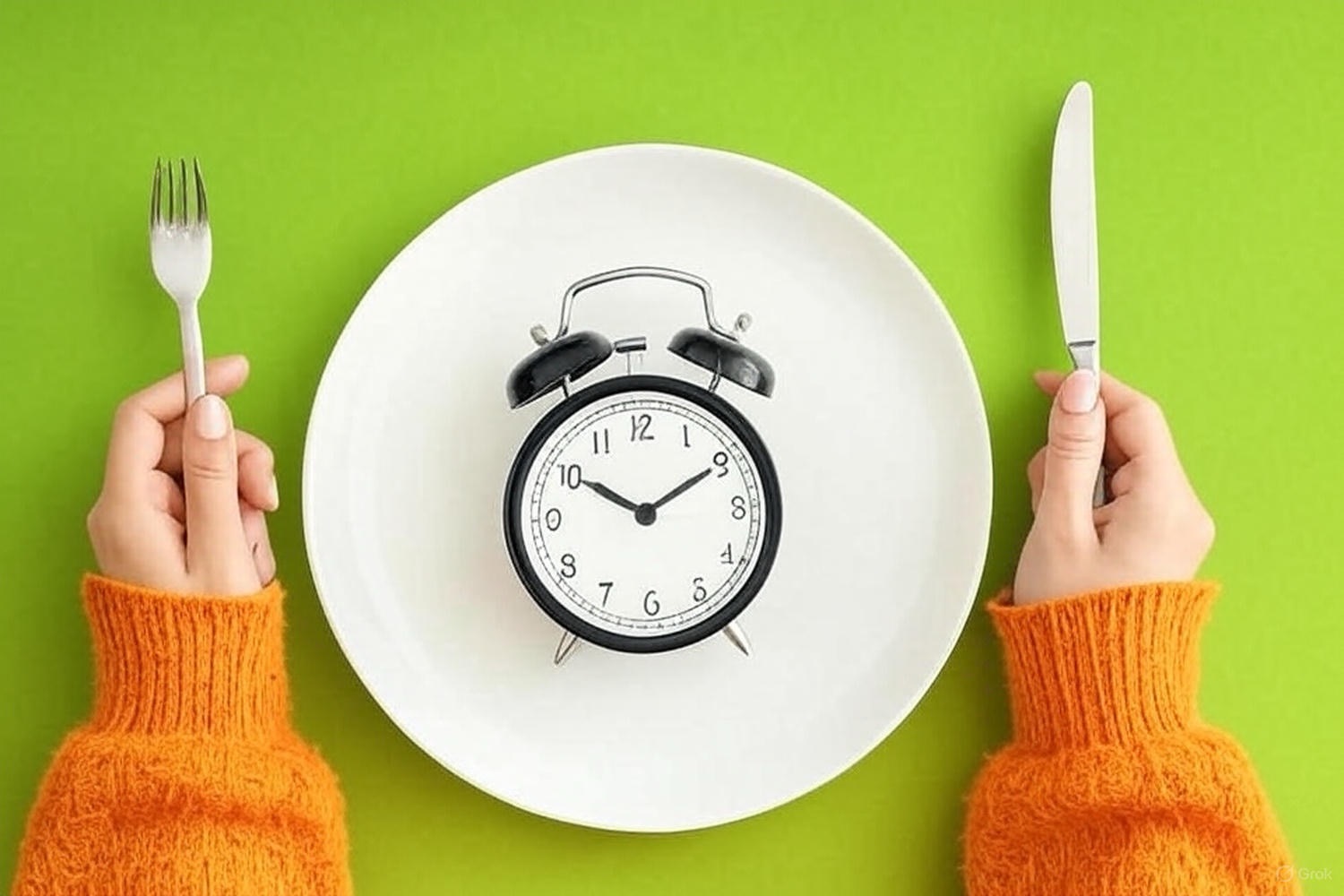
Most headlines stop at “fasting lowers anxiety.” Useful, but shallow. The real story is in the brain wiring—and how food choices (like LCHF) make those changes easier and more durable.
1) What the new study actually did (in plain English)
Healthy adults followed time-restricted eating (TRE) for 50 days: they fasted 18 hours and ate within a 6-hour window daily. Researchers checked weight, blood sugar/insulin, mood scales, and—crucially—resting-state fMRI to see how the amygdala (your threat/alarm hub) communicates with the rest of the brain, across baseline, days 10/30/50, and ~20 and ~60 days after fasting ended. Anxiety fell and metabolic markers improved. The brain data changed too.
[Insert Image: Study timeline illustration – fasting window + brain scans]
2) The neuroimaging: which wires moved?
Seed-based functional connectivity analyses focused on amygdala subregions, especially the laterobasal amygdala (involved in evaluating emotional significance). During TRE, the team saw reduced functional connectivity between the amygdala (left/right laterobasal) and precentral gyrus (primary motor area) at later time points (around days 30–50). In plain English: the amygdala looked less tightly coupled to action circuits as fasting progressed. That pattern tracked with lower anxiety scores that persisted for weeks after TRE stopped.
Why that matters: Anxiety often shows amygdala hyper-responsivity and over-coupling to networks that prime the body to act (fight/flight). Toning down amygdala–motor coupling suggests fewer “false alarms” turning into bodily tension, restlessness, and hypervigilance.
[Insert Image: Brain fMRI before vs after fasting, calmer blue connections]
3) How does this compare to other human data?
- Fasting and fear extinction: An overnight fast didn’t change fear learning, but improved extinction retention (ability to turn off outdated fear responses) and reduced fear relapse for months. Same direction: fasting helps the brain down-shift threat circuits.
- Ramadan studies: Some people report improved mood and reduced anxiety during fasting, though responses vary.
- Reviews: Mechanistic reviews highlight fasting’s effects on BDNF, neuroinflammation, and plasticity—all consistent with better mood resilience.
Bottom line: The new fMRI paper fits a growing pattern—fasting nudges emotional circuitry toward calm, but effect size and reliability depend on protocol, duration, and the individual.
4) Where LCHF fits: why combining TRE with low-carb makes sense
Fasting changes brain signaling. LCHF supplies the metabolic context that makes those brain changes smoother and more sustainable.
- Stable fuel: Lower glucose swings + higher ketones (BHB) = steadier neuronal energy, fewer adrenaline spikes.
- Anti-inflammatory: BHB inhibits NLRP3 inflammasome, reducing neuroinflammation linked to anxiety/depression.
- Neurotransmitters: Ketogenic metabolism shifts the glutamate→GABA balance toward calm inhibition.
- Mitochondrial efficiency: Ketones improve ATP output and lower oxidative stress—supporting network stability in emotional circuits.
[Insert Image: Fasting + LCHF synergy infographic – calm brain + healthy fats]
5) Practical: a safe, synergistic protocol (LCHF × TRE)
If you’re generally healthy and cleared by your clinician, here’s a realistic approach:
- Eating window: Start with 8 hours (e.g., 10:00–18:00). If you feel good, consider 6 hours (12:00–18:00).
- Macros: Low-carb (≤50 g/day), adequate protein (1.2–1.6 g/kg body weight), fats from whole foods (meat, eggs, fish, olive oil, avocado, butter).
- Anchor meals: Prioritize protein at the first meal.
- Electrolytes: Sodium, potassium, magnesium to prevent “low-carb flu.”
- Moderation: Avoid overdoing caffeine—it can spike anxiety during adaptation.
Not for everyone: Those with eating disorders, pregnancy, breastfeeding, brittle diabetes on insulin, or psychiatric instability should only attempt under supervision.
[Insert Image: Fasting clock infographic with food icons – meat, eggs, avocado]
6) Temper the hype: what we still don’t know
- Small sample size (26 healthy adults).
- No non-fasting control group.
- Individual responses vary—some feel more anxious early in fasting.
7) Take-home
Fasting appears to loosen over-tight wiring between the amygdala and action circuits, which tracks with lower anxiety. LCHF can amplify and stabilize those benefits by reducing glycemic volatility, supplying ketones, and damping neuroinflammation—while nudging the brain toward calm.
For many, LCHF × TRE is a realistic, low-cost way to support both metabolic and emotional health—with sensible screening and monitoring.
[Insert Image: Calm vs stressed lifestyle – left sugar spikes, right calm with LCHF foods]
📚 References
- Alpha Psychiatry (2025). Effects of Intermittent Fasting on Anxiety and the Functional Connectivity of the Amygdala in Healthy Adults.
- Translational Psychiatry (2018). Fasting enhances extinction retention and reduces return of fear.
- Reviews 2021–2024. Intermittent fasting, neuroplasticity, and mental health.
- Studies on BHB, NLRP3, and GABA/glutamate modulation.
- Case series on ketogenic diets in mood disorders.