
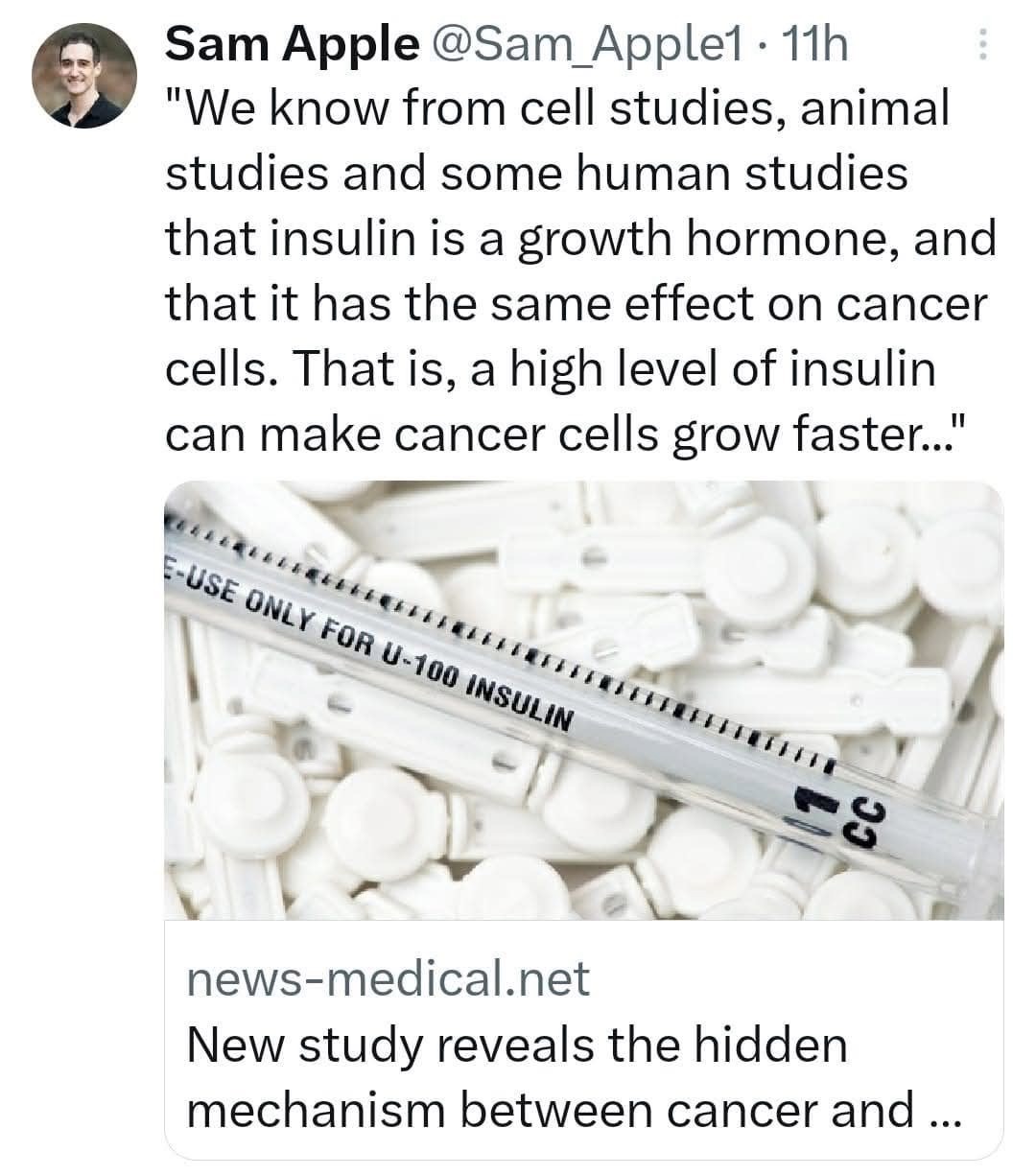
A groundbreaking systematic review and meta-analysis published in Acta Oncologica has shed light on an often-overlooked issue in cancer care: insulin resistance .
Most people think of insulin resistance as something only connected to diabetes or obesity. But this new research shows that it plays a major role in cancer patients too—and possibly influences survival and recovery.
🔎 What Did the Study Find?
Researchers analyzed 15 high-quality studies involving nearly 350 people, using the gold-standard hyperinsulinemic–euglycemic clamp test (the most precise way to measure insulin sensitivity).
They discovered:
Cancer patients were significantly more insulin resistant compared to healthy people of the same age. On average, cancer patients’ bodies used 35–40% less glucose in response to insulin. The level of insulin resistance was similar to, or even worse than, what is seen in type 2 diabetes.
In simple terms, when someone with cancer receives insulin, their body doesn’t respond normally—making it harder to manage blood sugar and overall metabolism.
🧩 Why Does This Matter?
Insulin resistance isn’t just about high blood sugar. It has wider effects:
Increased cancer recurrence risk – metabolic dysfunction can encourage cancer to return. Lower survival rates – studies link insulin resistance with poorer long-term outcomes. Greater treatment complications – cancer therapies like chemotherapy and steroids may worsen insulin resistance.
The study also highlights how cancer itself can trigger insulin resistance. Tumors release inflammatory molecules, disrupt fat metabolism, and change how muscles use glucose.
🌟 A New Opportunity for Better Cancer Care
The positive message here is that identifying and improving insulin resistance in cancer patients could open new doors in treatment.
✔ Lifestyle strategies like physical activity are already proven to improve insulin sensitivity. Exercise programs are now being recommended during and after cancer therapy—not just for fitness, but to potentially improve survival.
✔ Dietary approaches that stabilize blood sugar and reduce insulin demand may also play a role, though more research is needed.
✔ Monitoring insulin resistance in clinical settings could become as important as tracking weight or blood pressure in cancer care.
💡 Looking Ahead
This is the first large-scale review to confirm that cancer patients face a serious, hidden problem with insulin resistance. It suggests that if doctors can address this metabolic dysfunction—whether through exercise, diet, or other interventions—patients may live longer and healthier lives after diagnosis.
Instead of seeing cancer and diabetes as separate diseases, this research encourages us to view metabolism as the common thread. Managing insulin resistance could be the “missing link” to improving cancer outcomes.
✅ Final Thought
Cancer treatment isn’t only about shrinking tumors—it’s about strengthening the whole body. By focusing on metabolic health, especially insulin resistance, we may give patients a better chance not only to survive cancer but to thrive after it.
Reference:
Màrmol JM, Carlsson M, Raun SH, et al. Insulin resistance in patients with cancer: a systematic review and meta-analysis. Acta Oncol. 2023;62(4):364–371. DOI:10.1080/0284186X.2023.2197124