
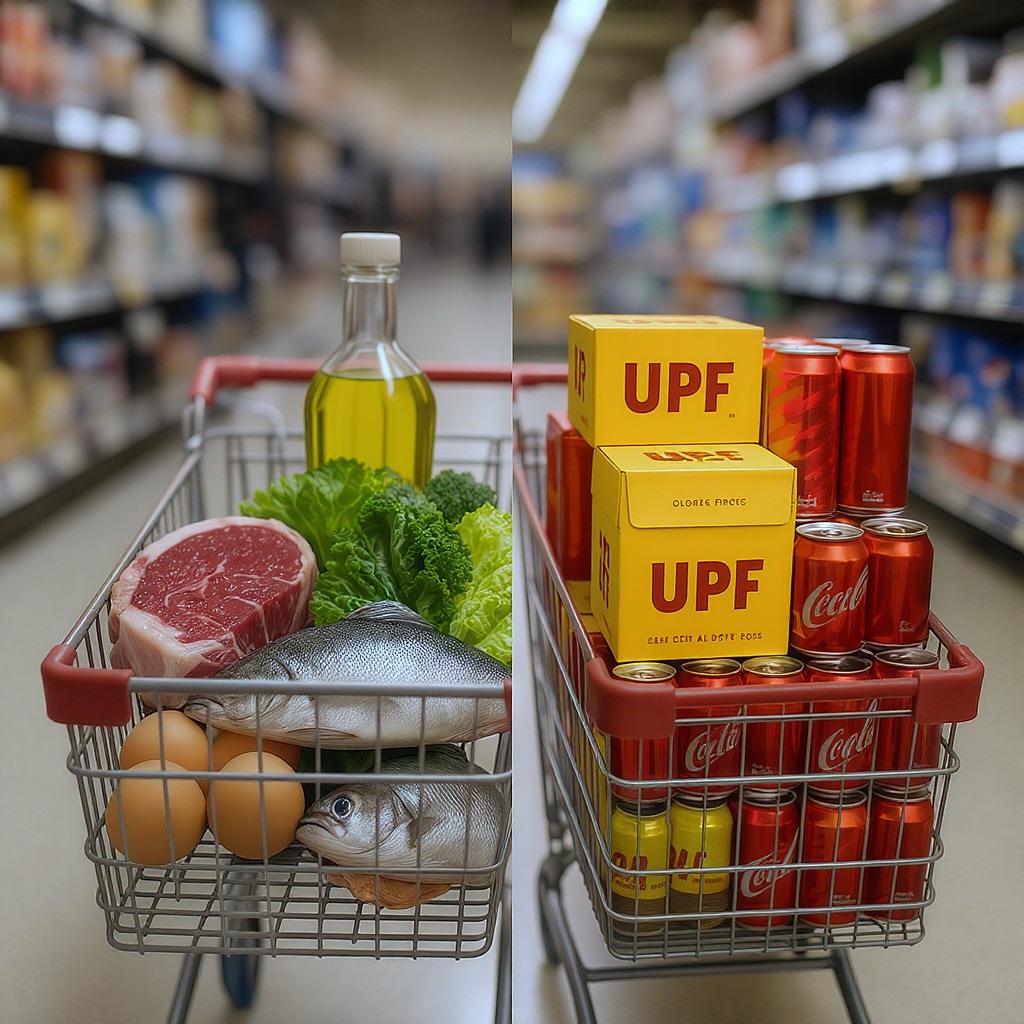
We all know the story of The Emperor’s New Clothes. A ruler is persuaded to believe he’s wearing a magnificent suit—until a child says the quiet part out loud: he’s naked. In modern nutrition, our excitement around ultra-processed foods (UPFs) can feel similar. The idea has power, but the evidence isn’t the royal robe many assume.
This article draws on Dr. David Ludwig’s essay, “Ultra-Processed Food, Retold by H.C. Andersen,” and unpacks what UPFs are, what the science really shows, and how you can use this clarity to make better choices today.
What Exactly Are Ultra-Processed Foods?
The term comes from the NOVA classification (2009), which groups foods by the extent and purpose of processing:
- Unprocessed or minimally processed foods — meat, fish, eggs, vegetables, fruits, nuts, plain yogurt, whole cuts.
- Processed culinary ingredients — oils, butter, lard, salt, sugar, spices.
- Processed foods — combinations of whole foods and culinary ingredients (e.g., cheese, canned fish, traditionally baked bread).
- Ultra-processed foods (UPFs) — industrial formulations built largely from extracted or modified ingredients (refined starches, sugars, seed oils) plus additives (emulsifiers, flavors, colors, stabilizers) to optimize taste, texture, and shelf life.
Think soda, packaged cookies, instant noodles, many breakfast cereals, and a long list of “snackable” convenience products. These are engineered more than they’re cooked.
The Emperor’s New Evidence
UPFs are now targeted by guidelines, warning labels, and proposed taxes. The public narrative often suggests UPFs are the cause of modern chronic disease. Dr. Ludwig’s caution is simple: the evidence base is not as strong—or as specific—as people think.
- Most UPF–health links come from observational studies. These show associations but can’t prove cause and effect.
- We have very few clinical trials, and they’re short. A well-known NIH study found participants ate about 500 kcal/day more on an ultra-processed diet than on a minimally processed one—compelling, but it lasted only two weeks.
The child in the crowd would say: there’s smoke, yes—but we’re still measuring the fire.
So What’s the Real Villain—Processing or Nutrients?
Many UPFs are loaded with refined carbohydrates, added sugars, and certain industrial oils. Those elements alone are strongly linked to weight gain, insulin resistance, fatty liver, and cardiometabolic disease. The open question is how much processing itself (texture, speed of consumption, additive blends, food matrix changes) adds on top of the nutrient problem.
That nuance matters because some items classed as “ultra-processed” (e.g., certain protein isolates or medically necessary formulas) may be useful in specific contexts. Blanket condemnation can lead to bad policy and confused consumers.
What We Know for Sure (Actionable Today)
- Cut sugars and refined starches. They drive appetite, glycemic swings, and fat storage.
- Prioritize protein and whole-food fats. Meat, eggs, fish, and minimally processed dairy support satiety and lean mass.
- Choose intact foods most of the time. Foods your grandparents recognize—prepared simply—tend to align with better metabolic outcomes.
- Scrutinize “health halos.” A bar or drink can be labeled “high-protein” or “plant-based” and still be a candy bar in disguise.
How to Shop and Eat Without the Hype
- Read ingredient lists, not just claims. Short, kitchen-familiar ingredients usually beat long chemistry sets.
- Cook more of what you eat. Batch-cook protein (roast chicken, beef steaks, burger patties, fish fillets) and pair with simple sides (eggs, sautéed greens, broth).
- Upgrade convenience. Keep quick, minimally processed staples: hard-boiled eggs, tinned fish, cheese, olives, bone broth, frozen veggies.
- Beware sip-and-snack traps. Liquid calories and “nibbles” add up fast—especially when ultra-processed.
Bottom Line
“Ultra-processed” is a useful warning label, but it isn’t a flawless map. The strongest, most practical target remains clear: ditch sugar and refined starches, favor whole proteins and fats, and build meals from minimally processed foods. Do that consistently, and you’ll capture most of the benefit—no fairy tale required.
References
- Monteiro CA, Cannon G, Levy RB, et al. NOVA. The star shines bright. World Nutrition. 2016;7(1-3):28–38.
- Hall KD, Ayuketah A, Brychta R, et al. Ultra-processed diets cause excess calorie intake and weight gain: An inpatient randomized controlled trial of ad libitum food intake. Cell Metabolism. 2019;30(1):67–77.e3.
- Ludwig DS. Ultra-Processed Food, Retold by H.C. Andersen. Medium. 2024. Available at: https://davidludwigmd.medium.com/ultra-processed-food-retold-by-hc-andersen-7a3d2ae60f39