
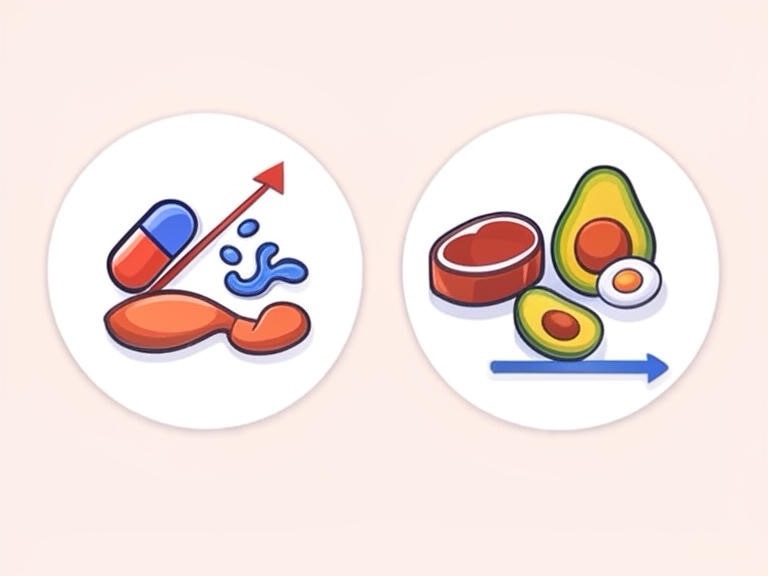
🚨 The Hidden Problem with Statins
Statins are among the most prescribed drugs worldwide. They lower cholesterol and reduce heart attack risk. But here’s the catch: many people who take statins end up with worse blood sugar control, and some even develop type 2 diabetes. Doctors have known about this side effect for years, but the exact mechanism was unclear.
🔍 The New Research
A 2024 study published in Cell Metabolism (PMID: 38325336) finally shed light on the problem. Researchers studied atorvastatin (a common statin) in humans and animals. They found:
- Disrupted gut bacteria – especially loss of Clostridium species
- Altered bile acids – important for digestion and hormone signaling
- Lower GLP-1 levels – a key gut hormone for insulin and blood sugar control
- Result: higher insulin resistance and worse glucose tolerance
💊 Can This Be Fixed?
The researchers tested a bile acid supplement called Ursodeoxycholic Acid (UDCA), already used for liver disease. In both animals and humans, UDCA restored GLP-1, improved blood sugar control, and didn’t interfere with the cholesterol-lowering effect of statins.
🥩 Why Low-Carb High-Fat Helps Naturally
A low-carb high-fat (LCHF) lifestyle already protects the same pathway that statins disrupt:
- Increases GLP-1 naturally – protein and fat stimulate gut hormones better than sugar
- Improves insulin sensitivity – less sugar means less strain on insulin
- Stabilizes the microbiome – fewer “sugar-feeding” bacteria, healthier gut
- Supports bile acid balance – closer to our evolutionary design
🎯 Takeaway
Statins save lives, but they can raise diabetes risk by disturbing gut bacteria and lowering GLP-1. UDCA or gut-friendly strategies can help, but the simplest long-term protection may come from a low-carb high-fat lifestyle. It supports your heart and your metabolism—without relying on drugs alone.
📚 References
- Wang Y, et al. Statins aggravate insulin resistance through reduced blood glucagon-like peptide-1 levels in a microbiota-dependent manner. Cell Metab. 2024 Feb 6;36(2):180-196.e8. PMID: 38325336
- Larsen PJ, et al. The role of GLP-1 in glucose control and appetite regulation. Nat Rev Endocrinol. 2021.
- Feinman RD, et al. Dietary carbohydrate restriction as the first approach in diabetes management. Nutrition. 2015.