
If you’ve ever seen someone have a seizure, you know how frightening it can look — for the person experiencing it and for everyone around them. But epilepsy, the condition behind most seizures, is far more common and far more manageable than most people realize.
So, What Exactly Is Epilepsy?
Epilepsy is a neurological disorder that causes repeated seizures. A seizure happens when there’s a sudden burst of abnormal electrical activity in the brain — almost like a temporary “short circuit.” It can affect anyone, from young children to older adults, and the causes and severity vary widely from person to person.
The good news? With proper treatment and medication, many people with epilepsy are able to control their seizures and live full, normal lives.
What Causes Epilepsy?
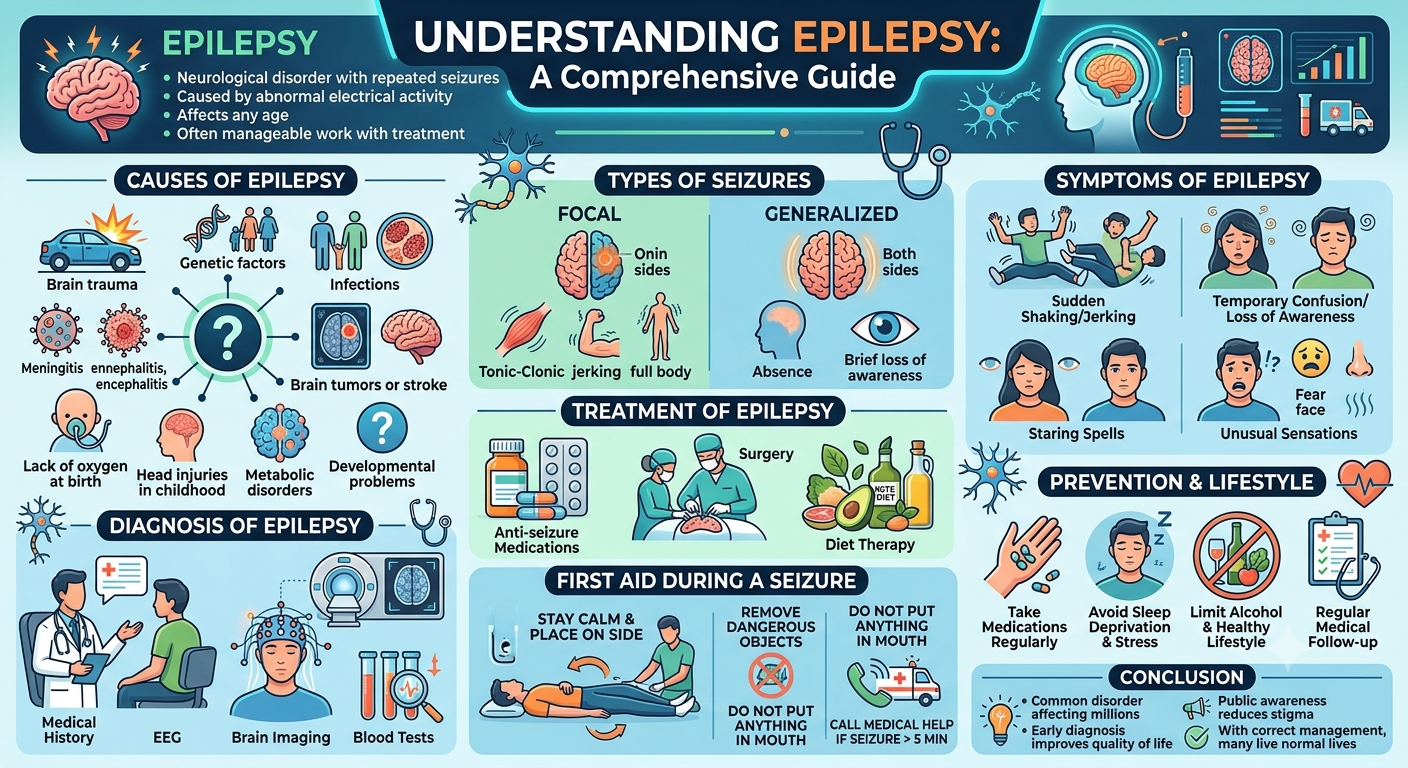
There’s no single cause of epilepsy — it can stem from a number of different factors, including:
- Brain injury, from trauma or accidents
- Genetics, which can raise the risk within certain families
- Infections like meningitis or encephalitis that damage brain tissue
- Brain tumors or stroke
- Oxygen deprivation at birth, which can lead to epilepsy later in life
- Severe head injuries during childhood
- Metabolic disorders or developmental conditions
Interestingly, in a large number of cases, doctors simply can’t pinpoint an exact cause. Epilepsy can develop without any clear medical explanation — which can be frustrating for patients and families looking for answers.
Not All Seizures Look the Same
Seizures come in different forms, depending on which part of the brain is involved:
- Focal seizures begin in one specific area of the brain.
- Generalized seizures involve both sides of the brain right from the start.
- Tonic-clonic seizures cause muscle stiffness followed by jerking movements — the type most people picture when they think of a seizure.
- Absence seizures are much subtler, causing a brief lapse in awareness that can last just a few seconds.
Recognizing the Symptoms
Seizures don’t always look dramatic. Some signs to watch for include:
- Sudden shaking or jerking movements
- Temporary confusion or loss of awareness
- Staring spells where the person doesn’t respond
- Unusual sensations like fear, strange smells, or tingling
How Is Epilepsy Diagnosed?
Diagnosing epilepsy usually starts with a conversation — doctors review the patient’s medical history and ask for a detailed description of what happened during the seizure. From there, they may use:
- An EEG (electroencephalogram) to record the brain’s electrical activity
- Brain imaging like an MRI or CT scan to look for structural abnormalities
- Blood tests to rule out infections or metabolic issues
Treatment Options
For most patients, anti-seizure medications are the first line of treatment, and taken regularly, they can control seizures effectively for many people. When medication isn’t enough, other options include:
- Surgery, to remove the specific brain area causing seizures
- Diet therapy, such as the ketogenic diet, which has shown benefits for certain patients
What to Do If Someone Has a Seizure
Knowing basic seizure first aid can make a real difference:
- Stay calm and gently turn the person onto their side to keep their airway clear.
- Clear the area of any nearby objects that could cause injury.
- Never put anything in the person’s mouth — this is a common myth and can actually cause harm.
- Call for medical help if the seizure lasts longer than five minutes.
Living Well with Epilepsy
Managing epilepsy is often about consistency. A few simple habits can go a long way:
- Take medications exactly as prescribed
- Avoid sleep deprivation and excessive stress
- Limit alcohol consumption
- Keep up with regular medical follow-ups to monitor treatment
Final Thoughts
Epilepsy affects millions of people around the world, yet it’s still surrounded by misunderstanding and stigma. The reality is that with early diagnosis, the right treatment, and a supportive community, most people with epilepsy can live active, fulfilling lives. The more we talk openly about it, the more we can replace fear with understanding — and that benefits everyone.