
Most people don’t think about how their stomach works—until it stops working properly.
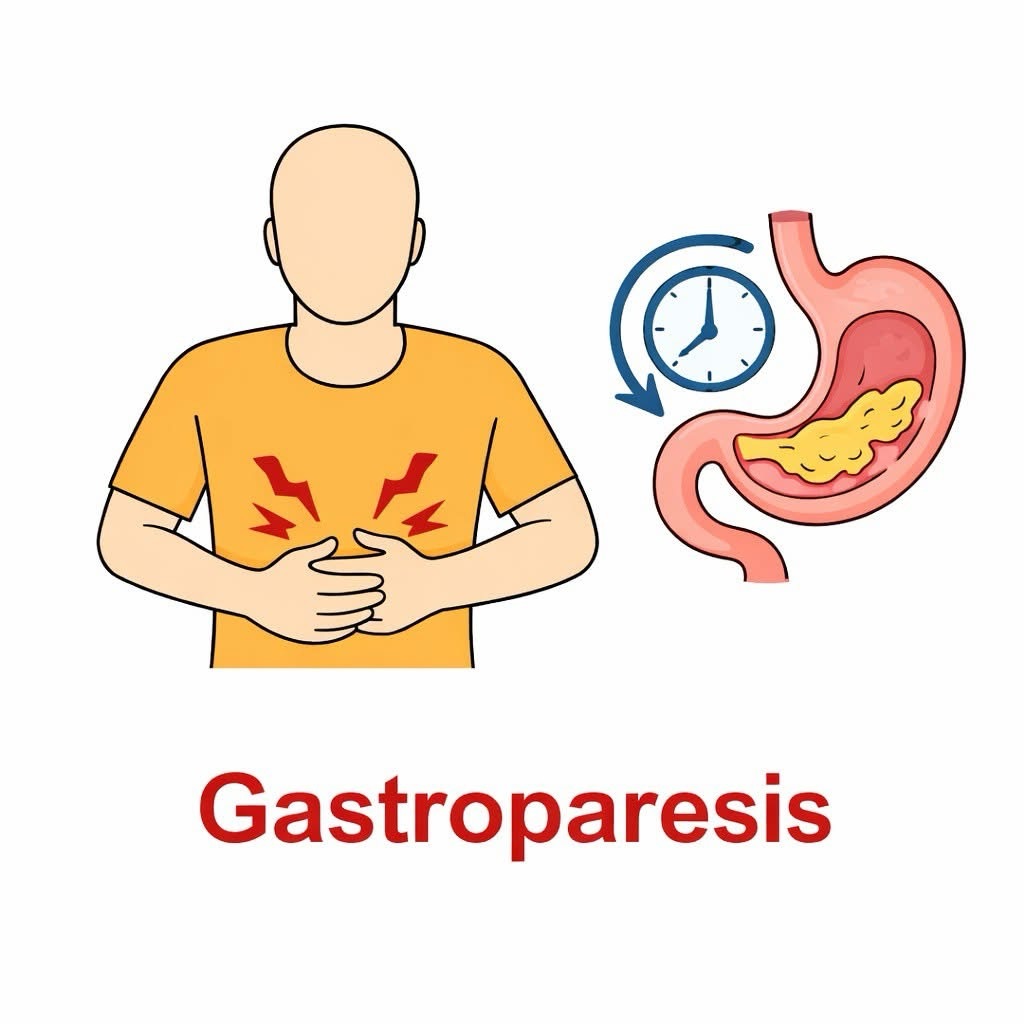
Gastroparesis is a condition where the stomach empties food very slowly. Food stays in the stomach longer than normal, leading to discomfort and digestive problems.
What Is Gastroparesis?
Gastroparesis means delayed stomach emptying.
In a healthy body, the stomach pushes food into the small intestine at a steady pace. In this condition, that movement slows down or stops.
Normal Stomach Function
- The stomach muscles contract to move food
- Food is broken down gradually
- It is released slowly into the small intestine
- Nutrients are absorbed properly
This process is called gastric motility.
What Happens in Gastroparesis
- Stomach muscles become weak or uncoordinated
- Food moves very slowly or stops moving
- The stomach cannot empty normally
This leads to symptoms like nausea and early fullness.
Common Causes
- Diabetes (most common cause)
- Damage to the vagus nerve
- Certain medications
- Unknown causes (idiopathic)
Risk Factors
- Long-term diabetes
- Previous stomach surgery
- Neurological diseases
- Use of certain medications
Signs and Symptoms
- Nausea and vomiting
- Feeling full very quickly
- Bloating and discomfort
- Loss of appetite
- Weight loss
Complications
- Bezoar (hardened food in stomach)
- Poor nutrition
- Unstable blood sugar
- Dehydration
Diagnosis
- Medical history and symptoms
- Gastric emptying study
- Endoscopy
- Imaging tests
Treatment
Diet Changes
- Eat small frequent meals
- Choose soft foods
- Avoid heavy meals
Medications
- Improve stomach movement
- Reduce nausea
Severe Cases
- Feeding tubes
- Surgery
Prevention & Lifestyle
- Control blood sugar
- Avoid overeating
- Eat easy-to-digest foods
- Regular medical follow-up