
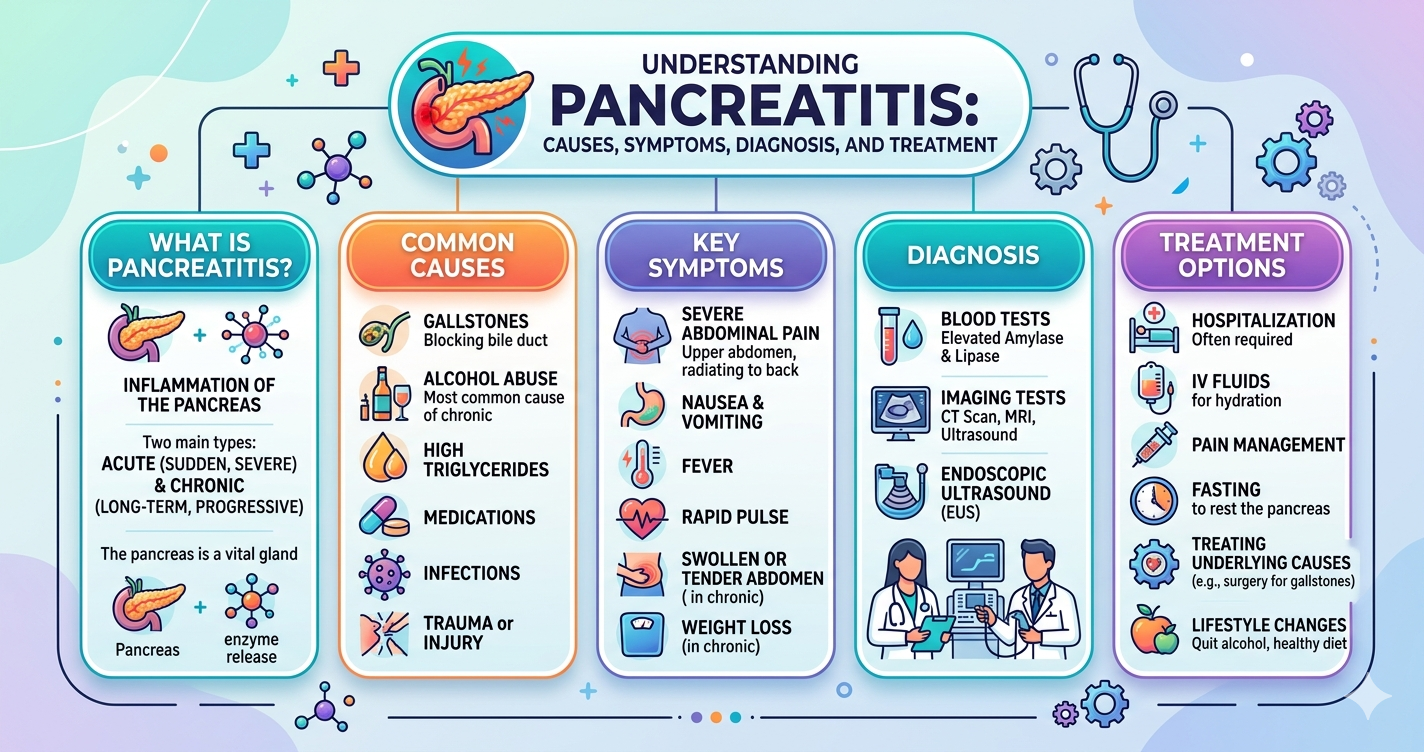
What is Pancreatitis?
Pancreatitis is a condition where the pancreas becomes inflamed. This inflammation can range from mild to severe and may become life-threatening if not treated early.
The pancreas plays an important role in digestion and blood sugar control. When inflamed, digestive enzymes may activate too early and begin damaging the pancreas itself.
What is the Pancreas?
The pancreas is a long gland located behind the stomach in the upper abdomen.
- Digestive function: Produces enzymes that break down fats, proteins, and carbohydrates
- Hormonal function: Releases hormones such as insulin and glucagon to regulate blood sugar levels
Types of Pancreatitis
- Acute pancreatitis: Sudden inflammation that may resolve within days but can be severe
- Chronic pancreatitis: Long-term inflammation that gradually damages the pancreas
- Recurrent pancreatitis: Repeated episodes of acute pancreatitis over time
Common Causes
- Gallstones blocking the pancreatic duct
- Heavy or prolonged alcohol consumption
- High triglyceride levels in the blood
- Certain medications or abdominal injury
Risk Factors
- Frequent alcohol intake
- Obesity and metabolic issues
- Smoking
- Family history of pancreatic disease
Symptoms
- Severe upper abdominal pain (may radiate to the back)
- Nausea and vomiting
- Abdominal tenderness and bloating
- Fever and rapid heartbeat in severe cases
Diagnosis
- Clinical assessment and symptom review
- Blood tests (amylase and lipase levels)
- Imaging such as ultrasound or CT scan
Complications
- Pancreatic tissue damage
- Fluid collections or pseudocysts
- Infection in severe cases
- Long-term issues such as diabetes or poor digestion
Treatment
- Hospital monitoring in most cases
- Intravenous fluids
- Pain management
- Treating the underlying cause (e.g., gallstones)
Prevention
- Avoid excessive alcohol
- Maintain a healthy body weight
- Manage triglyceride levels
- Stop smoking
- Seek early treatment for gallstones
Conclusion
Pancreatitis is a serious condition that requires proper medical attention. Early diagnosis and treatment can prevent complications.
Long-term health depends on consistent lifestyle habits and understanding how to protect the pancreas.