
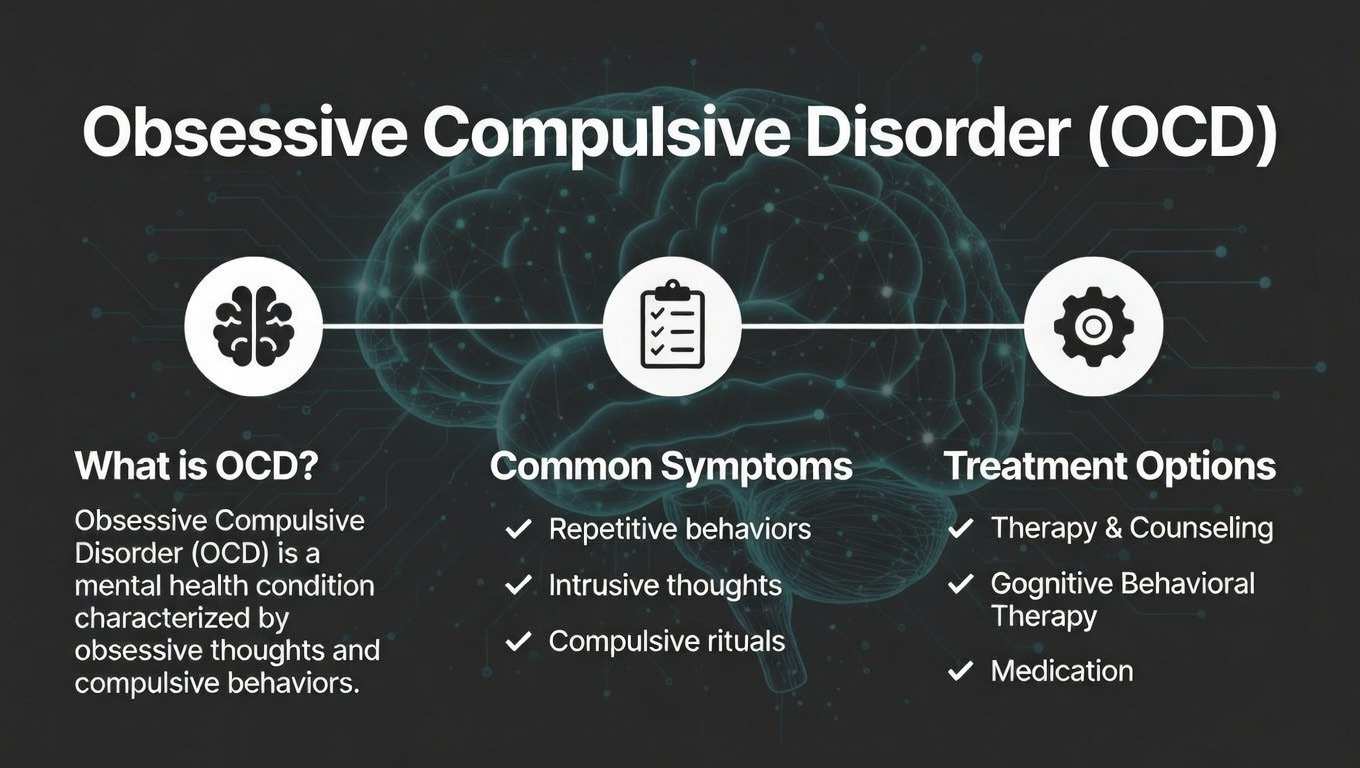
Obsessive Compulsive Disorder (OCD) is a chronic psychiatric disorder characterized by intrusive thoughts and repetitive behaviors. It significantly interferes with daily functioning, academic performance, and relationships.
🔎 Etiology
- Results from a combination of genetic, biological, and environmental factors.
- Family history increases susceptibility.
- Psychosocial stressors may precipitate symptom onset.
🧬 Pathophysiology
- Dysfunction of cortico-striato-thalamo-cortical (CSTC) circuits.
- Serotonin neurotransmission abnormalities are central.
- Neuroimaging shows hyperactivity in orbitofrontal regions.
⚠️ Clinical Features – Obsessions
- Fear of contamination or excessive concern about cleanliness.
- Intrusive aggressive, sexual, or religious thoughts.
- Patients recognize these thoughts as irrational.
🔁 Clinical Features – Compulsions
- Repetitive hand washing, checking, or ordering behaviors.
- Mental rituals such as counting or repeating phrases.
- Behaviors are time-consuming and distressing.
🩺 Diagnosis
Diagnosis is primarily clinical and based on DSM-5 diagnostic criteria.
- Symptoms must cause significant distress or impairment.
- Medical and psychiatric differentials must be excluded.
💬 Management – Psychotherapy
- Cognitive Behavioral Therapy (CBT) is the treatment of choice.
- Exposure and Response Prevention (ERP) is the most effective approach.
- Improves symptom control and functional outcomes.