
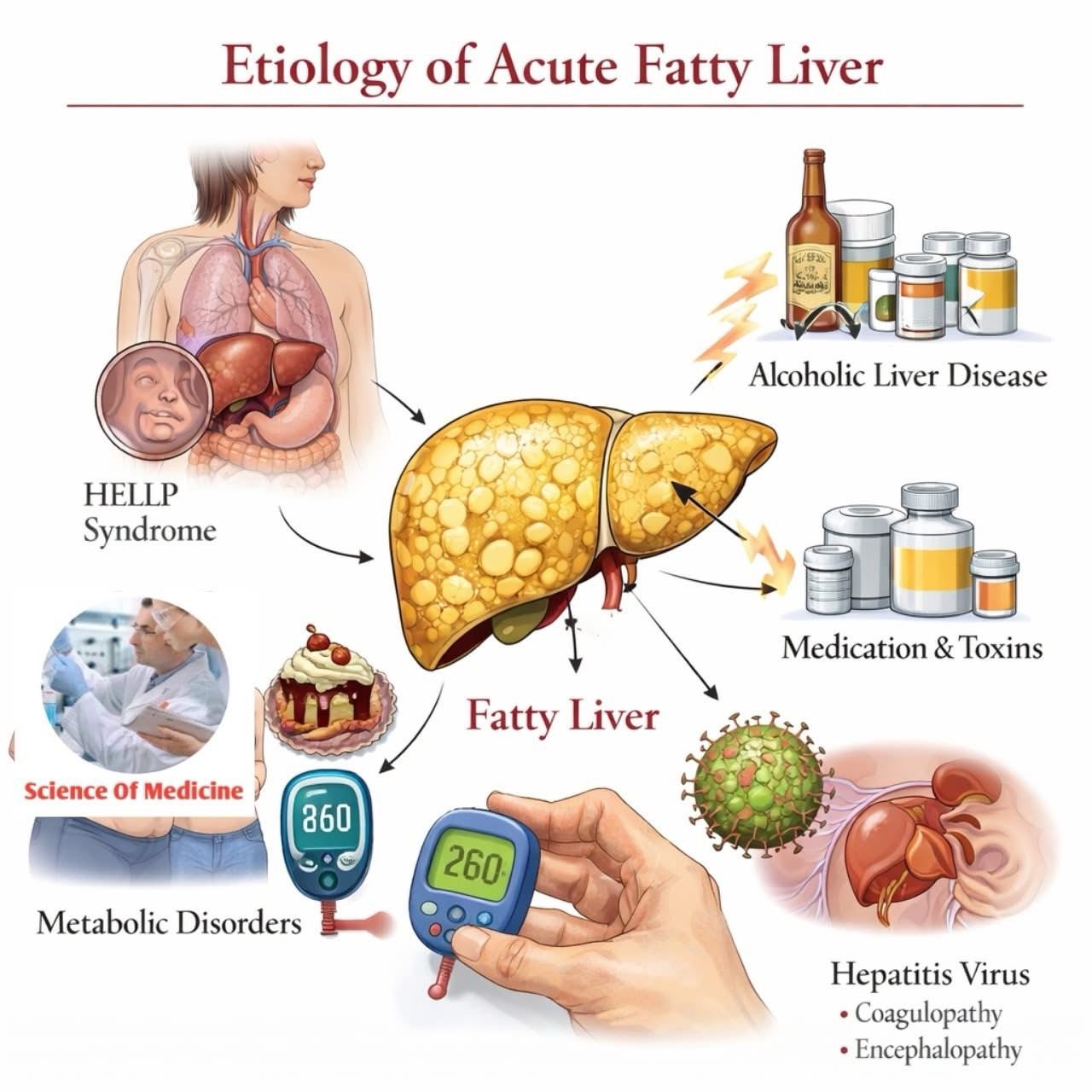
Acute Fatty Liver (AFL) is a serious metabolic liver disorder caused by the rapid accumulation of fat inside liver cells. Although rare, it can progress very quickly and become life-threatening if not recognized early.
This condition is most commonly seen during pregnancy, particularly in the third trimester. However, it may also occur due to certain medications or inherited metabolic defects.
What Causes Acute Fatty Liver?
- Defect in mitochondrial fatty acid oxidation
- Genetic enzyme deficiencies such as LCHAD deficiency
- Drug-induced mitochondrial toxicity
- Metabolic stress related to pregnancy
Who Is at Higher Risk?
- Women in the third trimester of pregnancy
- Multiple pregnancies (twins or more)
- Previous history of Acute Fatty Liver
- Low body mass index (BMI) and malnutrition
What Happens in the Body?
Normally, the liver breaks down fatty acids through a process called beta-oxidation inside mitochondria. When this process is impaired, fat accumulates within liver cells.
This leads to:
- Microvesicular fat deposition in hepatocytes
- Impaired liver function
- Low blood sugar (hypoglycemia)
- Blood clotting problems (coagulopathy)
- Potential progression to acute liver failure
Signs and Symptoms
- Persistent nausea and vomiting
- Abdominal pain
- Extreme fatigue or malaise
- Jaundice (yellowing of skin and eyes)
- Confusion or altered mental status
- Easy bruising or bleeding
Laboratory Findings
- Elevated liver enzymes (AST, ALT)
- Low blood sugar levels
- Prolonged prothrombin time (PT)
- Elevated ammonia levels
- High bilirubin levels
How Is It Diagnosed?
Diagnosis is mainly based on clinical suspicion supported by laboratory findings. The Swansea criteria are commonly used to confirm the diagnosis. Liver biopsy is rarely performed due to the risk of bleeding.
Conditions That May Look Similar
- HELLP syndrome
- Viral hepatitis
- Drug-induced liver injury
- Autoimmune hepatitis
Treatment and Management
- Immediate stabilization of the patient
- Prompt delivery if pregnancy-related
- Correction of hypoglycemia
- Management of bleeding disorders
- Intensive care monitoring
Prognosis
With early diagnosis and timely treatment, both maternal and fetal survival rates are high. Delayed intervention, however, may result in multi-organ failure.
Prevention
- Early antenatal screening for high-risk patients
- Genetic counseling for affected families
- Close monitoring in future pregnancies
Final Thoughts
Acute Fatty Liver may be rare, but it is a medical emergency when it occurs. Awareness, early recognition, and coordinated multidisciplinary care are critical to protecting both mother and baby.