
Definition
Lymphoma is a type of cancer that develops in the lymphatic system. It occurs when lymphocytes (a type of white blood cell) grow uncontrollably and become malignant.
Although it mainly affects the lymph nodes, lymphoma can also spread to other organs such as the spleen, bone marrow, and liver.
Types of Lymphoma
Hodgkin Lymphoma
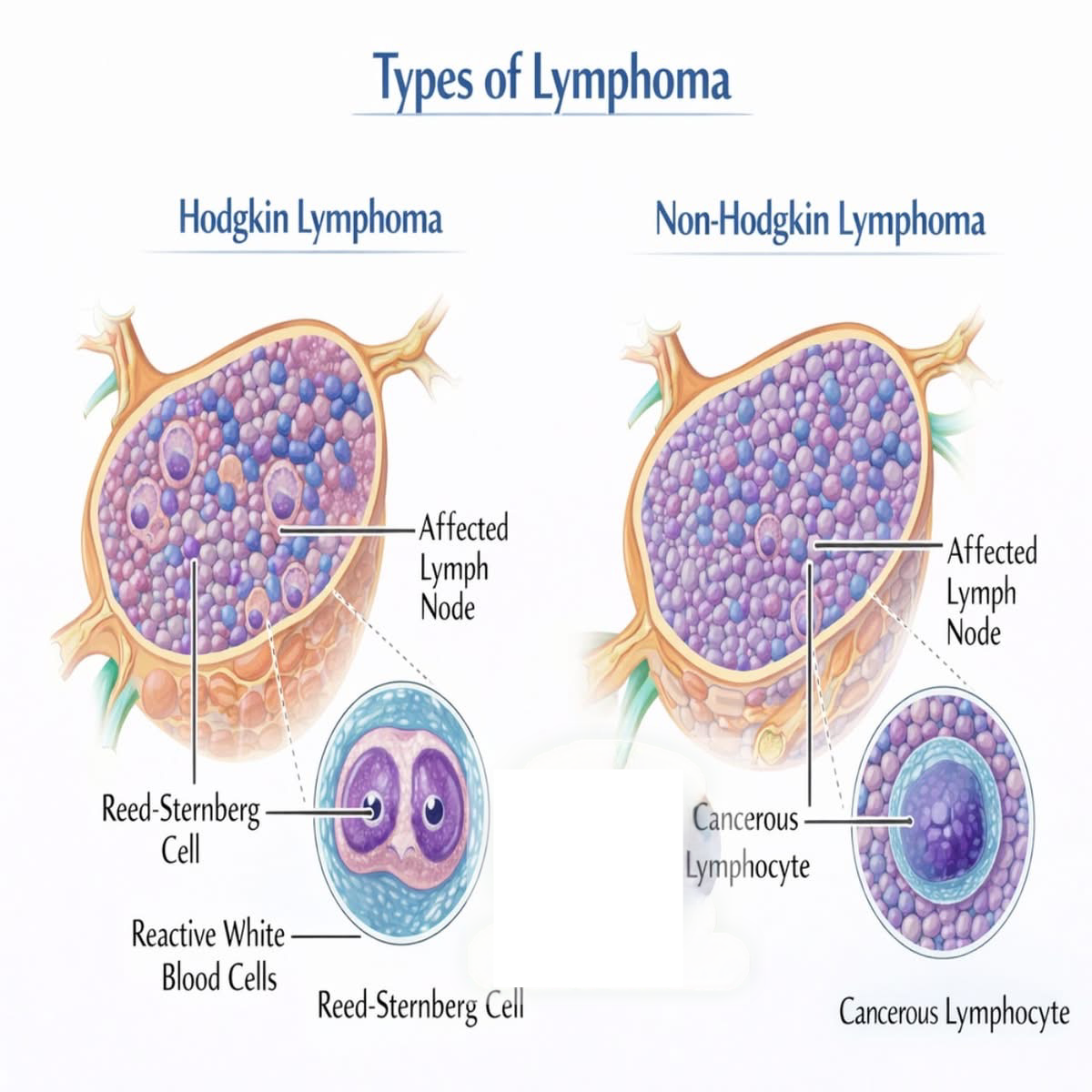
Hodgkin lymphoma is identified by the presence of Reed–Sternberg cells under the microscope. It usually spreads in a predictable pattern from one lymph node group to another.
Non-Hodgkin Lymphoma
Non-Hodgkin lymphoma (NHL) includes a diverse group of lymphoid cancers. These subtypes vary widely in behavior — some grow slowly, while others are aggressive and fast-spreading.
Causes and Risk Factors
- Genetic mutations that trigger abnormal lymphocyte growth
- Weakened immune system (immunosuppression)
- Certain viral infections
- Environmental exposures
How the Disease Develops
Malignant lymphocytes accumulate in lymph nodes, leading to painless swelling (lymphadenopathy).
As the disease progresses, it may spread to the bone marrow and other organs, affecting their normal function.
Common Signs and Symptoms
- Painless swollen lymph nodes (neck, armpits, groin)
- Persistent fever
- Night sweats
- Unexplained weight loss
These systemic symptoms are often referred to as “B symptoms” and may indicate more advanced disease.
Diagnosis
A lymph node biopsy remains the gold standard for confirming lymphoma and determining its specific type.
Imaging tests (CT, PET scans) and blood tests help determine the stage and extent of disease.
Staging
Staging depends on:
- The number of lymph node regions involved
- Whether the disease has spread outside the lymph nodes
Accurate staging is essential for choosing the most appropriate treatment and estimating prognosis.
Treatment
- Chemotherapy is the primary treatment for most lymphomas.
- Radiotherapy may be used in selected cases.
- Targeted therapy and immunotherapy are increasingly important depending on subtype.
Prognosis
Outcomes vary depending on the type of lymphoma and stage at diagnosis.
Early detection and timely treatment significantly improve survival rates.