
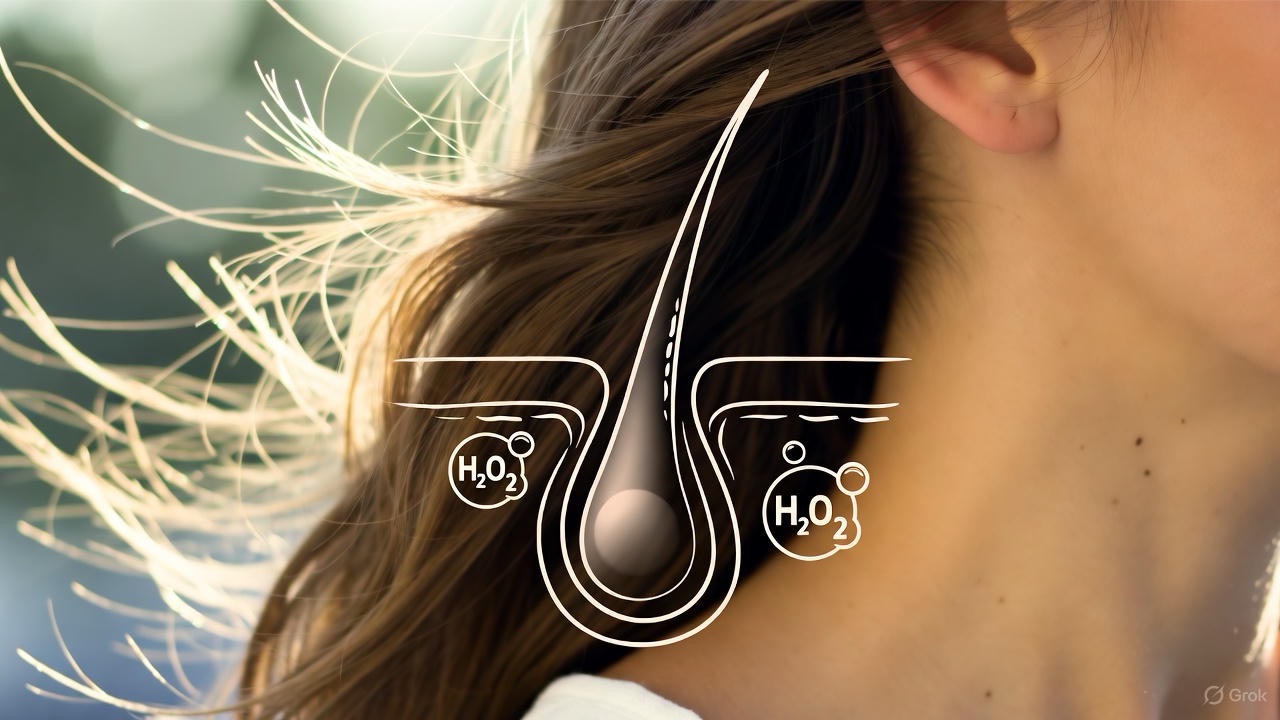
Gray hair is more than a calendar entry — it’s a story your cells are telling. Here’s the science behind the fade, practical factors that speed it up, and why some changes (and hope) exist for reversing or slowing the process.
Introduction — more than “just aging”
We all know the moment: you spot a gray strand and feel time’s nudge. But peeling back the surface reveals a biochemical tale of how pigment is made, how it breaks, and how lifestyle and nutrition influence the balance. Over the past two decades researchers have connected the dots between oxidative stress, the enzymes that create pigment, and why hair can sometimes lose color — and occasionally regain it.
How hair gets its color — the basic biology
Color comes from melanin, produced by specialized cells called melanocytes that sit in the hair bulb. Melanin synthesis (melanogenesis) uses a cascade of enzymes and steps:
- Tyrosinase — the critical enzyme at the start of pigment production.
- TRP-1 and TRP-2 — enzymes that help shape the type of melanin.
- Structural and regulatory proteins (pMel-17, MITF-M) that organize pigment granules and control gene expression.
Importantly, hair melanocytes are not identical to skin melanocytes. Some research shows hair follicle melanocytes lack certain enzymes (for example, TRP-2 in human hair bulbs), hinting that hair pigmentation relies on a slightly different, possibly more fragile, enzymatic program. (PMID: 15357835)
Why pigment production creates a vulnerability: hydrogen peroxide
Making pigment isn’t chemically neutral — it produces reactive byproducts. Studies show that during melanogenesis, hydrogen peroxide (H₂O₂) is generated as a natural by-product of enzymatic oxidation. Under normal circumstances antioxidant systems in the follicle (like catalase) neutralize H₂O₂. But if antioxidant defenses fall, H₂O₂ builds up and starts damaging the pigment machinery itself.
A landmark finding demonstrated that gray hair shafts can accumulate millimolar concentrations of H₂O₂ while the follicle’s catalase and methionine-sulfoxide-repair enzymes are reduced — an environment where tyrosinase becomes inactivated and pigment production stalls. In short: the hair can “bleach itself from the inside.” (PMIDs: 15885091, 19237503)
How follicles age — what the microscope shows
When dermatologists and pathologists examine aging follicles they find fewer active melanocytes and less pigment inside the bulb. Some pigment cells remain in other parts of the follicle in a dormant state — which may be why repigmentation, while uncommon, is sometimes possible. This histologic view ties the molecular damage to the visible white or gray hair you see in the mirror. (PMID: 30932205)
Premature graying: why it happens to younger people
Not all graying is chronological. Premature hair graying (PHG) — losing pigment earlier than expected — is often linked to a mix of genetics, oxidative stress, and systemic health. Clinical studies show that people with PHG commonly have reduced antioxidant enzyme activity and higher oxidative markers compared with controls. (PMID: 26622150)
Large reviews and meta-analyses identify risk factors including family history, smoking, certain nutritional deficiencies, thyroid problems, and metabolic conditions. These are signals that graying is often a systemic issue, not merely a local one. (PMID: 32654282)
Lifestyle factors that matter (smoking, alcohol, diet)
Smoking is repeatedly associated with premature graying and with increased oxidative damage in tissues. Alcohol, especially in higher intakes, increases lipid peroxidation and reduces key antioxidants (like glutathione and vitamin E). Both behaviors raise the oxidative burden on the body — and on the hair follicle. (PMIDs: 34307472, 17602789)
Diet is also influential. Observational data links restrictive or imbalanced diets, certain deficiencies and higher BMI with earlier graying. While some of these associations are complex (and may reflect confounders), they provide actionable avenues: check your diet, correct deficiencies, and reduce pro-oxidant exposures. (PMID: 30556257)
Nutrition and the hopeful exceptions — B12 and reversible cases
Among nutritional factors, vitamin B12 has a striking track record. Classic case reports document white or depigmented hair associated with B12 deficiency that repigmented following therapy. These cases show that, in certain contexts, pigment loss is reversible when the root cause is corrected — especially when the problem is systemic (nutritional) rather than irreversible follicle destruction. (PMID: 3740873)
What the combined evidence suggests
Bringing the studies together gives a consistent picture:
- Melanin production produces H₂O₂; proper detoxification is essential. (15885091)
- With age, repair and antioxidant systems in follicles decline; H₂O₂ accumulates and damages pigment enzymes, notably tyrosinase. (19237503)
- Premature graying often correlates with oxidative imbalance and lifestyle or nutritional factors; some of these are modifiable. (26622150, 32654282, 30556257)
- Smoking and alcohol increase oxidative stress and are associated with more/earlier graying. (34307472, 17602789)
- Some follicles retain dormant pigment cells, which—if the environment improves—may support partial repigmentation. (30932205, 15357835)
Practical steps you can consider (evidence-informed)
While not every case is reversible, the following steps are low-risk and have biological plausibility:
- Check and correct nutrient deficiencies: B12, folate, iron/ferritin, vitamin D, and trace minerals (when clinically indicated and tested).
- Reduce oxidative exposures: stop smoking; limit excessive alcohol; avoid unnecessary environmental toxins.
- Support antioxidant defenses: a diet rich in vegetables, fruit, and whole foods; consider antioxidant-rich foods (not mega-doses of single antioxidants unless advised by a clinician).
- Consider metabolic health: good sleep, stress management, and metabolic fitness can reduce systemic oxidative load.
- Cosmetic options: hair dyes and pigments are practical choices while biological therapies remain limited.
Where the research is headed
Future research will refine whether targeted topical antioxidants, catalytic modulators (e.g., catalase enhancers), or stem-cell interventions can restore pigment reliably. Right now, the mix of systemic care (nutrition, lifestyle) and symptomatic options (cosmetics) is the most realistic path.
Conclusion — a science-based, compassionate view
Gray hair signals changes at the cellular level: oxidative stress, declining repair systems, and sometimes systemic nutrient issues. The scientific story offers both explanation and hope. For many people, lifestyle and nutritional changes reduce the damage that leads to graying — and for a minority with reversible causes, treating the root issue can restore pigment. Either way, science suggests that how you treat your body matters not only for how you feel, but for the color of your hair.
References (PMID)
15357835, 15885091, 19237503, 23974581, 30932205, 32654282, 26622150, 34307472, 17602789, 30556257, 30607038, 3740873