
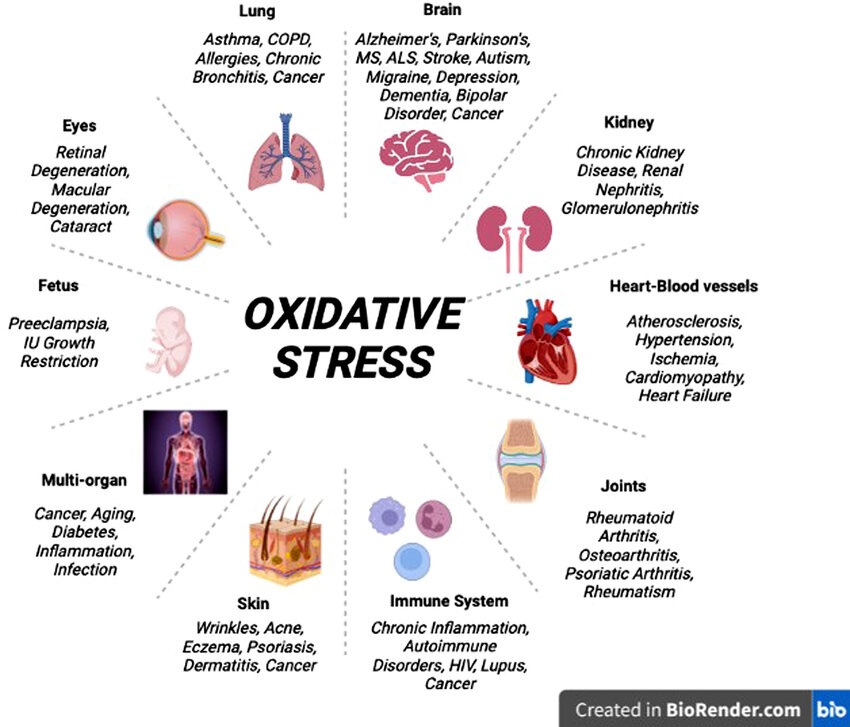
Understanding Oxidative Stress — The Body’s Rusting Process
To understand oxidative stress, imagine what happens when metal rusts or when a cut apple turns brown — oxygen reacts with the surface, producing oxidation. A similar process happens inside your body every second.
⚡ What Are Free Radicals?
During normal metabolism — such as digesting food, breathing oxygen, and producing energy in your cells — your body naturally generates free radicals, also called reactive oxygen species (ROS). These molecules are highly unstable because they have unpaired electrons. To stabilize themselves, they “steal” electrons from nearby molecules like DNA, lipids, or proteins — damaging those molecules in the process.
In small amounts, free radicals aren’t bad. In fact, they play essential roles in:
- Cell signaling
- Immune defense (white blood cells use ROS to kill pathogens)
- Hormone synthesis
But when ROS production outpaces your body’s antioxidant defenses, oxidative stress occurs — leading to cellular injury, inflammation, and accelerated aging.
🧬 Antioxidants: The Body’s Shield
Your body has a powerful internal defense system made of antioxidants — substances that neutralize free radicals by donating electrons without becoming unstable themselves.
These antioxidants include:
- Enzymatic defenders: Superoxide dismutase (SOD), catalase, glutathione peroxidase
- Nutrient-based antioxidants: Vitamins C and E, selenium, zinc, polyphenols
The balance between free radicals and antioxidants determines whether your cells thrive or suffer.
🔥 When Balance Breaks: Causes of Oxidative Stress
- High blood sugar and refined carbs – trigger glycation and free radical formation
- Chronic inflammation – white blood cells produce ROS as a defense, but excess becomes damaging
- Smoking and pollution – introduce external oxidants into the bloodstream
- Excessive exercise or stress – increases oxygen demand and metabolic ROS
- Poor sleep or nutrient deficiency – weakens antioxidant systems
Over time, oxidative stress contributes to damage in blood vessels, mitochondria, and DNA — driving aging, insulin resistance, arterial calcification, cancer, and neurodegeneration.
💔 Why It Matters
Oxidative stress isn’t just a buzzword — it’s a root cause shared by most modern chronic diseases:
- Atherosclerosis: ROS oxidizes LDL cholesterol, promoting plaque buildup in arteries
- Diabetes: High glucose levels overwhelm antioxidant defenses and damage pancreatic β-cells
- Neurodegeneration: The brain’s high oxygen use and lipid content make it especially vulnerable
- Cancer: DNA damage from ROS can trigger mutations and abnormal cell growth
In short, oxidative stress is like slow, internal corrosion — invisible, gradual, but deeply damaging. And the key to reversing it is restoring redox balance — reducing the sources of ROS and strengthening your antioxidant defense.
That’s exactly where low-carb and ketogenic nutrition becomes powerful.
🥩 How a Low-Carb Diet Helps Reduce Oxidative Stress
1️⃣ Improves Mitochondrial Efficiency
When carbs are restricted, the body shifts to fat oxidation and ketone production for fuel. Ketones (especially β-hydroxybutyrate) produce less ROS compared to glucose metabolism. This “cleaner” energy source enhances mitochondrial efficiency and reduces oxidative damage.
References: Veech RL (2004); Newman JC & Verdin E (2014).
2️⃣ Reduces Blood Sugar and Glycation
High blood sugar increases advanced glycation end-products (AGEs), which directly generate oxidative stress. Low-carb diets lower blood glucose and insulin spikes, reducing AGEs and oxidative stress in tissues.
References: Uribarri J et al. (2010); Boden G et al. (2005).
3️⃣ Enhances Antioxidant Defenses
Ketones activate Nrf2 — a master regulator of antioxidant enzymes like superoxide dismutase and glutathione peroxidase. This boosts the body’s natural antioxidant capacity.
References: Ma Q (2013); Milder JB et al. (2010).
4️⃣ Lowers Inflammation
Low-carb and ketogenic diets lower inflammatory markers such as IL-6, TNF-α, and CRP — meaning less oxidative burden.
References: Forsythe CE et al. (2008); Paoli A et al. (2013).
5️⃣ Supports Brain and Nerve Protection
Ketones enhance mitochondrial function, reduce glutamate toxicity, and decrease oxidative injury. That’s why ketogenic diets are studied in epilepsy, Alzheimer’s, and Parkinson’s disease.
References: Kashiwaya Y et al. (2013); Gasior M et al. (2006).
🌿 Summary
MechanismEffect on Oxidative Stress Lower glucose & insulin↓ Glycation & ROS formation Ketones as fuel↓ ROS production, ↑ mitochondrial efficiency Nrf2 activation↑ Antioxidant enzyme expression Anti-inflammatory↓ Cytokine-induced oxidative damage Neuroprotection↓ Oxidative injury in brain cells
🩸 In Simple Terms
Eating low-carb helps your body:
- Burn cleaner fuel (fat → ketones)
- Produce fewer “exhaust fumes” (ROS)
- Strengthen its natural antioxidant shield
- Protect the brain and mitochondria from damage
It’s like switching from a smoky diesel engine to a clean hybrid — less waste, more power, longer lifespan.