
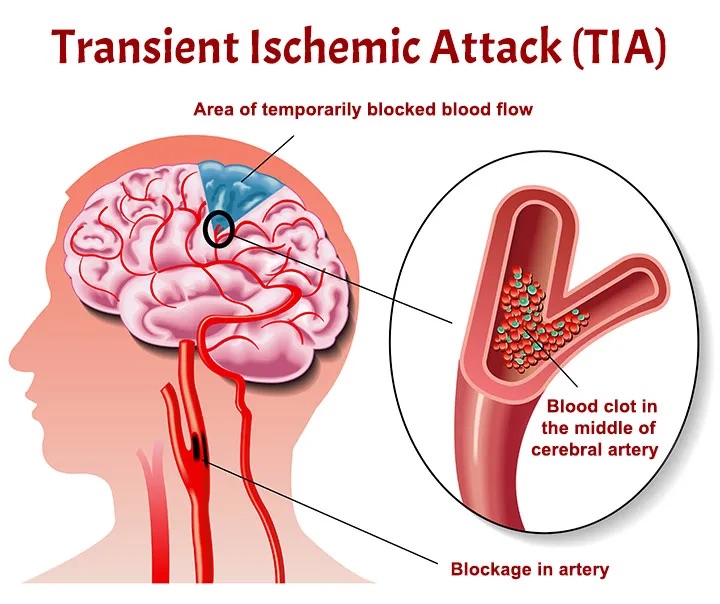
A Transient Ischemic Attack (TIA) is often called a “mini-stroke.” While its symptoms are temporary, a TIA is a serious medical warning that should never be ignored. It signals a high
risk of a future, potentially disabling stroke.
What Is a Transient Ischemic Attack?
A TIA occurs when blood flow to part of the brain is briefly interrupted. Unlike a full stroke, the blockage resolves on its own, and symptoms usually disappear within minutes to hours — always within 24 hours.
Even though symptoms resolve, a TIA is a medical emergency.
Common Causes
- A blood clot temporarily blocking a brain artery
- Narrowed blood vessels due to atherosclerosis (plaque buildup)
- Reduced blood flow caused by heart conditions, such as atrial fibrillation
What Happens in the Brain?
During a TIA, a cerebral artery becomes temporarily blocked. This reduces oxygen and nutrient delivery to brain tissue. Brain cells are stressed but not permanently damaged because blood flow is restored quickly.
Risk Factors
- High blood pressure (the most important risk factor)
- Diabetes mellitus
- Smoking and excessive alcohol use
- High cholesterol levels
- Obesity and physical inactivity
- Family history of stroke or TIA
Warning Signs and Symptoms
- Sudden weakness or numbness on one side of the body
- Difficulty speaking or understanding speech
- Sudden vision problems in one or both eyes
- Loss of balance or coordination
- Sudden, severe headache with no known cause
These symptoms may disappear — but the danger does not.
How TIA Is Diagnosed
- Clinical evaluation based on symptoms and medical history
- CT or MRI scans to rule out an actual stroke
- Carotid ultrasound to assess artery narrowing
- Blood tests to identify underlying risk factors
Management and Treatment
- Immediate hospital evaluation, even if symptoms resolve
- Antiplatelet therapy such as aspirin
- Strict control of blood pressure and cholesterol
- Lifestyle changes to reduce long-term risk
Prevention Strategies
- Maintain healthy blood pressure
- Quit smoking and limit alcohol intake
- Engage in regular physical activity
- Adopt a nutrient-dense, whole-food diet
- Control blood sugar in diabetes
TIA vs Stroke: What’s the Difference?
- TIA symptoms resolve within minutes to hours
- Stroke symptoms last longer and may cause permanent damage
- TIA is a powerful warning sign of a future stroke
Possible Complications
- Increased risk of ischemic stroke
- Recurrent TIAs
- Progression of underlying cardiovascular disease
What to Do in an Emergency
- Recognize symptoms immediately
- Call emergency services without delay
- Do not wait for symptoms to disappear
Key Takeaways
- TIA is a brief but serious neurological event
- It requires urgent medical attention
- Managing risk factors dramatically lowers future stroke risk
A TIA is not “nothing.” It is your body’s early warning system. Listen to it.