
C-Reactive Protein (CRP) is one of the most commonly used blood markers for inflammation. It does not identify a specific disease, but it provides important information about whether inflammation is present and how active it is in the body.

What Is CRP?
CRP is a protein produced by the liver in response to inflammation. When the body is fighting an infection, experiencing tissue injury, or undergoing immune activation, CRP levels can rise rapidly—often within hours.
This fast response makes CRP especially useful in clinical practice.
Causes of Elevated CRP
- Bacterial infections – often cause a rapid and significant increase in CRP
- Autoimmune diseases – such as rheumatoid arthritis and lupus
- Trauma, burns, or surgery – temporary elevation due to tissue injury
Because CRP is non-specific, elevated values must always be interpreted in clinical context.
Indications for CRP Testing
- Detect acute infections
- Monitor response to treatment (e.g. antibiotics)
- Assess severity of inflammation
A decreasing CRP usually indicates improvement, while a rising CRP may suggest ongoing or worsening inflammation.
CRP vs ESR: Key Differences
- CRP changes rapidly with inflammation and recovery
- ESR may remain elevated even after inflammation subsides
- CRP is less affected by age, anemia, or pregnancy
For many clinical situations, CRP provides a more timely and accurate picture of inflammatory activity.
High-Sensitivity CRP (hs-CRP)
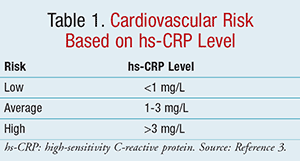
High-sensitivity CRP (hs-CRP) detects very low levels of inflammation and is primarily used for cardiovascular risk assessment.
- Detects subtle, chronic inflammation
- Used in cardiovascular risk prediction
- hs-CRP < 1 mg/L: low cardiovascular risk
CRP in Cardiovascular Disease
Chronic low-grade inflammation plays a central role in the development of atherosclerosis.
- Higher hs-CRP is associated with higher cardiac risk
- Reflects vascular inflammation rather than plaque size
- Best interpreted together with lipid profile and other risk factors
CRP helps assess risk but does not diagnose heart disease on its own.
CRP in Autoimmune Disorders
- Often elevated in rheumatoid arthritis and lupus
- Helps monitor disease activity
- Useful for assessing treatment effectiveness
Some autoimmune conditions may flare without a marked CRP rise, so results should always be interpreted carefully.
CRP Monitoring in Clinical Practice
- Tracks disease progression
- Evaluates response to antibiotics or anti-inflammatory treatment
- Assesses systemic inflammation
Serial CRP measurements are often more informative than a single reading.
Limitations of CRP
- Non-specific marker – cannot identify the exact disease
- May increase in non-infectious conditions
- Must be interpreted alongside symptoms and other investigations
Why CRP Matters
CRP remains a reliable and practical marker of inflammation in modern medicine.
- Fast response to inflammatory changes
- Widely available and easy to measure
- Useful for both diagnosis support and monitoring
When used appropriately, CRP is a valuable clinical tool that complements sound medical judgment.