
When people talk about emotional health, they often blame stress, personality, or difficult life situations. While these factors certainly matter, there is another powerful influence behind our mood that many people overlook — serotonin.
Serotonin is often called the “feel-good neurotransmitter.” But its role in the body goes far beyond simply making us feel happy. It is one of the most important chemical messengers in the brain and nervous system, helping regulate mood, sleep, appetite, and even how we handle stress.
When serotonin levels are healthy, people tend to feel calm, emotionally stable, focused, and mentally clear. Sleep tends to be deeper, energy levels are steadier, and emotional resilience improves.
But when serotonin levels are low for long periods of time, people may start to experience:
- Low mood or emotional instability
- Anxiety or irritability
- Poor sleep
- Cravings for sugar or comfort foods
- Difficulty concentrating
This is why emotional health is not just about mindset — it is also about biological balance.
Why Serotonin Matters More Than We Think
Serotonin plays a central role in how our brain communicates with the body. It helps regulate:
- Emotional stability
- Stress response
- Sleep cycles
- Appetite control
- Memory and focus
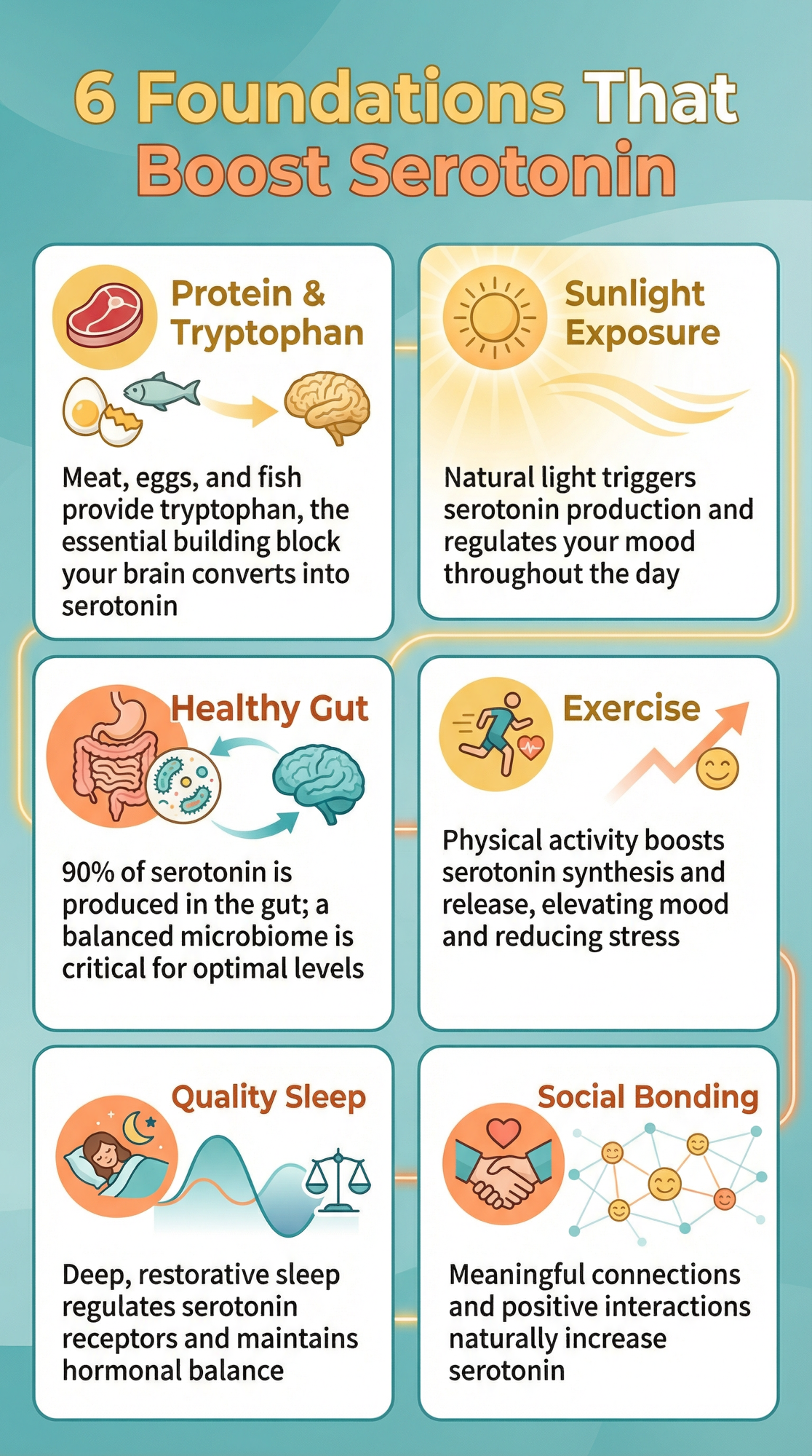
Interestingly, about 90% of the body’s serotonin is produced in the gut, not the brain. This highlights how closely our mental health is connected to our physical health and lifestyle habits.
The good news is that our body is naturally capable of producing serotonin when the right conditions are present.
The Six Foundations That Help Boost Serotonin Naturally
🥩 1. Protein and Tryptophan
High-quality protein foods such as meat, eggs, and fish provide an essential amino acid called tryptophan. This amino acid is the raw material the brain uses to produce serotonin.
Without sufficient protein in the diet, the brain simply lacks the building blocks needed to create this important neurotransmitter.
☀️ 2. Sunlight Exposure
Natural sunlight is one of the simplest and most powerful ways to support serotonin production. Just 15–30 minutes of sunlight exposure each day can help regulate mood and support healthy circadian rhythms.
🏃 3. Regular Physical Activity
Exercise stimulates the release of serotonin and other mood-supporting chemicals like endorphins. This is why many people feel mentally refreshed and emotionally lighter after physical activity.
🦠 4. Gut Health
Since the majority of serotonin is produced in the gut, maintaining a healthy digestive system is crucial. A balanced gut microbiome supports proper serotonin production and communication within the body.
😴 5. Quality Sleep
Serotonin is closely linked with melatonin, the hormone that regulates sleep. Deep, restorative sleep helps maintain healthy serotonin receptor activity and supports overall hormonal balance.
🤝 6. Meaningful Social Connection
Humans are social beings. Positive interactions, meaningful conversations, and supportive relationships naturally increase serotonin activity in the brain.
Emotional Health Often Begins With Physical Health
Many people believe emotional stability is simply about controlling thoughts or having stronger willpower. In reality, the body and brain are deeply connected.
If the body lacks proper nutrition, sunlight, sleep, movement, and social connection, the brain struggles to maintain balanced neurotransmitters.
Instead of only trying to manage emotions mentally, it may be more effective to strengthen the body’s foundation:
- Eat sufficient high-quality protein
- Spend time in natural sunlight
- Move your body regularly
- Support gut health
- Prioritize restful sleep
- Nurture meaningful relationships
When these pillars are supported, emotional balance often improves naturally.
Take care of your body, and your mind will often follow.