
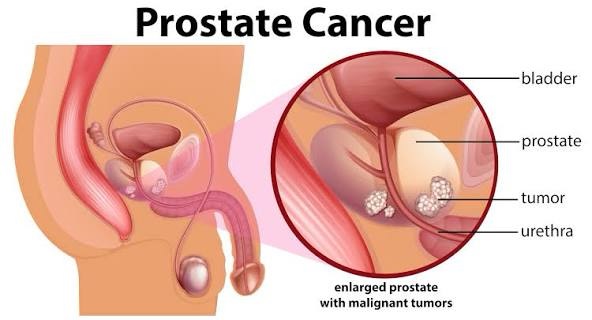
Prostate cancer is a malignant tumor arising from the epithelial cells of the prostate gland. It is one of the most common cancers affecting elderly males worldwide.
The disease often progresses slowly; however, some cases become aggressive and spread beyond the prostate in advanced stages.
Epidemiology
- Incidence increases significantly after 50 years of age.
- Higher risk is observed in men with a positive family history.
- Geographical variation exists, with higher prevalence in Western countries.
- Lifestyle and dietary factors may influence disease occurrence.
Risk Factors
- Advancing age (most important non-modifiable factor)
- Genetic predisposition including BRCA1 and BRCA2 mutations
- Obesity
- Family history of prostate cancer
Pathophysiology
Prostate cancer develops due to malignant transformation and uncontrolled proliferation of prostate cells.
Androgen hormones, particularly testosterone, play a major role in tumor growth.
The tumor may remain localized or metastasize to bones and lymph nodes.
Clinical Features
Early Stage:
- Often asymptomatic
- Detected through screening
Localized Disease:
- Urinary hesitancy
- Weak urine stream
- Increased urinary frequency
Advanced Disease:
- Bone pain
- Unexplained weight loss
- Fatigue
Screening & Diagnosis
- Prostate-Specific Antigen (PSA) blood test
- Digital Rectal Examination (DRE)
- Prostate biopsy (definitive diagnosis)
Staging
- TNM system evaluates tumor size, lymph node involvement, and metastasis.
- Imaging studies such as MRI, CT, and bone scans assist in staging.
- Staging guides treatment decisions and prognosis.
Management
Treatment depends on stage, grade, and patient factors.
- Active surveillance
- Radical prostatectomy (surgery)
- Radiotherapy
- Hormonal therapy (androgen deprivation therapy)
Complications
- Urinary obstruction
- Bone fractures due to metastasis
- Treatment side effects such as incontinence and erectile dysfunction
Prevention & Prognosis
Early detection improves survival outcomes.
- Maintain healthy body weight
- Regular physical activity
- Balanced diet
- Discuss appropriate screening with healthcare providers
Prognosis varies depending on stage at diagnosis and response to treatment.