
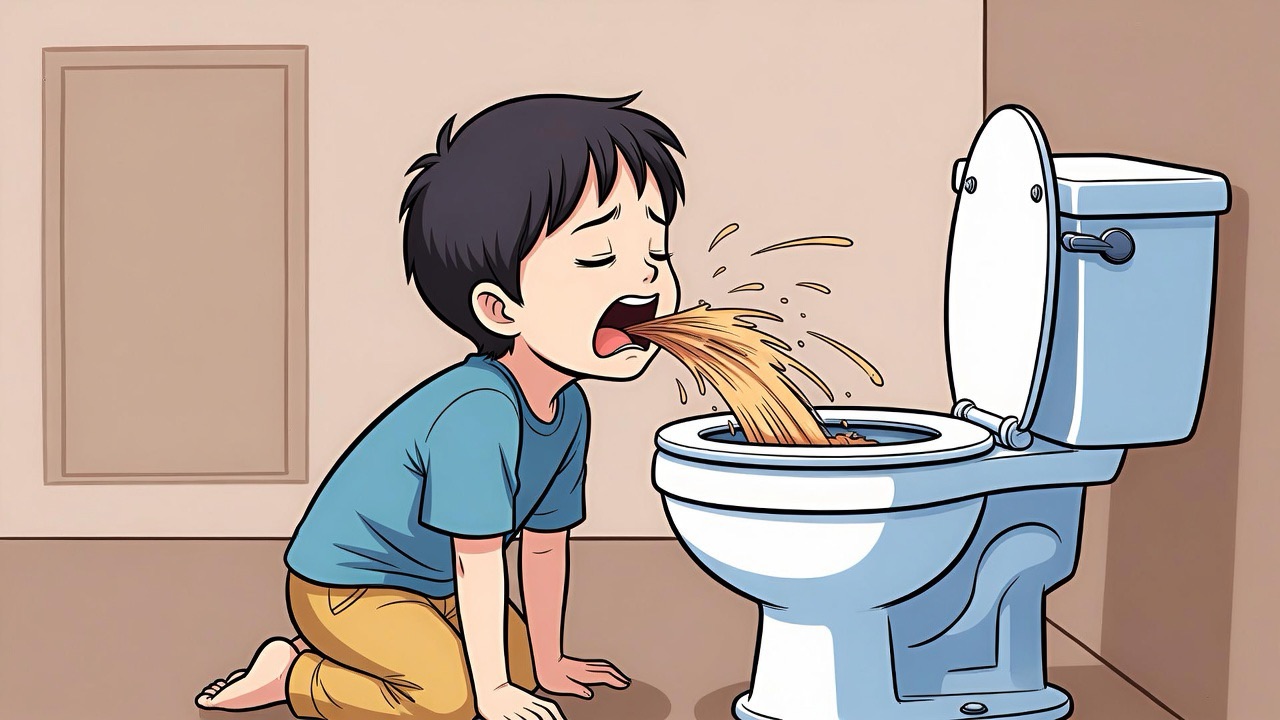
Vomiting is the forceful expulsion of stomach contents through the mouth. It is actually a protective reflex — the body’s way of removing harmful or irritating substances.
This reflex is controlled by the vomiting center located in the medulla oblongata (part of the brainstem). Vomiting may occur with or without nausea.
Common Causes of Vomiting
- Gastrointestinal infections
- Food poisoning
- Motion sickness
- Migraine
- Pregnancy (morning sickness)
- Medication side effects
Sometimes stress, strong smells, severe pain, or anxiety can also trigger vomiting.
Signs and Symptoms
- Nausea
- Sweating
- Increased salivation
- Abdominal discomfort
- Dizziness
- Weakness
These symptoms may appear before, during, or after vomiting.
Possible Complications
- Dehydration
- Electrolyte imbalance
- Esophageal tears
- Malnutrition
- Aspiration pneumonia
Infants, elderly individuals, and people with chronic illnesses are at higher risk of complications.
Management and Treatment
- Rehydration (oral fluids or intravenous fluids)
- Antiemetic medications
- Identifying and treating the underlying cause
- Dietary modifications (small, bland meals)
- Adequate rest
Oral rehydration solutions are especially important in children to prevent dehydration.
When to Seek Medical Help
- Vomiting lasting more than 24 hours
- Blood in vomit
- Severe abdominal pain
- Signs of dehydration (dry mouth, reduced urination, extreme weakness)
- Vomiting in infants or elderly individuals
Do not ignore warning signs. Early medical attention prevents serious complications.
Prevention
- Eat light and bland foods
- Avoid known triggers
- Take medications with food (if advised)
- Stay well hydrated
- Practice good food hygiene
Vomiting is common and often temporary. However, persistent or severe cases require proper medical evaluation.