
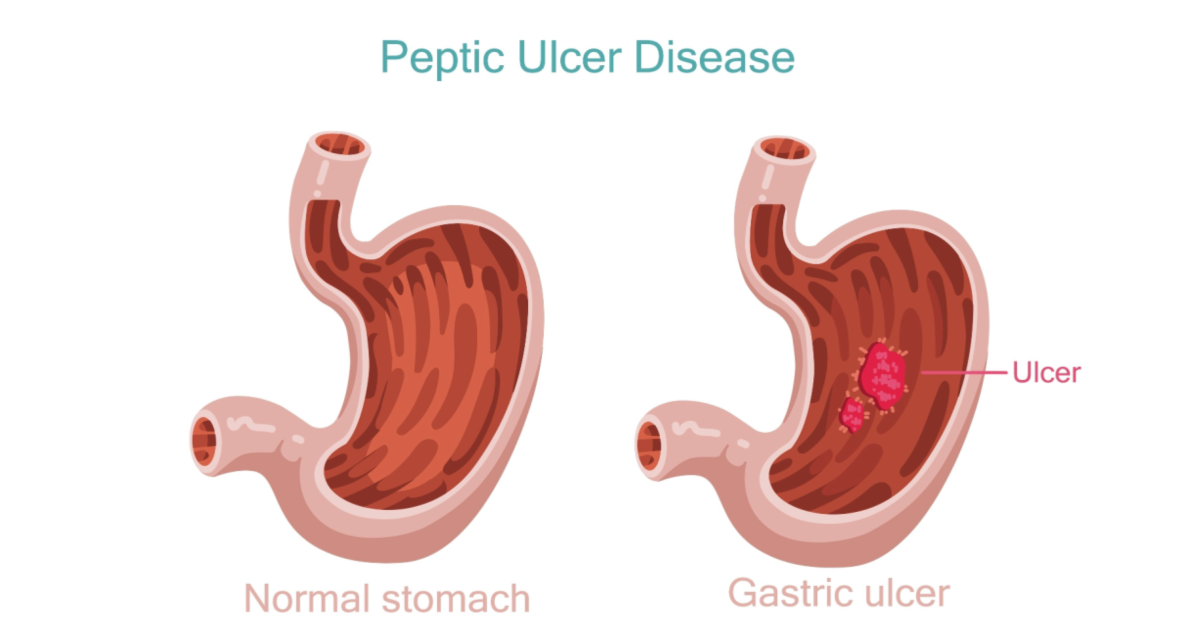
Peptic Ulcer Disease (PUD) is a condition where open sores develop in the lining of the stomach or the first part of the small intestine. These ulcers form when the protective lining of the digestive tract is damaged by stomach acid. It is a common digestive problem and can cause pain and discomfort if not treated properly.
Types of Peptic Ulcers
- Gastric ulcer: Forms in the lining of the stomach.
- Duodenal ulcer: Develops in the first part of the small intestine (duodenum).
Both types share similar causes but may present slightly different symptoms.
Causes
- Helicobacter pylori infection: A common bacterial infection that damages the stomach’s protective lining.
- Long-term use of NSAIDs: Pain relievers such as aspirin or ibuprofen can irritate the stomach lining.
- Excess stomach acid: Can weaken the protective barrier and lead to ulcer formation.
Risk Factors
- Frequent use of pain-relieving medicines (NSAIDs)
- Smoking, which delays healing and damages the stomach lining
- High stress levels and unhealthy eating habits
Signs and Symptoms
- Burning pain in the upper abdomen (most common)
- Nausea or vomiting
- Loss of appetite
- Unintended weight loss
Diagnosis
- Endoscopy: Allows doctors to view the stomach lining directly
- H. pylori tests: Includes breath, blood, or stool tests
- Additional tests: Blood or stool tests to support diagnosis
Treatment
- Antibiotics: Used to treat Helicobacter pylori infection
- Acid-reducing medications: Help ulcers heal and relieve symptoms
- Lifestyle adjustments: Reduce or stop NSAIDs and avoid triggers
Complications
- Bleeding: May cause vomiting blood or black stools
- Perforation: A hole in the stomach or intestinal wall
- Obstruction: Blocking of food passage due to swelling or scarring
Prevention
- Avoid unnecessary use of NSAIDs
- Maintain healthy eating habits
- Limit alcohol consumption
- Seek early medical care if symptoms appear