
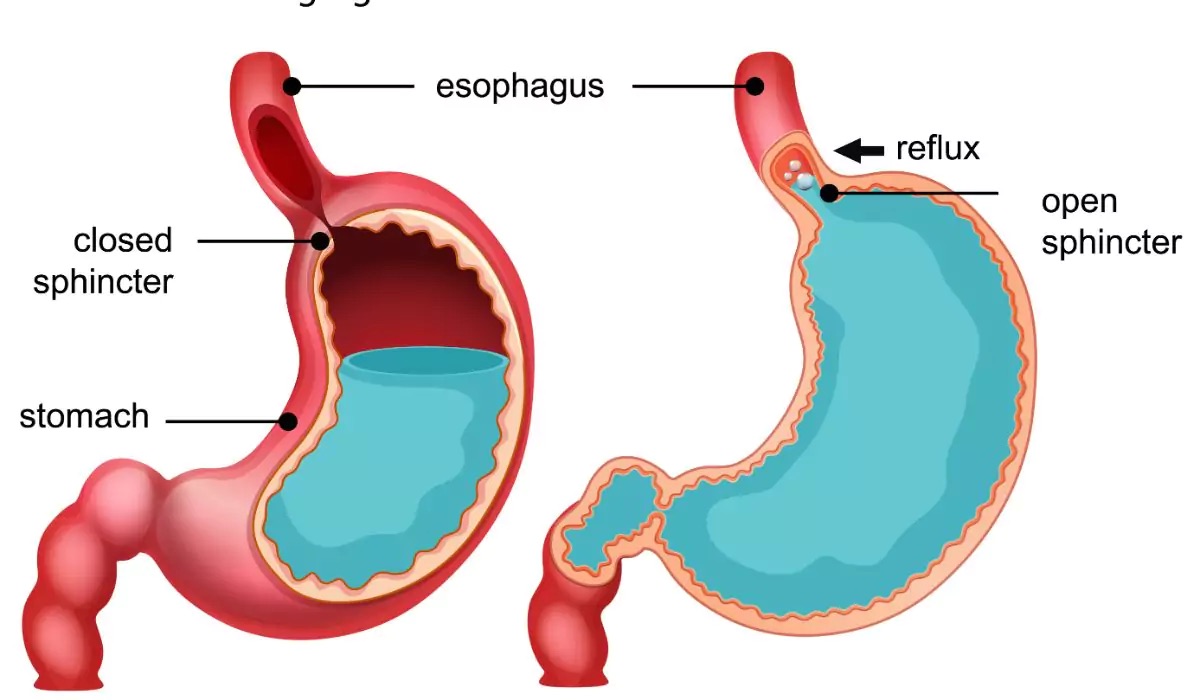
Gastroesophageal Reflux Disease (GERD) is a condition where stomach acid flows back into the esophagus (food pipe).
This backflow irritates the lining of the esophagus and causes uncomfortable symptoms.
GERD is very common and can affect people of any age.
If it happens often and is not treated, it may lead to complications.
Introduction
- The esophagus is the tube that carries food from the mouth to the stomach.
- Normally, a muscle called the lower esophageal sphincter (LES) keeps stomach acid from moving upward.
- In GERD, this muscle becomes weak or relaxes at the wrong time.
- Because of this, acid moves back into the esophagus and causes irritation.
Causes
- Weak or relaxed lower esophageal sphincter (LES) allowing acid to move upward.
- Obesity or excess body weight which increases pressure on the stomach.
- Eating large meals or lying down soon after eating.
- Certain foods such as spicy food, fatty food, chocolate, and caffeine.
Risk Factors
- Being overweight or obese increases pressure inside the abdomen.
- Smoking can weaken the lower esophageal sphincter.
- Pregnancy can increase pressure on the stomach and cause reflux.
- Certain medicines may relax the LES and lead to acid reflux.
Signs and Symptoms
- Heartburn which feels like a burning sensation in the chest.
- Sour or acidic taste in the mouth due to stomach acid.
- Difficulty swallowing or feeling that food is stuck in the throat.
- Chronic cough, hoarseness, or sore throat.
Complications
- Esophagitis which means inflammation of the esophagus lining.
- Narrowing of the esophagus due to repeated irritation and scarring.
- Barrett’s esophagus which increases the risk of esophageal cancer.
- Long-term discomfort and difficulty eating.
Diagnosis
- Doctors may diagnose GERD based on symptoms and medical history.
- Endoscopy can be used to examine the inside of the esophagus.
- pH monitoring helps measure the amount of acid in the esophagus.
- Sometimes imaging tests or other examinations are done.
Conclusion
- GERD is a common digestive disorder caused by acid reflux.
- Early recognition of symptoms helps prevent complications.
- Lifestyle changes and proper treatment can control the disease.
- Medical advice should be taken if symptoms occur frequently.