
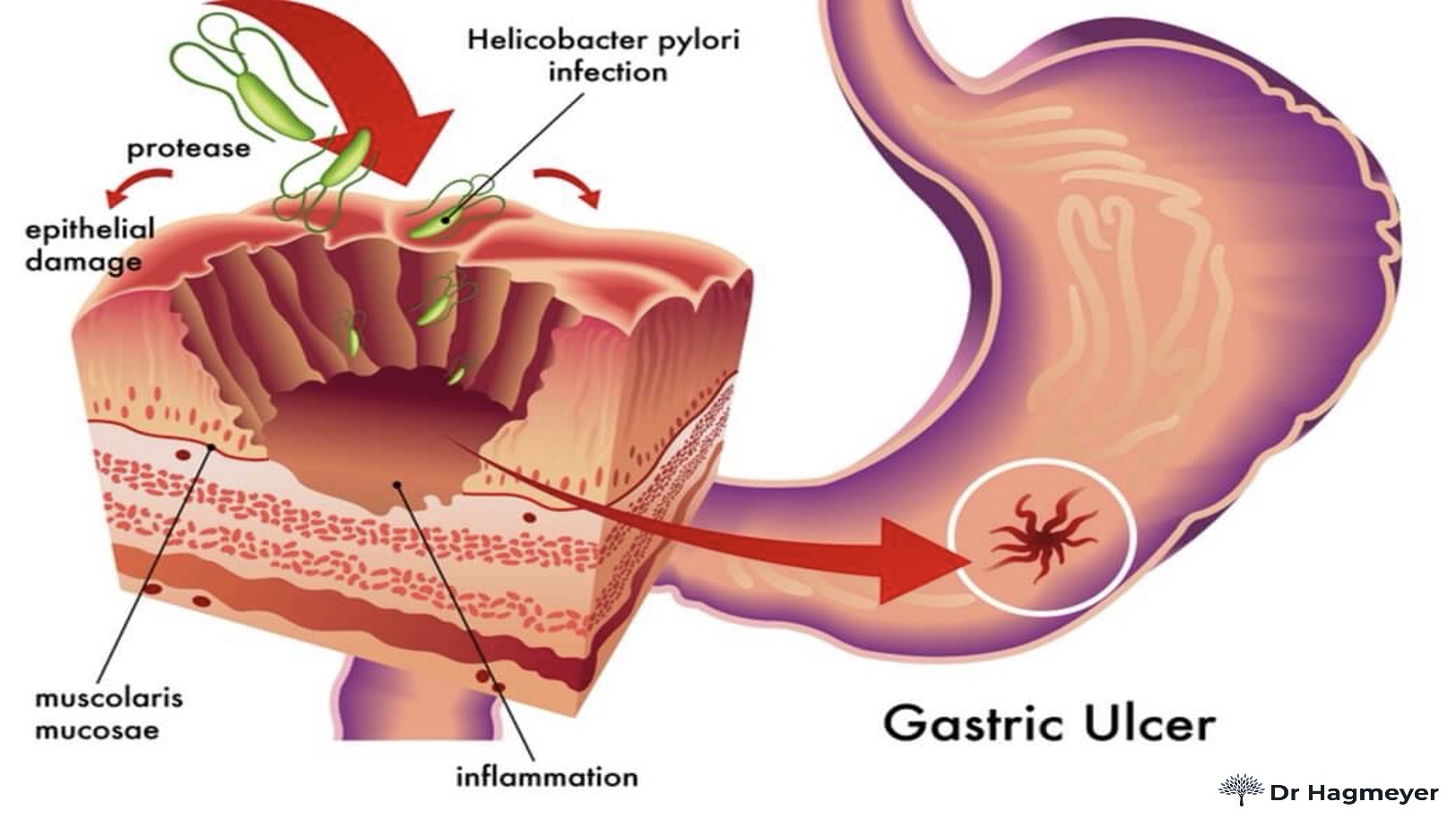
Most people blame stress, spicy food, or late-night suppers when their stomach starts acting up. But for millions worldwide, the real culprit is a tiny spiral-shaped bacterium quietly living in the stomach: Helicobacter pylori, better known as H. pylori. This infection is extremely common—one of the most widespread in the world—yet many people walk around for years without knowing they have it. Left untreated, it can cause ulcers, chronic inflammation, and even stomach cancer. Understanding it is the first step to protecting your health.
What Exactly Is H. pylori?
H. pylori is a hardy bacterium built to survive the stomach’s harsh acidic environment. It spreads through contaminated food, untreated water, and even saliva, which is why it’s more common in places with poor sanitation or crowded living conditions. Once it settles in the stomach, it rarely clears on its own.
How It Causes Trouble Inside the Stomach
H. pylori produces an enzyme called urease that neutralizes stomach acid, creating a protective bubble for the bacteria. From there, it burrows into the stomach lining and triggers inflammation. Over time, this irritation may develop into gastritis, peptic ulcers, changes in the stomach lining, and an increased risk of gastric cancer.
Common Symptoms You Shouldn’t Ignore
Many people have no symptoms at all. But when symptoms appear, they often mimic basic “gastric issues,” such as:
- upper abdominal pain
- bloating or nausea
- reduced appetite
- unexplained weight loss
- frequent burping or indigestion
If these complaints keep returning, testing is worthwhile.
How Doctors Diagnose H. pylori
Testing is simple and reliable:
- Urea breath test: detects urease activity from the bacteria
- Stool antigen test: identifies bacterial proteins
- Endoscopy with biopsy: allows direct evaluation of the stomach lining
- Blood serology: checks for antibodies, though it may not confirm active infection
Treatment Options
H. pylori can be completely eradicated with the right medication combinations. Standard therapies include:
- Triple therapy (10–14 days): proton pump inhibitor + clarithromycin + amoxicillin or metronidazole
- Quadruple therapy: proton pump inhibitor + bismuth + metronidazole + tetracycline
After treatment, follow-up testing is essential to confirm the infection is gone.
The Danger of Leaving It Untreated
Long-term infection can lead to:
- peptic ulcers
- chronic gastritis
- gastric carcinoma
- MALT lymphoma
Early detection and treatment prevent these complications.
How to Lower Your Risk
Prevention focuses on improving hygiene and food safety:
- wash hands regularly
- avoid contaminated or suspicious food and water
- keep kitchen and preparation areas clean
- improve hygiene in shared living spaces
- screen high-risk individuals or families with ulcer history
In Summary
H. pylori is common and often silent, but highly treatable. If recurring stomach discomfort keeps bothering you, consider testing. A clear diagnosis and timely treatment can protect your long-term digestive health.
References
- Malfertheiner P, Megraud F, O’Morain CA, et al. Management of Helicobacter pylori infection—the Maastricht V/Florence Consensus Report. Gut. 2017;66(1):6–30.
- Crowe SE. Helicobacter pylori Infection. N Engl J Med. 2019;380:1158–1165.
- Kusters JG, van Vliet AH, Kuipers EJ. Pathogenesis of Helicobacter pylori Infection. Clin Microbiol Rev. 2006;19(3):449–490.
- Hooi JKY, Lai WY, Ng WK, et al. Global Prevalence of Helicobacter pylori Infection: Systematic Review and Meta-analysis. Gastroenterology. 2017;153(2):420–429.
- National Institute of Diabetes and Digestive and Kidney Diseases (NIDDK). Helicobacter pylori (H. pylori) and Peptic Ulcers.
- World Health Organization. Helicobacter pylori Fact Sheet.
- Chey WD, Leontiadis GI, Howden CW, Moss SF. ACG Clinical Guideline: Treatment of Helicobacter pylori Infection. Am J Gastroenterol. 2017;112:212–239.