
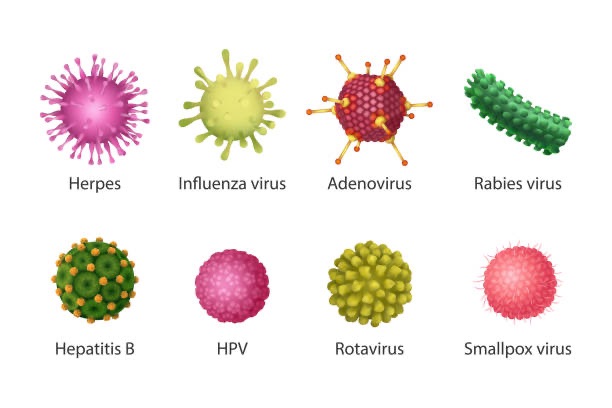
Viruses are tiny, invisible agents that have shaped human history in ways few other organisms can. They sit on the boundary between living and non-living, waiting for the right moment to invade a host. Once they enter a cell, they turn it into a factory that produces more of themselves. Despite their simplicity, viruses play huge roles in medicine, immunity, and public health.
What Exactly Are Viruses?
A virus is a microscopic infectious particle that cannot reproduce on its own. It must enter a living cell—human, animal, plant, or even bacterial—to survive and multiply. Outside a host, a virus is basically a packet of genetic instructions wrapped in protein. That is why scientists say viruses are “non-living” when they are outside a cell.
How a Virus Is Built
Most viruses share the same simple structure. They contain genetic material—either DNA or RNA—protected by a protein shell called a capsid. Some viruses also carry a fatty envelope on the outside. This structure influences how each virus attaches to cells, enters them, and takes control of their machinery.
Key Characteristics of Viruses
- Acellular — they are not made of cells.
- Cannot reproduce without a host cell.
- Obligate intracellular parasites.
- Extremely small — much smaller than bacteria.
How Viruses Replicate
Once a virus enters the body, it follows a predictable cycle:
- Attachment — the virus locks onto a host cell.
- Penetration — it injects or releases its genetic material inside.
- Replication — the host cell begins copying the viral genome.
- Assembly — new viral particles form inside the cell.
- Release — new viruses burst out, ready to infect more cells.
Different Types of Viruses
- DNA viruses — carry DNA as genetic material.
- RNA viruses — use RNA instead of DNA.
- Bacteriophages — infect bacteria.
- Retroviruses — replicate through reverse transcription.
Diseases Caused by Viruses
- Influenza
- COVID-19 (SARS-CoV-2)
- HIV/AIDS
- Hepatitis (A, B, C and others)
Prevention and Control
- Vaccination — trains the immune system to recognize viruses.
- Good hygiene — reduces transmission.
- Antiviral drugs — help control viral infections.
- Public health measures — limit large-scale outbreaks.
How LCHF (Low-Carb, High-Fat) Living May Support Immunity
A healthy immune system depends on stable energy supply, metabolic flexibility, and low inflammation. This is where a low-carb, high-fat lifestyle may offer advantages. By reducing sugar intake, LCHF helps lower chronic inflammation—an environment where viruses tend to thrive more easily. Stable blood sugar also supports stronger immune cell function, since high glucose can impair white blood cells and increase susceptibility to infections. Many people on LCHF report fewer colds, better metabolic health, and steadier energy—factors that create a stronger foundation for the body when facing viral challenges.
Final Thoughts
Viruses may be simple, but their impact on human life is enormous. Understanding how they work helps us build better strategies to prevent and treat viral diseases. With ongoing scientific research, improved hygiene, vaccines, and good lifestyle choices—including metabolic health practices like LCHF—we have more tools than ever to protect ourselves in a world full of microscopic threats.
References
- Fields BN, Knipe DM, Howley PM. Fields Virology. Wolters Kluwer Health.
- Peterhans E. Oxidants and antioxidants in viral diseases. Veterinary Microbiology. 1997.
- Paoli A et al. Ketogenic diet and immune function. Nutrition & Metabolism. 2013.
- Hotamisligil GS. Inflammation and metabolic disorders. Nature. 2006.