
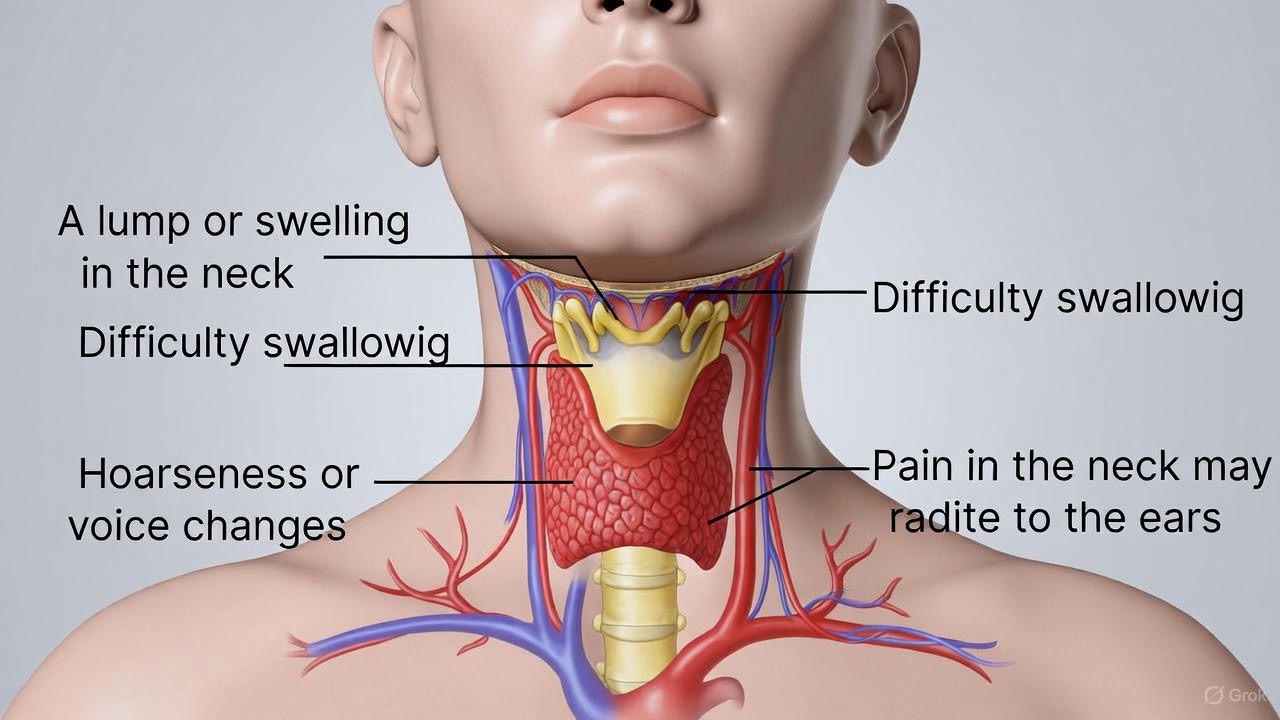
Thyroid cancer is often treatable when found early. This article explains the thyroid’s role, risk factors, symptoms, diagnosis, treatment options, and prognosis in plain language.
Introduction
Thyroid cancer rarely makes headlines, yet its numbers have quietly climbed over the past few decades. Many people only discover a problem after noticing a small lump in the neck or a sudden change in their voice. The good news is that most thyroid cancers are treatable — especially when caught early. Understanding how this disease starts, how it behaves, and what treatment looks like can make a world of difference.
Understanding the Thyroid: A Small Gland With a Big Job
The thyroid sits at the base of your neck, shaped like a small butterfly wrapping around your windpipe. Despite its size, it produces hormones that control how fast you burn energy, how warm you feel, and how your heart beats. It is made of two lobes connected by a thin bridge called the isthmus.
When the cells inside this gland begin to grow abnormally and no longer follow normal control signals, thyroid cancer forms.
Why Thyroid Cancer Happens: Causes and Risk Factors
Thyroid cancer doesn’t have just one cause. Several factors can raise risk:
- Genetic mutations — Changes in certain genes (for example, BRAF, RAS, RET/PTC) can trigger uncontrolled thyroid cell growth.
- Childhood radiation exposure — Radiation to the head or neck during early life can significantly increase risk later.
- Family history — Some inherited syndromes, especially MEN2, predispose individuals to medullary thyroid cancer.
- Age and gender — Women are several times more likely to develop thyroid cancer, particularly in middle age.
Even so, many patients have no clear risk factors at all.
Different Types of Thyroid Cancer
Thyroid cancer comes in several distinct forms. Each behaves differently and may require different treatments.
Papillary Carcinoma
The most common type. Slow-growing and usually responds very well to treatment.
Follicular Carcinoma
More likely than papillary cancer to spread through the bloodstream to distant organs such as the lungs or bones.
Medullary Carcinoma
Arises from the thyroid’s C-cells, which produce the hormone calcitonin. Often linked to hereditary syndromes and may require genetic testing.
Anaplastic Carcinoma
A rare but extremely aggressive form. Requires urgent, intensive care.
Key Symptoms You Should Watch For
Thyroid cancer often starts quietly. As it grows, it may cause:
- A painless lump or swelling at the front of the neck
- Hoarseness or persistent voice changes
- Difficulty swallowing or breathing
- Neck discomfort that may radiate toward the ears
Most thyroid nodules are benign, but persistent symptoms should prompt medical evaluation.
How Doctors Diagnose Thyroid Cancer
Diagnosis typically involves multiple steps:
- Physical examination of the neck
- Thyroid ultrasound to identify suspicious nodules
- Fine-needle aspiration biopsy to examine cells under a microscope
- Blood tests, including thyroid hormone levels and tumor markers like thyroglobulin or calcitonin
These steps help determine the type of cancer and the best treatment approach.
Treatment Options
Surgery
The primary approach. Surgeons may remove the whole thyroid (thyroidectomy) or only one lobe (lobectomy), depending on the case.
Radioactive Iodine Therapy (RAI)
Used mainly for papillary and follicular cancers. RAI destroys remaining thyroid cells after surgery with targeted radiation.
Thyroid Hormone Therapy
Patients take daily hormone pills for the rest of their lives. This replaces missing thyroid hormones and helps suppress TSH (thyroid-stimulating hormone) to lower the risk of recurrence.
Targeted Therapy or Chemotherapy
Used for advanced or aggressive cancers that do not respond to standard treatments.
Possible Complications
While treatment is generally safe, some complications may occur:
- Voice changes if nerves to the vocal cords are affected
- Low calcium levels (hypocalcemia) if the parathyroid glands are disturbed during surgery
- Cancer recurrence in lymph nodes or distant organs
Close follow-up helps manage these risks early.
Prevention, Monitoring, and Outlook
There is no guaranteed prevention, but smart habits help:
- Avoid unnecessary radiation, especially for children.
- Perform simple neck self-checks and attend regular medical evaluations.
- Know your family history—especially for medullary thyroid cancer.
Most thyroid cancers — especially papillary carcinoma — have excellent long-term outcomes with appropriate treatment.
Summary
Thyroid cancer usually responds well to early treatment. Surgery and radioactive iodine remain the foundation of care. Lifelong monitoring supports long-term health and helps detect recurrence early.
References
- American Thyroid Association. Thyroid Cancer—Patient Resources and Guidelines. (See: thyroid.org.)
- National Cancer Institute. Thyroid Cancer—Patient Version. (See: cancer.gov/types/thyroid.)
- Haugen BR, et al. 2015 American Thyroid Association Management Guidelines for Adult Patients with Thyroid Nodules and Differentiated Thyroid Cancer. Thyroid.
- Wells SA Jr, et al. Revised American Thyroid Association Guidelines for the Management of Medullary Thyroid Carcinoma. Thyroid.
- World Health Organization. Thyroid Cancer: Epidemiology and Risk Factors. (WHO website.)
- Dean DS, Gharib H. Epidemiology of Thyroid Nodules and Cancer. Endocrinology and Metabolism Clinics of North America.