
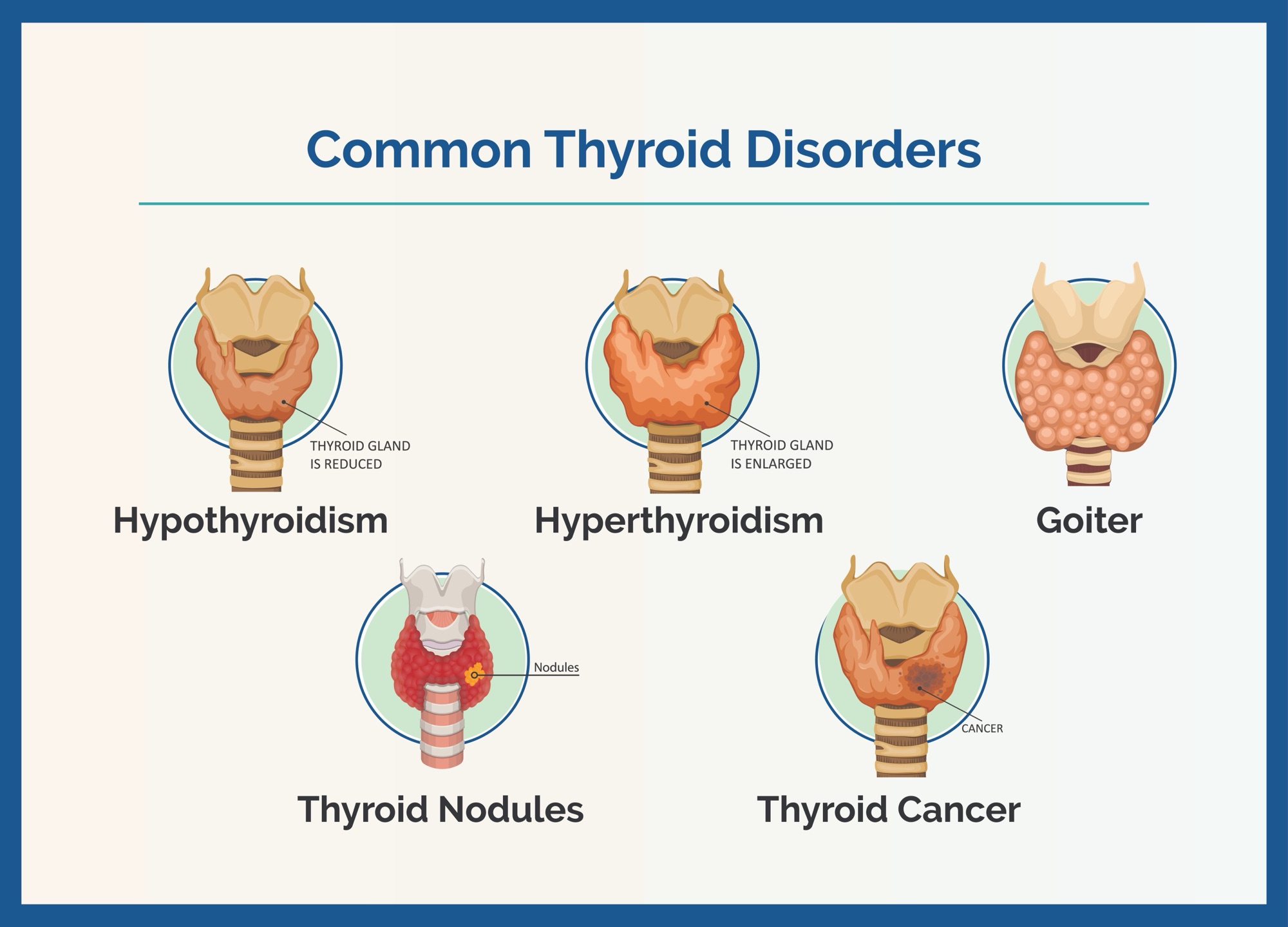
Thyroid disorders are conditions that affect how your thyroid gland works, especially its hormone production.
This small gland plays a major role in controlling metabolism, energy levels, body temperature, and many vital functions. When the thyroid produces too much or too little hormone, the whole body can fall out of balance.
What Is the Thyroid Gland?
The thyroid is a small, butterfly-shaped gland located at the front of the neck.
It produces two important hormones:
- T3 (triiodothyronine)
- T4 (thyroxine)
These hormones regulate metabolism, growth, and body temperature. In simple terms, the thyroid acts as the body’s “speed control system.”
Main Types of Thyroid Disorders
- Hypothyroidism – too little thyroid hormone
- Hyperthyroidism – too much thyroid hormone
- Goiter – enlargement of the thyroid gland
- Thyroid nodules – lumps in the thyroid
Hypothyroidism (Underactive Thyroid)
This occurs when the thyroid does not produce enough hormones, causing body processes to slow down.
Causes
- Autoimmune disease (Hashimoto’s thyroiditis)
- Iodine deficiency
- Thyroid damage from surgery or radiation
Symptoms
- Fatigue and weakness
- Weight gain without increased eating
- Cold intolerance
- Dry skin and hair loss
Hyperthyroidism (Overactive Thyroid)
This occurs when the thyroid produces excessive hormones, speeding up body functions.
Causes
- Autoimmune disease (Graves’ disease)
- Overactive thyroid nodules
- Excess thyroid hormone medication
Symptoms
- Rapid heartbeat
- Increased sweating
- Weight loss despite normal appetite
- Anxiety and sleep problems
Diagnosis
- Blood tests (T3, T4, TSH)
- Ultrasound imaging
- Radioactive iodine testing
Treatment
- Hypothyroidism: Hormone replacement therapy
- Hyperthyroidism: Medication, radioactive iodine, or surgery
Treatment depends on the underlying cause and severity.
Prevention and Management
- Ensure adequate iodine intake
- Go for regular medical checkups
- Follow prescribed treatment plans
Thyroid disorders are often overlooked. If you experience unexplained fatigue, weight changes, or low energy, it is worth checking your thyroid function.