
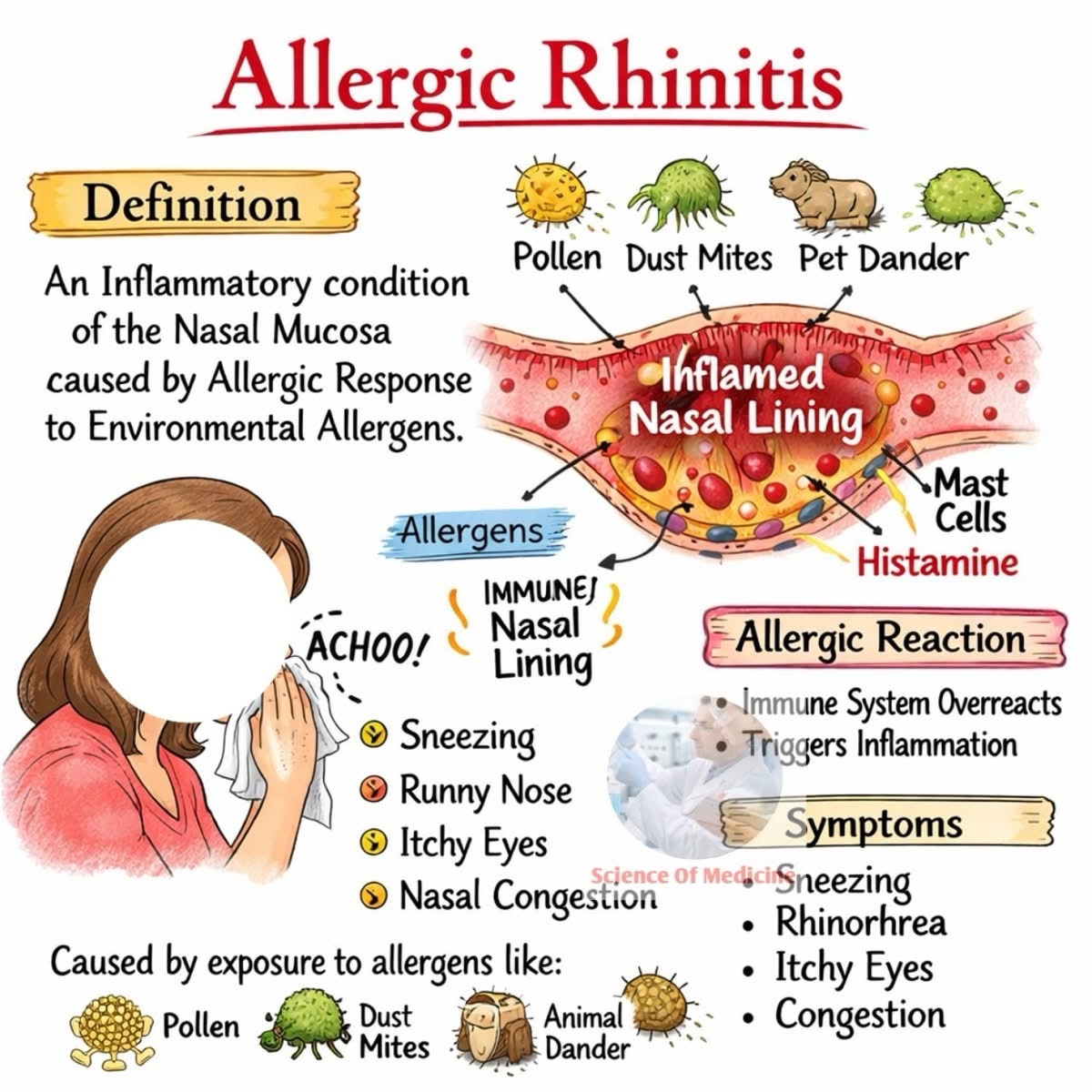
Allergic rhinitis is a chronic inflammatory condition of the nasal lining triggered by allergens. It is mediated by Immunoglobulin E (IgE) hypersensitivity reactions. Although many people consider it minor, it can significantly affect sleep, concentration, school performance, and overall quality of life.
Types of Allergic Rhinitis
- Seasonal Allergic Rhinitis – Commonly known as hay fever, usually triggered by pollen.
- Perennial Allergic Rhinitis – Occurs year-round due to indoor allergens such as dust mites, molds, or pet dander.
- Occupational Allergic Rhinitis – Caused by workplace exposure (e.g., chemicals, flour dust, latex).
What Happens Inside the Body?
The condition develops through an immune response:
- First exposure to an allergen leads to sensitization and production of IgE antibodies.
- Upon re-exposure, allergens bind to IgE on mast cells.
- This triggers histamine release and inflammatory mediators.
- The result is nasal swelling, inflammation, and excessive mucus production.
Common Causes
- Pollen, dust mites, molds
- Pet dander (cats and dogs)
- Family history of asthma, eczema, or other atopic conditions
Symptoms to Watch For
- Frequent sneezing
- Nasal itching
- Watery nasal discharge (runny nose)
- Nasal congestion
- Postnasal drip
- Itchy, red, watery eyes
Symptoms may come and go or persist depending on allergen exposure.
How Is It Diagnosed?
- Detailed medical history
- Physical examination
- Skin prick testing to identify specific allergens
- Serum IgE testing (supportive evidence)
Treatment & Management
- Avoidance of allergens and environmental control
- Antihistamines to relieve sneezing and itching
- Intranasal corticosteroids (first-line treatment for moderate to severe symptoms)
Proper and consistent treatment can greatly improve daily functioning.
Possible Complications
- Chronic sinusitis
- Otitis media (middle ear infection)
- Sleep disturbances
- Reduced academic or work performance
Prevention Tips
- Reduce allergen exposure at home
- Seek early diagnosis and treatment
- Maintain regular follow-up care
Allergic rhinitis may not be life-threatening, but when ignored, it can quietly disrupt everyday life.