
There’s a simple habit many people don’t talk about.
When life feels uncertain, you quietly open your banking app… check your balance… and somehow feel better.
Not excited. Not overjoyed. Just… calmer.
Almost like something inside you settled down.
That reaction is real. But it’s not about money in the way most people think.
💰 Money Doesn’t Create Happiness — It Reduces Threat
Money doesn’t automatically make someone happy. There are plenty of wealthy people who are still anxious and restless.
So what’s really happening?
Money, especially savings, reduces uncertainty.
Your brain is extremely sensitive to uncertainty. From a biological perspective, uncertainty signals potential danger.
- Will I have enough?
- What if something goes wrong?
- What happens if I lose control?
When you have savings, you send a powerful message to your brain:
“I have a buffer. I can handle problems.”
🧠 Your Brain Is Always Asking One Question
At a deep level, your brain is constantly asking:
“Am I safe?”
Not rich. Not successful. Just safe.
When that sense of safety improves, your entire internal state shifts.
🧪 The Chemistry Behind That Feeling
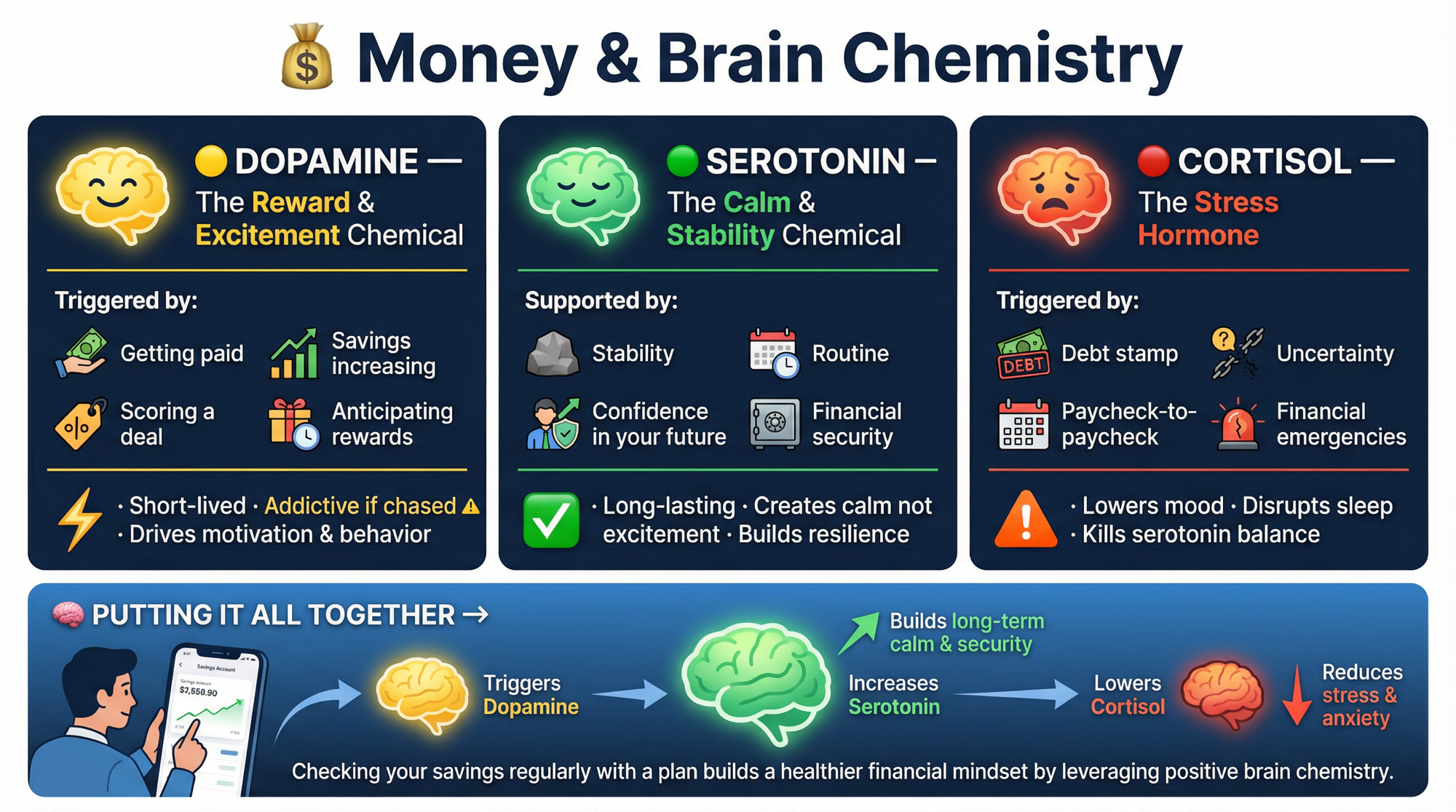
1. Dopamine — The Quick Lift
The small “nice” feeling when checking your balance comes from dopamine.
It responds to progress, rewards, and wins. But it is short-lived.
2. Serotonin — The Stable Calm
Serotonin is linked to emotional stability and confidence.
Saving money supports it indirectly by reducing chaos and increasing control.
3. Cortisol — The Hidden Stress
Cortisol rises when there is financial stress and uncertainty.
High cortisol leads to:
- Anxiety
- Poor sleep
- Mood swings
Saving money helps lower perceived threat, allowing your brain to relax.
🥩 The Missing Piece — Your Biology Still Matters
You can have financial stability and still feel unstable.
Why? Because your internal environment matters just as much.

🍚 Blood Sugar — The Silent Mood Controller
A high-carb, high-sugar diet creates a cycle:
- Blood sugar spikes
- Insulin rises
- Blood sugar crashes
- Stress hormones increase
This leads to:
- Mood swings
- Cravings
- Brain fog
- Irritability
🧈 A More Stable Internal Environment
A diet focused on:
- Protein (meat, eggs)
- Healthy fats
- Lower carbohydrates
Helps create:
- Stable energy
- Better focus
- Reduced stress signals
Instead of emotional highs and crashes, you get consistency.
🧩 External Stability + Internal Stability
True balance comes from both:
- External: Savings, financial security
- Internal: Stable nutrition, balanced hormones
This creates a grounded and resilient state.
⚠️ The Trap to Avoid
Saving money can turn into stress if it becomes obsessive or fear-driven.
Diet can also backfire if it becomes extreme or restrictive.
Stability should feel calm—not tense.
🔥 A More Honest Perspective
Most people chase excitement and quick highs.
But real well-being is quieter:
- Clear thinking
- Stable mood
- Feeling in control
🧠 Final Thought
Saving money doesn’t create happiness.
It reduces uncertainty.
And when uncertainty drops, your brain finally relaxes.
Combine that with a stable way of eating, and you stop chasing temporary relief—and start building a steady, reliable state of mind.