
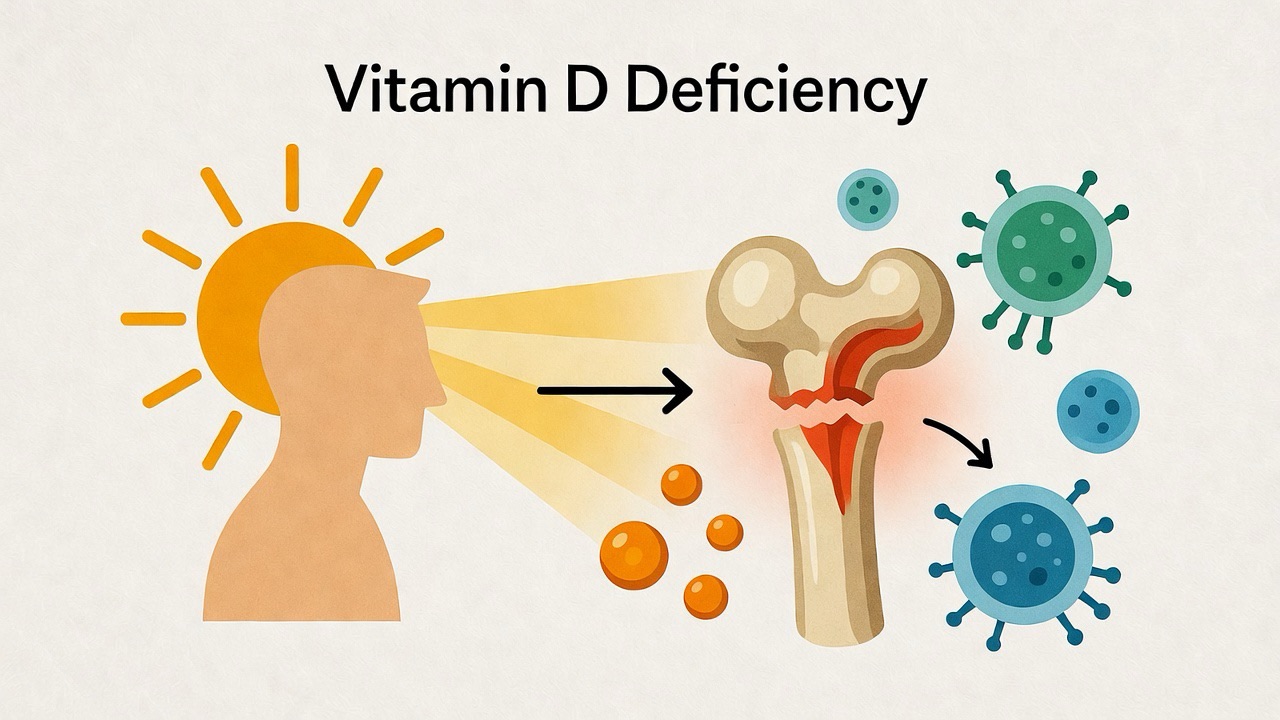
Vitamin D is a fat-soluble vitamin essential for bone health, muscle function, and immune support. Despite its importance, vitamin D deficiency is widespread globally. Many people fail to obtain sufficient vitamin D from sunlight, diet, or supplementation, often without obvious early symptoms.
Why Vitamin D Matters
Vitamin D facilitates the absorption of calcium and phosphate—two key minerals required for maintaining strong bones and teeth. It also plays a role in immune regulation, muscle performance, and mood stability. When vitamin D levels are low, mineral balance and bone integrity gradually decline.
Causes of Vitamin D Deficiency
- Limited sunlight exposure, reducing vitamin D synthesis in the skin
- Low dietary intake of vitamin D-rich foods such as fatty fish, eggs, and fortified dairy products
- Malabsorption disorders including Crohn’s disease and celiac disease
- Liver or kidney disease impairing activation of vitamin D
Signs and Symptoms
- Bone pain and proximal muscle weakness
- Increased fracture risk due to reduced bone mineral density
- Chronic fatigue, low mood, or depressive symptoms
- In children, severe deficiency may lead to rickets with bone softening
Diagnosis
Vitamin D status is assessed using a blood test measuring 25-hydroxyvitamin D.
- < 50 nmol/L (20 ng/mL): Vitamin D deficiency
- 50–75 nmol/L: Vitamin D insufficiency
Supporting Blood Markers: Calcium and Phosphate (mmol/L)
Calcium and phosphate levels may remain within the reference range in early deficiency. However, abnormalities become more apparent in prolonged or severe vitamin D deficiency and help support the diagnosis.
- Calcium (total serum):
Normal range: 2.15 – 2.55 mmol/L
Vitamin D deficiency often presents with low-normal or mildly reduced calcium levels due to impaired intestinal absorption. - Phosphate (serum):
Normal adult range: 0.80 – 1.45 mmol/L
Low phosphate is commonly observed in prolonged or severe deficiency. - Parathyroid hormone (PTH):
Frequently elevated, reflecting secondary hyperparathyroidism as the body attempts to maintain calcium balance.
This biochemical pattern—low vitamin D, low or low-normal calcium, reduced phosphate, and elevated PTH—is characteristic of clinically significant vitamin D deficiency.
Treatment
- Vitamin D supplementation (D2 or D3) as guided by a healthcare professional
- Safe sunlight exposure for approximately 10–30 minutes several times per week
- Dietary inclusion of vitamin D-rich foods such as fatty fish and fortified products
Prevention
- Regular sunlight exposure remains the most effective natural strategy
- A nutrient-dense diet including vitamin D sources
- Routine screening for high-risk groups such as older adults, pregnant women, and individuals with minimal sun exposure
Conclusion
Vitamin D is fundamental to bone integrity, muscle strength, and immune resilience. Deficiency is common but preventable. Evaluating vitamin D alongside calcium and phosphate levels allows earlier recognition and more effective intervention, helping prevent long-term skeletal complications.