
GLP-1 is often marketed today as a “weight loss hormone.” But in reality, it is something far more fundamental — a natural regulator your body uses every single day.
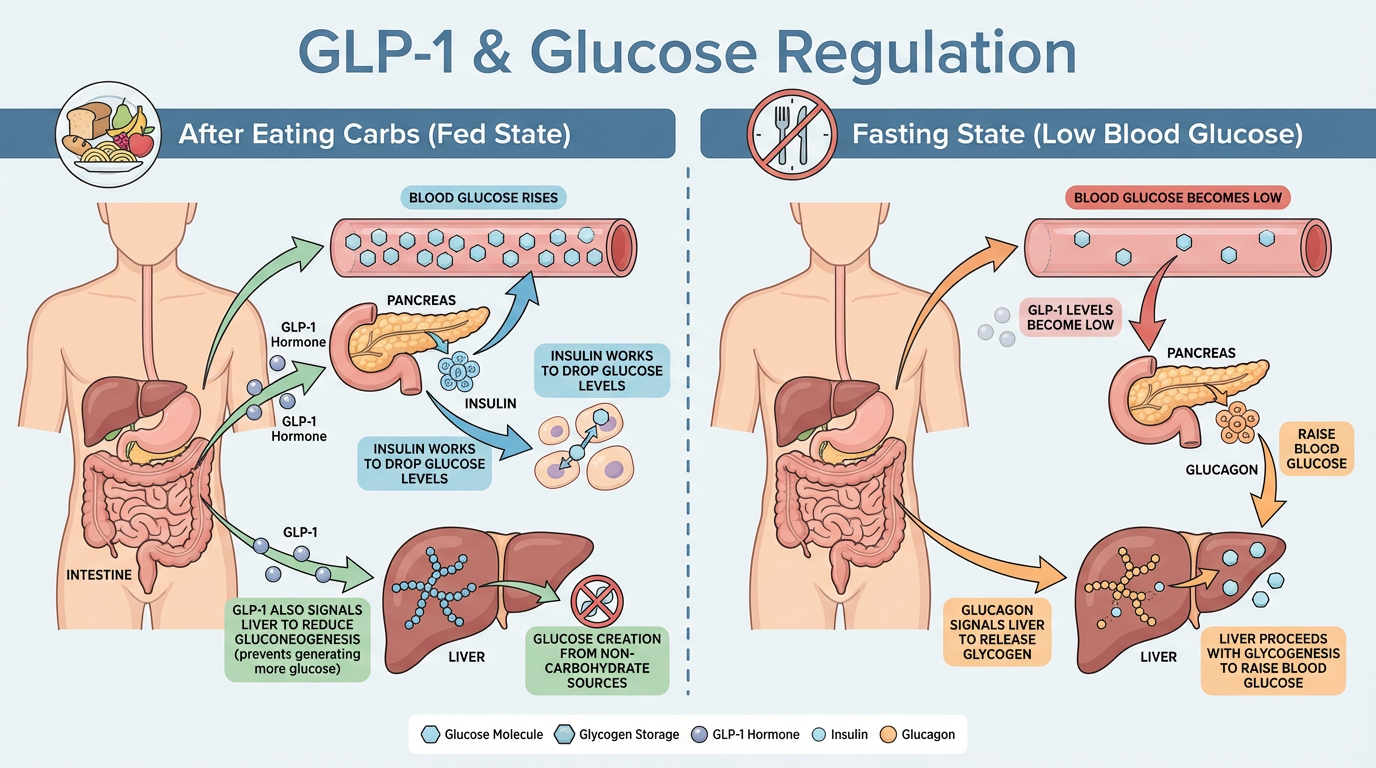
To truly understand metabolic health, we need to look at the full picture — how GLP-1, insulin, and glucagon work together in a continuous cycle.
The Fed State — What Happens After You Eat Carbohydrates
When you consume carbohydrates, your body enters what we call the fed state.
- Your intestine releases GLP-1
- GLP-1 signals the pancreas to release insulin
- Blood glucose rises from the meal
- Insulin helps bring glucose levels back down
- At the same time, GLP-1 signals the liver to reduce glucose production (gluconeogenesis)
This is your body’s blood sugar lowering mode.
The Fasting State — When Blood Sugar Drops
During fasting or between meals, the body shifts into a different mode.
- Blood glucose begins to fall
- GLP-1 levels decrease
- The pancreas releases glucagon instead of insulin
- Glucagon signals the liver to release stored glycogen
- The liver raises blood glucose back to a stable level
This is your body’s blood sugar raising mode.
The Key Insight Most People Miss
Many people believe the pancreas only produces insulin.
That is not true.
The pancreas produces both:
- Insulin — lowers blood sugar
- Glucagon — raises blood sugar
This is not a one-direction system. It is a dual regulation system.
True metabolic health depends on how well these two hormones work together — at the right time, in the right amount.
Why Modern Metabolism Breaks Down
When someone consumes a high-carbohydrate diet frequently, insulin is constantly stimulated.
Over time, this disrupts the natural balance between insulin and glucagon.
This imbalance is at the core of many metabolic issues today.
Final Thought
The real issue is not just whether your blood sugar is high or low.
The real question is — is your regulatory system still working properly?
Metabolic health is not about forcing outcomes.
It is about restoring balance.
Key Takeaways: GLP-1, Insulin, and Glucagon
- The “Balance” Act: Blood sugar is managed by a tug-of-war between Insulin (which lowers sugar) and Glucagon (which raises it).
- GLP-1’s Role: This gut hormone signals your pancreas to release insulin and suppress glucagon, preventing dangerous sugar spikes after meals.
- Keto Synergy: A Low-Carb High-Fat (LCHF) diet naturally supports GLP-1 pathways, helping to reduce insulin resistance and “quiet” constant hunger.
- Metabolic Health: Understanding these hormones is the key to Type 2 Diabetes remission and achieving long-term energy stability without “crashing.”
- Expert Tip: For those in Johor, we offer specialized LCHF supplies at our store to help you manage these hormones through real food.