
When people talk about blood sugar problems, one organ always gets the spotlight:
The pancreas.
The common belief is simple:
Damaged pancreas → low insulin → high blood sugar
This is true — but it’s incomplete.
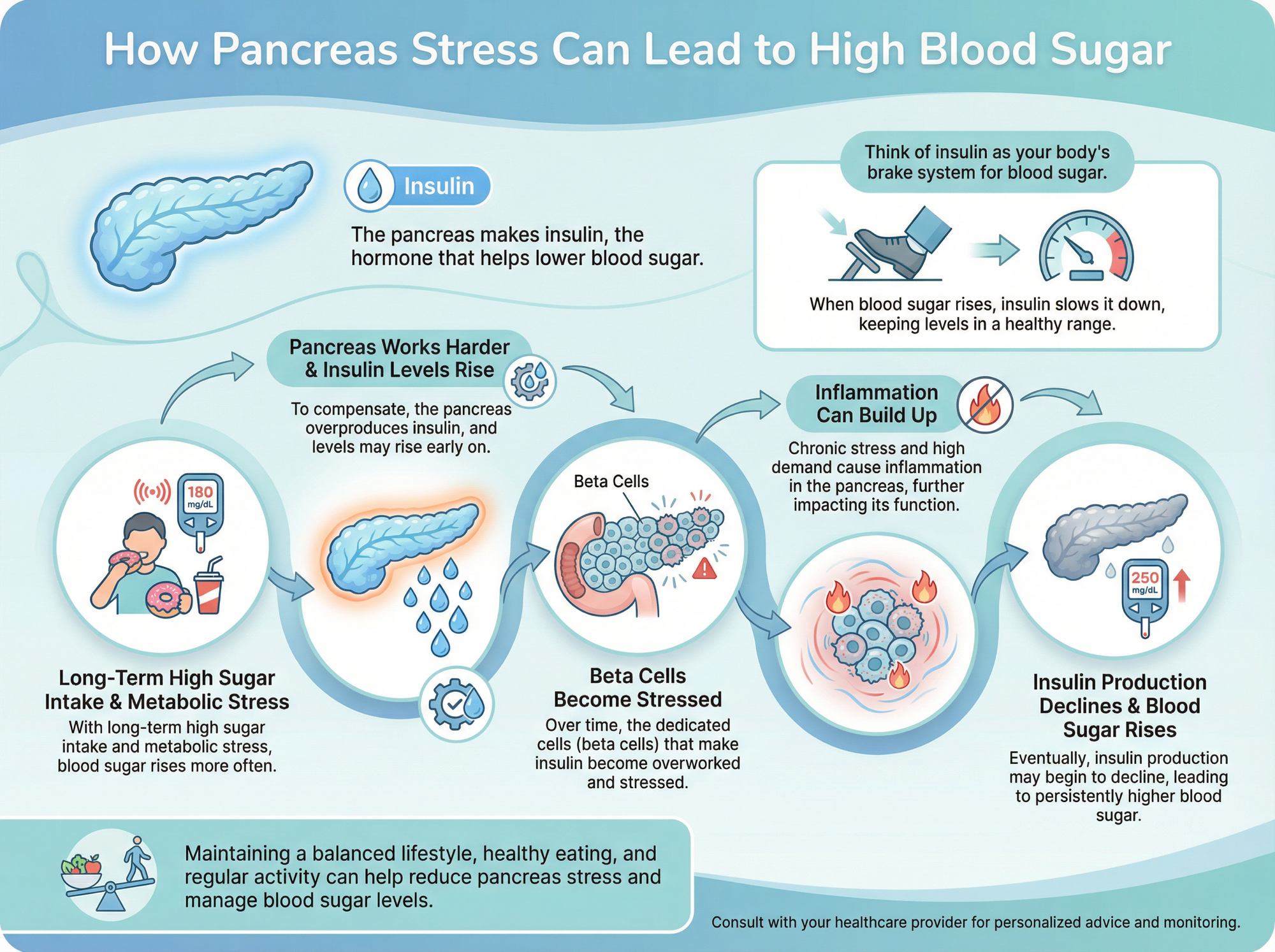
What the pancreas actually does
The pancreas produces insulin, the hormone responsible for lowering blood sugar.
Think of insulin as:
The brake system of your body.
What happens under stress
With long-term high sugar intake and metabolic stress:
- Blood sugar rises frequently
- The pancreas works harder to compensate
- Insulin levels increase (early stage)
Over time:
- Beta cells become stressed
- Inflammation builds up
- Insulin production begins to decline
The problem most people miss
Even when insulin starts to fail, that alone does not explain everything.
Because blood sugar is controlled by more than just insulin.
Low carb: what it really does
A properly structured low-carb diet helps to:
- Reduce incoming glucose
- Lower insulin demand
- Reduce stress on the pancreas
It reduces pressure — and gives the system a chance to recover.
But here’s the key truth
Fixing the pancreas alone is not enough.
Because even with low insulin, your blood sugar can remain high.
Why?
Because the liver is still producing glucose.
What’s next
In Part 2, we will break down the real driver behind persistent high blood sugar:
The liver — and why it keeps producing glucose even when you don’t eat.