
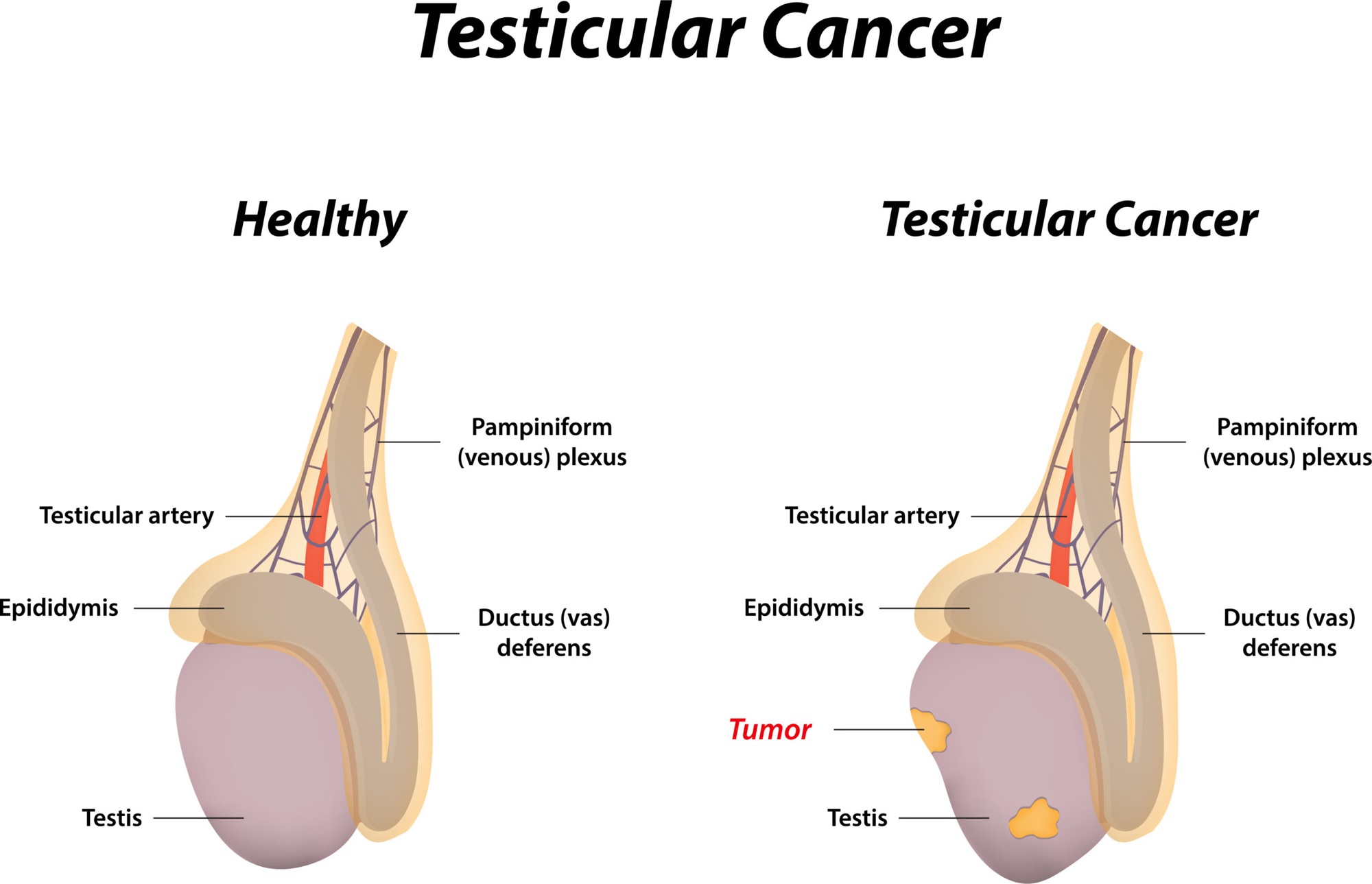
Let’s be honest — most men don’t think about their testicles unless something feels wrong. And even then, many choose to ignore it.
That’s exactly why testicular cancer often gets overlooked in the early stage — even though it is one of the most treatable cancers if caught early.
What Is Testicular Cancer?
Testicular cancer starts in the testicles, the male organs responsible for producing sperm and testosterone.
It’s not very common, but here’s the surprising part — it mainly affects young men, especially those between 15 and 35 years old.
The good news? When detected early, the survival rate is very high.
Why You Shouldn’t Ignore It
Unlike many other cancers, testicular cancer often gives early warning signs. The problem is not lack of symptoms — it’s lack of awareness.
Many men assume:
- “It doesn’t hurt, so it must be nothing.”
- “I’m still young, cancer won’t happen to me.”
- “I’ll wait and see first.”
That delay is where risk begins.
Common Signs to Watch For
- A painless lump or swelling in one testicle
- A feeling of heaviness in the scrotum
- Dull pain in the lower abdomen or groin
- Sudden fluid buildup
Notice something important — pain is not always present. That’s why this condition can quietly progress.
What Causes It?
There is no single cause, but several risk factors increase the chances:
- Undescended testicle (since birth)
- Family history
- Previous testicular cancer
- Young adult age group
How It Is Diagnosed
If something feels off, don’t guess — get it checked.
- Doctor’s physical examination
- Ultrasound scan
- Blood tests (tumor markers)
- CT scan if needed
These tests are straightforward and can give clear answers quickly.
Treatment: More Effective Than You Think
Many people panic when they hear the word “cancer,” but testicular cancer is different.
It is one of the most treatable cancers, especially when caught early.
- Surgery to remove the affected testicle
- Chemotherapy if needed
- Radiation therapy (mainly for certain types)
Doctors will choose the best approach based on your condition.
The Simple Habit That Can Save You
This is where most men fail — not because it’s difficult, but because they never start.
A monthly self-check takes less than a minute.
- Feel for any lump or unusual change
- Notice size, shape, or heaviness
- Don’t ignore anything unusual
It’s simple, private, and could make all the difference.
Final Thoughts
Testicular cancer is rare, but it targets men in their prime.
The real danger is not the disease itself — it’s delay, denial, and neglect.
Know your body. Check regularly. Act early.
Because when it comes to this condition, early action doesn’t just help — it saves lives.