
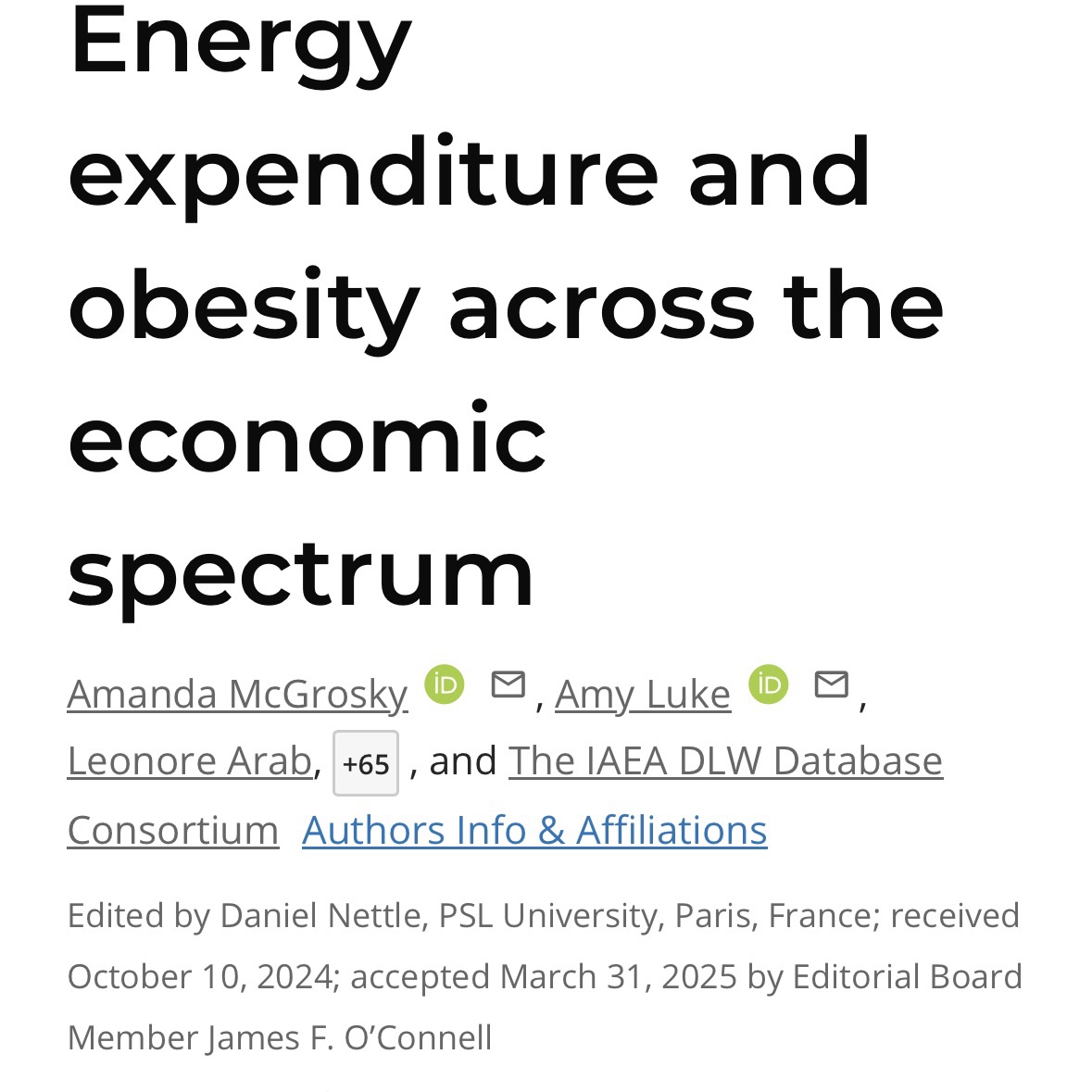
A groundbreaking study published in PNAS challenges the age-old belief that sedentary lifestyles are to blame for rising global obesity. Researchers analyzed real-world data from 4,213 adults across 34 populations—including hunter-gatherers, farmers, and urban dwellers—to understand how energy use and diet relate to body fat. Spoiler: the problem isn’t that we move too little—it’s that we eat too much of the wrong stuff.
🌐 The Most Comprehensive Energy Study Ever
Using the gold-standard doubly labeled water method, scientists measured:
- Total Energy Expenditure (TEE) – daily calories burned
- Basal Energy Expenditure (BEE) – calories burned at rest
- Activity Energy Expenditure (AEE) – calories burned through movement
- Body composition – BMI and body fat %
- Dietary intake – % of calories from ultra-processed foods (UPFs)
📊 What They Found
- People in developed economies had higher body weight, BMI, and body fat.
- They also had higher TEE, BEE, and AEE, mainly because of larger body size.
- After adjusting for size, TEE and BEE were 6–11% lower in richer nations.
- Interestingly, AEE was higher, showing that people in wealthier countries aren’t necessarily less active.
- TEE explained only ~10% of the increase in body fat associated with economic development.
🍔 Diet: The Real Culprit
For the 25 populations with dietary data:
- Higher consumption of ultra-processed foods strongly correlated with higher body fat.
- UPFs tend to be energy-dense, highly digestible, and designed to be addictive.
- These foods disrupt natural fullness cues, leading to overconsumption and fat storage.
“Differences in body fat between rich and poor countries were 10× greater than those linked to calories burned,” researchers noted.
🔬 How Our Bodies Adapt
This study supports the “constrained energy expenditure” model—which argues our bodies reallocate energy instead of endlessly increasing calorie burn. That means even if we’re more active, our metabolism compensates elsewhere, limiting our overall energy use.
🧭 What This Means for Public Health
- Exercise is essential for overall health, but not the primary solution to obesity.
- Reforming our diets—especially cutting back on UPFs—is key to reducing body fat.
- Health campaigns should shift from “move more” to “eat smarter” and “fix the food environment”.
Final Thought
Obesity isn’t a failure of motivation or movement—it’s a symptom of how modern societies eat. Tackling it means changing the foods we normalize, not just the workouts we preach.