
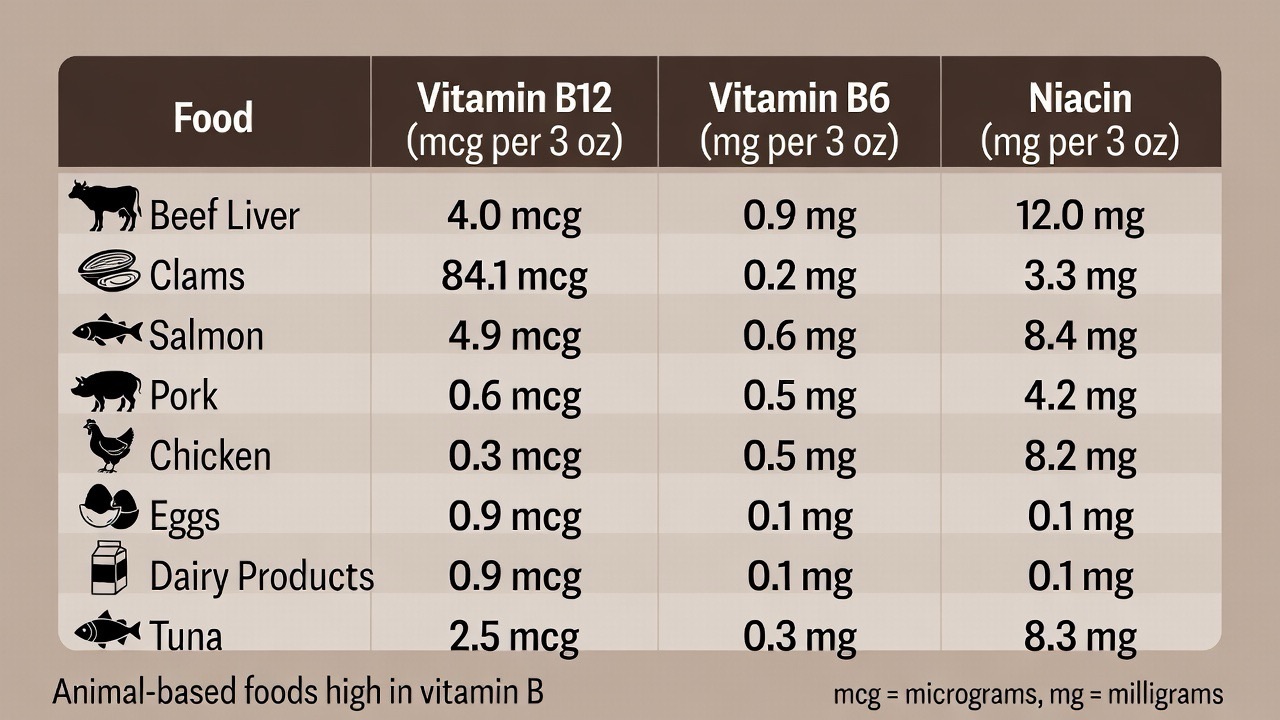
Vitamin B is not a single nutrient but a group of essential vitamins required for daily survival. These vitamins play a central role in energy metabolism, nerve conduction, red blood cell production, DNA synthesis, and hormonal balance.
When vitamin B intake is insufficient, the body struggles to function efficiently. Common signs include chronic fatigue, poor concentration, mood instability, numbness or tingling in the hands and feet, pale skin, and weakened immunity. Long-term deficiency—especially vitamin B12 deficiency—can lead to anemia, irreversible nerve damage, and metabolic dysfunction.
Vitamin B deficiency is not rare. In many cases, it is directly linked to dietary patterns.
2) Types of Vitamin B
The vitamin B complex consists of eight vitamins, each with a specific biological role:
- Vitamin B1 (Thiamine) – Supports energy metabolism and nerve signaling
- Vitamin B2 (Riboflavin) – Essential for cellular energy production and antioxidant function
- Vitamin B3 (Niacin) – Involved in metabolism, circulation, and DNA repair
- Vitamin B5 (Pantothenic Acid) – Required for hormone synthesis and fat metabolism
- Vitamin B6 (Pyridoxine) – Important for protein metabolism and neurotransmitter production
- Vitamin B7 (Biotin) – Supports fat metabolism, skin, hair, and nail health
- Vitamin B9 (Folate) – Critical for cell division and red blood cell formation
- Vitamin B12 (Cobalamin) – Essential for nerve health, DNA synthesis, and anemia prevention
Among these, vitamin B12 is the most critical and the most commonly deficient, as it occurs naturally only in animal-based foods.
3) Sources of Vitamin B
Vitamin B is found in many foods, but the source and bioavailability matter more than the total amount listed on paper.
Animal-based sources (highest bioavailability)
- Red meat and organ meats
- Eggs (especially egg yolks)
- Milk, cheese, yogurt, and other dairy products
- Fish and shellfish
- Poultry
Plant-based sources (partial and limited)
- Leafy greens (mainly folate)
- Legumes (B1, B6)
- Whole grains
- Nuts and seeds
Natural plant foods do not contain vitamin B12. Any B12 listed in vegetarian foods comes from fortification or supplementation, not from the food itself.
4) Why Vegetarians Commonly Develop Vitamin B Deficiency
Vegetarian diets frequently fall short in vitamin B intake, especially vitamin B12, for several clear reasons:
- Absence of natural B12 sources – Removing meat removes the primary source of vitamin B12
- Over-reliance on fortified foods – Synthetic vitamins are less efficiently absorbed
- Reduced absorption – High fiber and plant anti-nutrients interfere with uptake
- Delayed symptoms – B12 deficiency develops slowly and is often detected late
This explains why fatigue, anemia, low energy, and brain fog are commonly observed in long-term vegetarians.
5) Vegetarians Are Strongly Encouraged to Eat More Eggs and Dairy
For vegetarians who choose not to eat meat, eggs and dairy are not optional extras. They are nutritional necessities.
Why eggs are important
- Provide natural vitamin B12, B2, B5, and biotin
- Contain choline, essential for brain and nerve health
- Offer complete, highly bioavailable protein
- Affordable, versatile, and metabolically efficient
Avoiding egg yolks while remaining vegetarian significantly increases the risk of deficiency.
Why dairy is important
- Supplies vitamin B12 and riboflavin (B2)
- Provides calcium in a highly absorbable form
- Dairy fats improve absorption of fat-soluble nutrients
- Fermented dairy supports gut health and nutrient uptake
A vegetarian diet that minimizes eggs and dairy is nutritionally fragile and often leads to long-term dependency on supplements.
6) Vitamin B Is Especially Important for Women
Blood Health, Hormones, and Pregnancy
Women have higher vulnerability to vitamin B deficiency due to menstruation, pregnancy, and hormonal demands.
- Blood supply and anemia prevention – Vitamins B6, B9, and B12 are essential for red blood cell production
- Pregnancy and fetal development – Folate and B12 are critical for DNA synthesis and neural tube development
- Hormonal balance and mood stability – B vitamins support adrenal and nervous system function
For vegetarian women, adequate intake of eggs and full-fat dairy is especially important, particularly before and during pregnancy.
7) Why Animal-Based Food as a Whole Is Important
Animal-based foods deliver complete nutrition in biologically usable forms:
- Full B-complex in natural ratios
- Complete amino acid profiles
- Highly absorbable iron, zinc, and choline
- Natural fats that support vitamin absorption
Nutrition works as a system. Whole foods work because nutrients arrive together, not in isolation.
8) Why Protein Powder and Vitamin B Supplements Are Less Efficient
Protein powders and vitamin supplements may help temporarily, but they have clear limitations:
- Isolated nutrients lack natural synergy
- Synthetic B vitamins may require additional conversion
- Protein powders lack essential micronutrients
They may patch deficiencies, but they do not replace real food.
9) Conclusion: LCHF, Whole Foods, and Practical Nutrition
From a Low-Carb High-Fat (LCHF) perspective, the approach is practical and evidence-based.
- Eat whole foods
- Prioritize nutrient density
- Do not fear animal-based nutrition
For vegetarians, this means intentionally increasing eggs and dairy, not avoiding them.
For non-vegetarians, meat and eggs remain foundational foods.
Long-term health is built on real food, real nutrients, and real bioavailability—not powders, pills, or fortified substitutes.
LCHF works best when it includes whole, animal-based nutrition.