
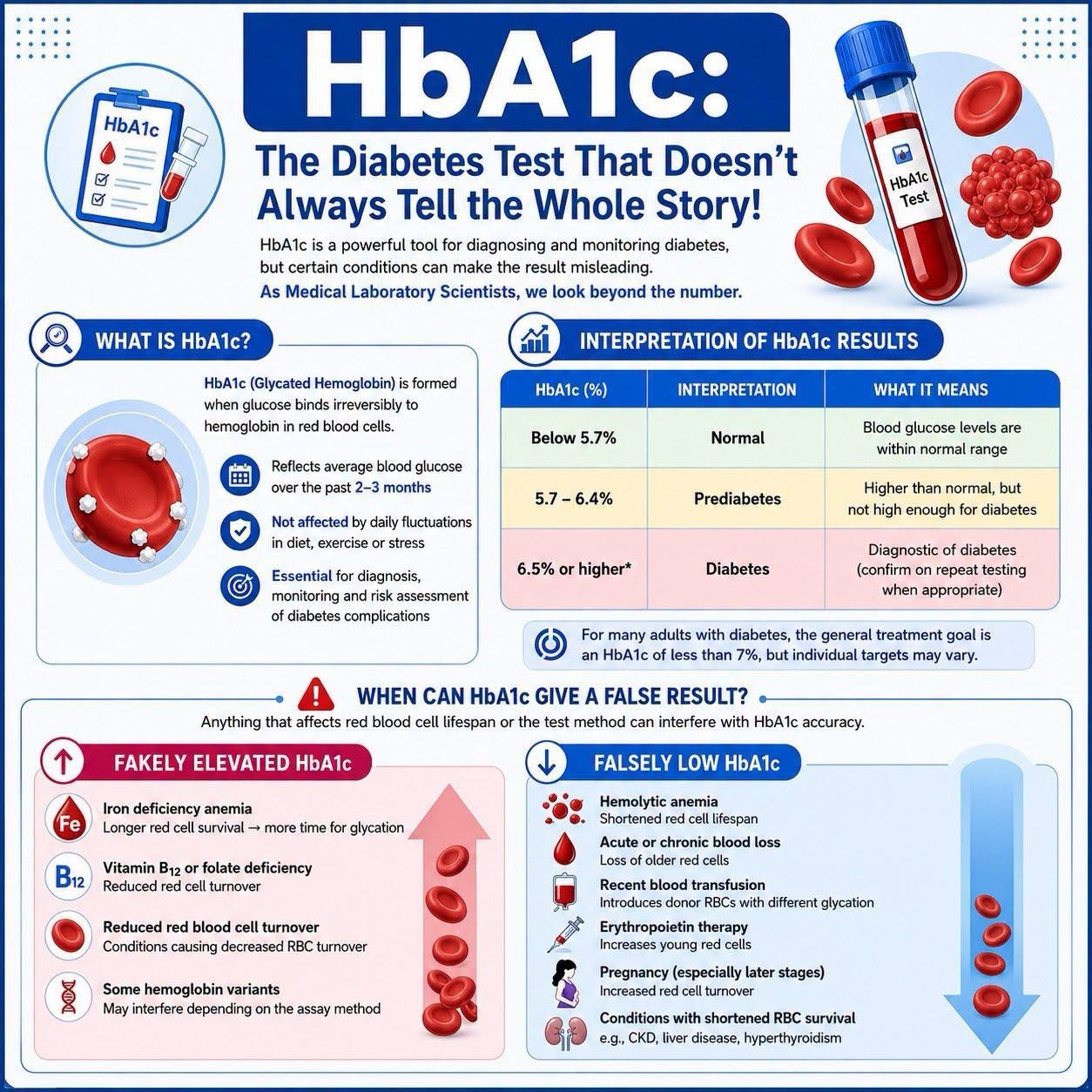
The HbA1c blood test reflects your average blood glucose level over the past 2–3 months. It does not measure daily sugar fluctuations, but shows your long-term glucose pattern.
Higher blood glucose levels lead to more glucose attaching to hemoglobin, resulting in a higher HbA1c value.

Why HbA1c Is Important
- Shows long-term blood glucose trends
- Helps assess diabetes control
- Reduces risk of complications such as nerve, kidney, eye, and heart disease
Purpose of the HbA1c Test
- Diagnose diabetes
- Identify prediabetes early
- Monitor long-term glucose control
- Guide treatment and lifestyle adjustments
Test Procedure
- Simple blood sample
- No fasting required
- Can be done at any time of the day
How to Interpret HbA1c Results
- Normal: < 5.7%
- Prediabetes: 5.7% – 6.4%
- Diabetes: ≥ 6.5%
Factors That May Affect HbA1c Accuracy
- Hemoglobin variants
- Anemia
- Chronic kidney disease
- Conditions affecting red blood cell lifespan
Benefits of the HbA1c Test
- Indicates long-term glucose control
- Not affected by short-term stress or meals
- Useful for monitoring treatment effectiveness
Limitations
- May be inaccurate in anemia
- Certain medical conditions alter hemoglobin levels
- Does not show daily glucose fluctuations
Recommended Monitoring Frequency
- Every 3 months for uncontrolled diabetes or treatment changes
- Every 6 months if diabetes is stable and well controlled
Bottom line: HbA1c reflects long-term blood sugar control and should be interpreted together with symptoms and other tests.