
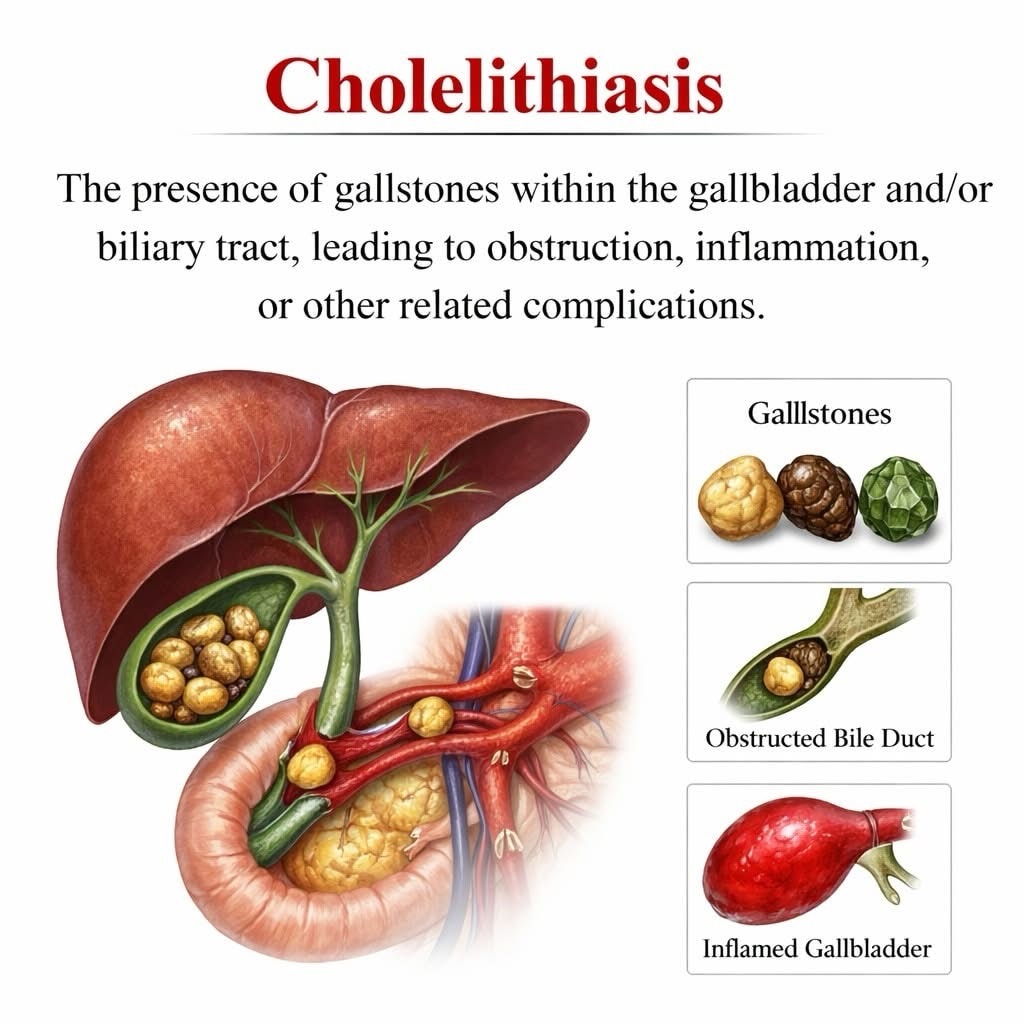
The gallbladder is a small organ located beneath the liver. Its main job is to store bile, a digestive fluid that helps the body break down fats.
However, sometimes substances in bile can harden and form small stones inside the gallbladder. This condition is known as cholelithiasis, or more commonly, gallstones.
Gallstones are very common. Some people may live for years without knowing they have them, while others may develop severe pain or complications.
What is Cholelithiasis?
Cholelithiasis refers to the formation of stones inside the gallbladder due to an imbalance in the components of bile.
Bile normally contains a balanced mixture of:
- Cholesterol
- Bile salts
- Bilirubin

When this balance is disturbed, these substances can crystallize and gradually form gallstones.
Some people remain symptom-free, but others may experience sudden abdominal pain known as biliary colic.
Types of Gallstones
1. Cholesterol Stones
This is the most common type of gallstone. These stones are usually yellowish and form when bile contains too much cholesterol.
2. Pigment Stones
These stones are darker in color and mainly consist of calcium bilirubinate. They are often associated with liver disease or certain blood disorders.
3. Mixed Stones
Many gallstones contain a mixture of cholesterol, bile salts, and calcium deposits.
Causes and Risk Factors
Gallstones usually develop when bile becomes overly concentrated with cholesterol or when bile flow slows down.
Several factors may increase the risk of developing gallstones:
- Female gender
- Pregnancy and hormonal changes
- Family history of gallstones
- Obesity or rapid weight loss
- Sedentary lifestyle
- Diets high in refined carbohydrates and sugar
Modern dietary patterns that rely heavily on sugary drinks and processed carbohydrates may increase metabolic stress and contribute to gallbladder problems.
How Gallstones Form (Pathophysiology)
Gallstones usually form through a gradual process:
- Bile becomes oversaturated with cholesterol.
- Small cholesterol crystals begin to form.
- These crystals clump together and grow into stones.
- If a stone blocks the cystic duct, inflammation of the gallbladder may occur.
This obstruction can cause sudden and severe pain.
Signs and Symptoms
Many people with gallstones do not experience symptoms.
However, when symptoms occur, they may include:
- Severe pain in the right upper abdomen
- Pain that radiates to the back or right shoulder
- Nausea and vomiting
- Bloating after meals
- Indigestion
The pain often occurs after eating a large or heavy meal.
Possible Complications
If gallstones block the bile ducts, several serious complications may develop:
- Acute cholecystitis – inflammation of the gallbladder
- Choledocholithiasis – stones in the common bile duct
- Obstructive jaundice
- Pancreatitis if the pancreatic duct becomes blocked
These conditions require urgent medical attention.
Diagnosis
Doctors use several tests to diagnose gallstones:
- Ultrasound – the most common and reliable test
- Liver function tests – to evaluate bile duct obstruction
- MRCP or ERCP – used when complications are suspected
Treatment Options
Medical Treatment
If gallstones are not causing symptoms, doctors may simply monitor the condition.
Some medications such as ursodeoxycholic acid may help dissolve cholesterol stones, although this approach is slow and not always effective.
Pain relief medications may be used during episodes of biliary colic.
Surgical Treatment
The most effective treatment for symptomatic gallstones is removal of the gallbladder.
Laparoscopic cholecystectomy is considered the gold standard because it is minimally invasive and recovery is usually quick.
In complicated cases, open surgery may be required.
Prevention and Lifestyle Considerations
Although not all gallstones can be prevented, certain lifestyle habits may reduce the risk:
- Maintain a healthy body weight
- Avoid excessive sugar and refined carbohydrates
- Stay physically active
- Eat whole, nutrient-dense foods
From a metabolic perspective, reducing excessive carbohydrate intake may help stabilize insulin levels and improve overall metabolic health.
Many people find that a low-carbohydrate, healthy-fat dietary pattern helps support better metabolic balance and digestive health.
Final Thoughts
Gallstones are a common condition, but they can range from harmless silent stones to serious medical emergencies.
Understanding the causes, recognizing symptoms early, and maintaining a healthy metabolic lifestyle are important steps toward prevention and long-term health.