
(A Friendly Guide for Everyone)
You probably don’t think about fungi very often—until you get an itchy foot, a stubborn nail problem, or (in rare cases) something far more serious. Most of the time, fungal infections are annoying rather than dangerous, but they can turn life-threatening, especially if your immune system is already struggling. The good news? Almost all of them are preventable and treatable if you catch them early.
Here’s a simple, human rundown of what you need to know.
What Exactly Are Fungal Infections?
Fungi are everywhere—soil, air, water, even on our skin. Out of tens of thousands of fungal species, only a few hundred can make us sick. They usually enter the body by:
• Breathing in tiny spores (think moldy basements or bird droppings)
• Direct contact with infected skin, towels, gym floors, etc.
• Through small cuts or medical devices (catheters, ventilators)
Once inside, they can stay on the surface (skin, nails, mouth) or, in people with weak immunity, travel deeper into lungs, brain, or bloodstream.
The Four Main Types
1. Superficial – The everyday ones
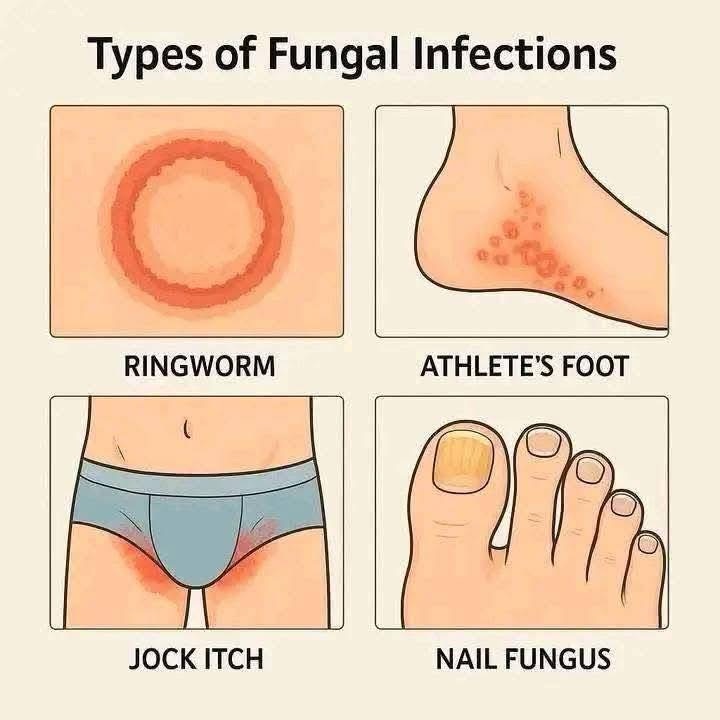
Ringworm, athlete’s foot, itchy scalp, fungal nails.
2. Subcutaneous – Deeper skin layers
Usually from thorns, splinters, or soil injuries in tropical areas.
3. Systemic (deep) – Affect lungs or other organs
Histoplasmosis, valley fever—often from inhaling spores in certain regions.
4. Opportunistic – Strike when immunity is low
Common in people with HIV, cancer treatment, diabetes, or on strong steroids.

The Usual Suspects
• Candida → Thrush in the mouth, vaginal yeast infections, diaper rash
• Dermatophytes → Ringworm, athlete’s foot, jock itch
• Aspergillus → Lung infections, especially in asthma or cancer patients
• Cryptococcus → Meningitis in people with very weak immunity
• Histoplasma → “Cave disease” from bird/bat droppings in certain areas

Why Some People Get Hit Harder
• Diabetes (high blood sugar = fungal buffet)
• HIV/AIDS or cancer chemotherapy
• Long courses of antibiotics (they kill good bacteria that keep fungi in check)
• Steroid medicines or new immune-suppressing drugs after transplants
• Hospital stays with tubes and lines
• Hot, humid climates or sweaty shoes all day
Red Flags You Shouldn’t Ignore
Skin/nails
• Persistent itching, redness, peeling between toes
• Round, expanding rashes with clear centers (classic ringworm)
• Yellow, thick, crumbling nails
Mouth or private areas
• White patches that don’t wipe off (oral thrush)
• Itching, cottage-cheese-like discharge (yeast infection)
Whole-body symptoms
• Fever, night sweats, unexplained weight loss
• Chronic cough or shortness of breath that won’t go away
How Doctors Figure It Out
They’ll scrape a bit of skin or nail, look under the microscope (often with a special stain), grow it in a lab, or do blood tests. For deep infections, a CT scan or biopsy may be needed.
Treatment – It’s Usually Straightforward
Mild cases
→ Creams or powders (clotrimazole, terbinafine, miconazole) for weeks
Nasty nail infections
→ Special nail lacquers or oral terbinafine for 3 months
Serious or internal infections
→ Strong IV medicines like amphotericin B (the “big gun”) or newer pills like itraconazole, voriconazole, or isavuconazole
Sometimes surgery is needed to remove dead tissue (especially in mucormycosis—the scary “black fungus” seen in some diabetic COVID patients a few years ago).
Simple Ways to Protect Yourself
• Keep skin dry—change socks, dry well after showers
• Don’t share towels, razors, or flip-flops
• Wear slippers in public showers and hotel rooms
• If you’re diabetic, keep blood sugar under control
• After antibiotics, consider probiotics (yogurt, kefir) to restore healthy bacteria
• In hospitals, remind staff about hand hygiene—superbugs like Candida auris spread fast on unwashed hands
The New Worries on the Block
• Candida auris – A tough, multidrug-resistant yeast spreading in hospitals worldwide.
• Mucormycosis – Explosive growth in uncontrolled diabetes or after heavy steroid use.
• Climate change is helping some fungi adapt to human body temperature, which is scary for the future.
Real-Life Example
During the 2021 COVID wave in India, thousands of recovering patients (many diabetic and on steroids) developed mucormycosis—“black fungus.” One man noticed black crusts in his nose and facial swelling. Doctors acted fast: IV amphotericin B + emergency surgery to remove dead tissue. He survived because it was caught early. Delay of even a few days can be fatal.
The Bottom Line
Most fungal infections are more of a nuisance than a nightmare. A little awareness and basic hygiene go a long way. But if you’re in a high-risk group—diabetes, cancer treatment, organ transplant, or heavy steroid use—don’t brush off new rashes, coughs, or weird nails. Early treatment really does save lives.
Stay dry, stay vigilant, and your chances of ever needing the scary medicines are tiny.
Quick References & Further Reading
• CDC Fungal Diseases – cdc.gov/fungal
• WHO Fungal Priority Pathogens List (2024) – who.int/publications/i/item/9789240092174
• UpToDate & Medscape articles on specific mycoses (excellent for patients and doctors alike)