
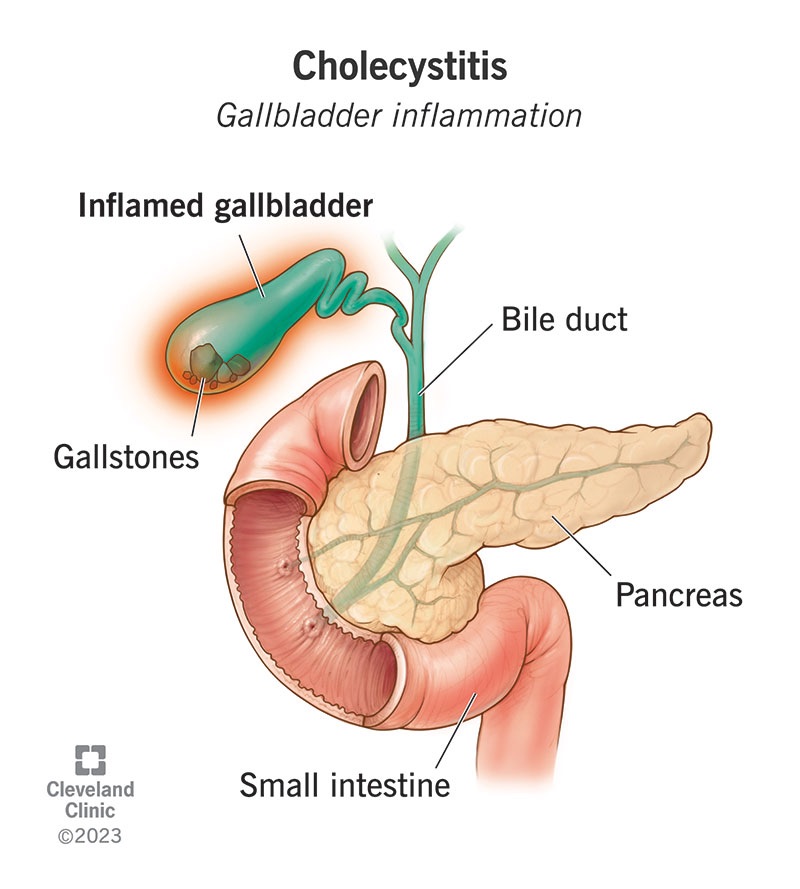
Cholecystitis is the inflammation of the gallbladder — a small pear-shaped organ located beneath the liver. Its main function is to store and concentrate bile, a digestive fluid that helps break down fats.
Most commonly, cholecystitis occurs when a gallstone blocks the cystic duct, preventing bile from flowing out. The trapped bile causes irritation, inflammation, and sometimes infection.
The condition may develop suddenly (acute cholecystitis) or gradually over time (chronic cholecystitis).
Causes
- Gallstones blocking the cystic duct, causing pressure buildup.
- Bile accumulation leading to irritation of the gallbladder wall.
- Bacterial infection developing in stagnant bile.
- Tumors or scar tissue obstructing bile drainage (less common).
Risk Factors
- Female gender — estrogen increases cholesterol levels in bile.
- Obesity — higher cholesterol production increases stone formation risk.
- Pregnancy — hormonal changes slow gallbladder emptying.
- Rapid weight loss — sudden fat breakdown saturates bile with cholesterol.
- High-fat diet — frequent bile stimulation may increase gallstone formation risk.
- Age over 40.
- Family history of gallstones.
Pathophysiology
- A gallstone lodges in the cystic duct.
- Bile cannot exit the gallbladder.
- Pressure builds up inside the organ.
- The gallbladder wall stretches and becomes inflamed.
- If untreated, infection and tissue damage may occur.
Signs & Symptoms
- Severe pain in the right upper abdomen, especially after meals.
- Pain radiating to the right shoulder or back.
- Fever and chills (suggesting infection).
- Nausea and vomiting.
- Murphy’s sign — pain with inhalation when pressing below the right ribs.
Diagnosis
- Physical examination showing right upper quadrant tenderness.
- Ultrasound (first-line test) detecting gallstones and inflammation.
- Blood tests showing elevated white blood cells and inflammatory markers.
- HIDA scan to assess bile flow when diagnosis is unclear.
Treatment
- Hospital admission for monitoring.
- Pain control and intravenous fluids.
- Antibiotics if infection is suspected.
- Cholecystectomy (surgical removal of the gallbladder) — definitive treatment.
Complications
- Gallbladder rupture.
- Abscess formation.
- Peritonitis.
- Sepsis (life-threatening bloodstream infection).
Prevention
- Maintain a healthy and stable weight.
- Avoid rapid crash dieting.
- Engage in regular physical activity.
- Manage cholesterol levels.
- Practice balanced eating habits.