
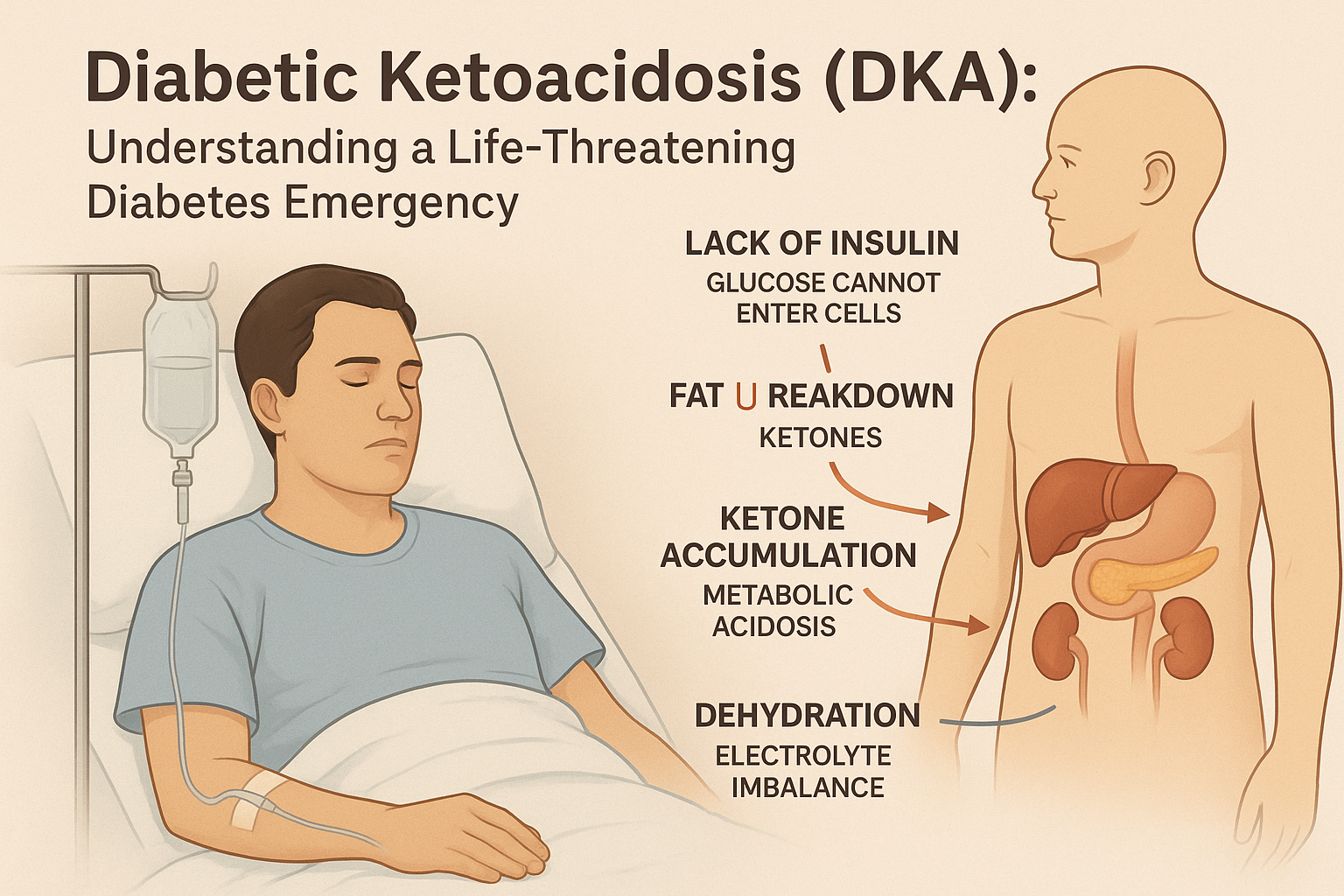
Diabetic Ketoacidosis (DKA) is one of the most serious and potentially life-threatening complications of diabetes. It occurs when the body lacks enough insulin to allow glucose to enter cells, forcing it to break down fat for energy. This process produces ketones—acidic compounds that can build up in the blood and cause dangerous chemical imbalances.
⚠️ Causes
- Insulin deficiency or omission
- Infection (a common trigger)
- Myocardial infarction or stroke
- Certain medications (such as steroids)
📖 Definition
DKA is a serious complication of diabetes resulting from insulin deficiency, characterized by high blood sugar (hyperglycemia), the presence of ketones (ketosis), and metabolic acidosis.
🔬 Pathophysiology
- Lack of insulin prevents glucose from entering cells
- The body breaks down fat for energy, producing ketones
- Ketone accumulation leads to metabolic acidosis
- Causes dehydration and electrolyte imbalance
🩺 Clinical Features
- Frequent urination (polyuria)
- Excessive thirst (polydipsia)
- Nausea and vomiting
- Abdominal pain
- Fruity odor breath (due to ketones)
- Altered mental status or coma in severe cases
🔎 Investigations
- Elevated blood glucose (> 13.9 mmol/L or >250 mg/dL)
- Positive serum ketones
- Metabolic acidosis on arterial blood gas
- Potassium abnormalities in electrolytes
- Ketonuria and glycosuria in urinalysis
🚑 Management
- Fluid replacement (IV normal saline)
- Insulin therapy (IV insulin infusion)
- Electrolyte correction (especially potassium)
- Treat the underlying cause (such as infection)
- Monitor glucose, ketones, and electrolytes closely
🥦 How a Low-Carb Diet and Hydration Help
Maintaining a low-carb diet helps prevent extreme blood glucose fluctuations, reducing insulin stress. Proper hydration supports kidney function, aiding the clearance of glucose and ketones. Together, they can support better metabolic control and reduce the risk of DKA in diabetics.
✅ Prevention
- Good diabetes control
- Patient education on insulin compliance
- “Sick-day rules” – adjusting insulin during illness
- Regular blood glucose and ketone monitoring
⚕️ Complications
- Cerebral edema (especially in children)
- Severe dehydration
- Shock
- Arrhythmias from electrolyte imbalance
- Death if untreated
💬 Conclusion
Diabetic Ketoacidosis is a medical emergency that requires early recognition and prompt management. Through education, consistent insulin use, and good metabolic control, the risk of DKA can be significantly reduced.
References:
1. Kitabchi AE et al. (2009). “Management of Diabetic Ketoacidosis: A Clinical Review.” New England Journal of Medicine, 361(23): 2300–2310.
2. American Diabetes Association (2023). “Standards of Medical Care in Diabetes.”