When people talk about health and nutrition, the spotlight usually falls on vitamins, superfoods, or the latest trendy supplements. But there’s a quiet hero that rarely gets enough credit: glutamine. It’s one of the essential amino acids your body depends on, and you’ll find it abundantly in foods many of us were taught to avoid—like red meat, eggs, and broth.
🔹 The Role of Glutamine
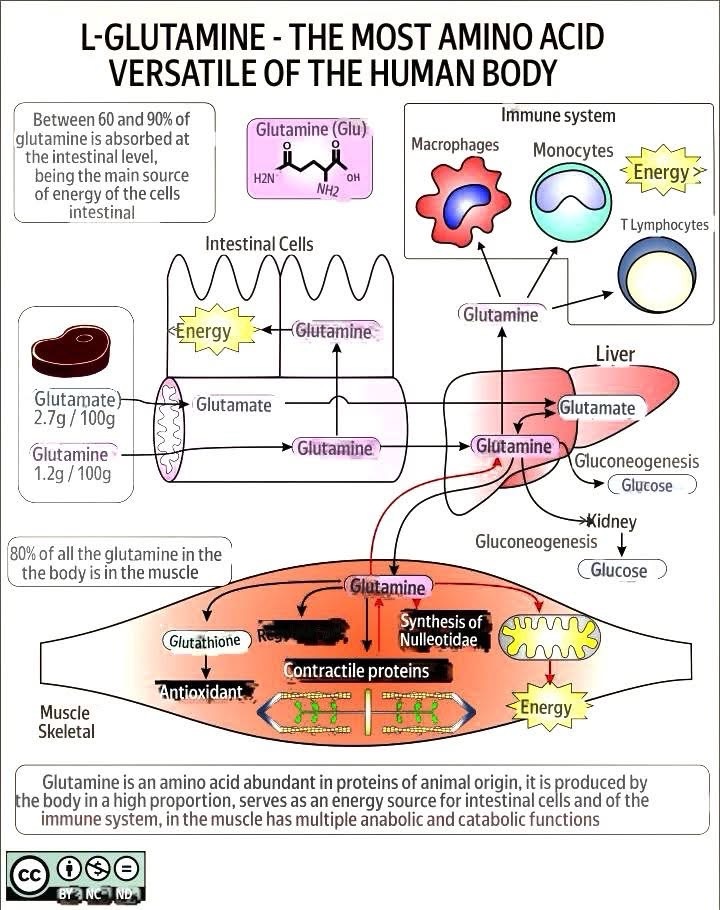
Glutamine is the most abundant amino acid in your bloodstream. Technically, it’s “conditionally essential,” which means your body can make it—but not always enough, especially during stress, illness, or heavy training. Think of it as backup energy for cells that need to work overtime.
🔹 Benefits of Glutamine
- Stronger Gut Lining – Your intestines burn glutamine as fuel. Without it, the gut wall weakens, and that can lead to “leaky gut” and inflammation.
- Faster Recovery from Illness – When you’re sick or healing from surgery, your immune system gobbles up glutamine to keep making white blood cells.
- Support for Muscles – Intense training drains glutamine. Replenishing it helps maintain muscle mass, reduces soreness, and prevents muscle breakdown.
- pH Balance – Glutamine helps your kidneys produce bicarbonate, keeping your blood chemistry stable.
🔹 Glutamine and the Immune System
White blood cells, the body’s first defense against infections, rely on glutamine. When you’re under stress—whether that’s flu, surgery, or even mental burnout—glutamine demand shoots up. Without enough, your immune response is weaker, leaving you more vulnerable.
This is why meat, eggs, and broth aren’t just comfort food—they’re immune-supporting food.
🔹 Glutamine and Muscles
Muscles are like a bank account for glutamine. They store it, release it, and use it. When you train hard or get sick, your muscles donate glutamine to the rest of your body. If you’re not replenishing it with diet, you risk muscle breakdown. That’s one reason why a high-protein diet with plenty of meat and eggs is not only about strength—it’s also about resilience.
🔹 Glutamine and Gut Health
Your gut is home to trillions of microbes, and it’s lined with delicate cells that need constant energy. Their favorite fuel? Glutamine.
Eating glutamine-rich foods helps repair and maintain the intestinal barrier. That’s why broth, soups, and protein-rich meals have been traditional remedies for generations. Grandma’s chicken soup wasn’t just comfort—it was biochemistry at work.
🔹 Foods High in Glutamine
- Beef, chicken, turkey
- Eggs (especially the whites)
- Fish and seafood
- Milk, cheese, yogurt
- Bone broth and soups
- Spinach, cabbage, beets, legumes (moderate amounts, higher in carbs)
For low-carb eaters, meat, eggs, fish, cheese, and broth are the most powerful sources.
🔹 How Much Vegetables Do You Need for Glutamine?
Yes, vegetables contain glutamine—but not nearly at the same density as animal foods. For example:
- Spinach – about 1 g glutamine per cup (cooked, 180 g)
- Cabbage – about 1 g per cup (cooked, 150 g)
- Beets – around 0.6–0.8 g per cup
- Legumes (beans, soy, lentils) – 2–3 g per cup (but high in carbs)
By comparison, animal foods are far richer:
- Beef (100 g steak) – about 4–5 g glutamine
- Eggs (2 large) – about 2 g glutamine
- Milk (1 cup) – about 0.5–0.7 g glutamine
If you aimed for 10 g of glutamine per day, you’d need 5–10 cups of cooked spinach or cabbage to match what a single 200 g steak already provides. This shows why animal foods are the most practical and efficient sources, while vegetables are supportive but secondary.
🔹 The Benefit of Broth and Soup
Slow-cooked broths and soups made from bones are packed with glutamine, glycine, and proline—amino acids that soothe the gut, support joints, and help recovery. No wonder every culture has some form of healing soup. When you sip a bowl of real bone broth, you’re literally feeding your gut cells.
🔹 Why Low Carb Fits the Human Blueprint
Glutamine highlights a bigger truth: the human body thrives on nutrient-dense foods like meat, eggs, fish, and broth. These foods give you not just protein, but the amino acids your body can’t function without.
On the other hand, a diet overloaded with refined carbs and sugars leaves you nutrient-poor while spiking blood sugar and inflammation. Low carb eating flips the script—removing the junk and emphasizing real food that fuels your body, muscles, brain, and immune system.
🌟 The Bottom Line
Glutamine isn’t just a supplement in a jar—it’s a natural gift found in meat, eggs, and broth. It feeds your gut, supports your immune system, repairs your muscles, and speeds recovery when life knocks you down.
So the next time you crack open some eggs or sip on homemade broth, remember—you’re not just eating. You’re rebuilding.
📚 References
- Newsholme P. Why is L-glutamine metabolism important to cells of the immune system in health, post-injury, surgery or infection? J Nutr. 2001;131(9 Suppl):2515S-2522S.
- Rogero MM, Tirapegui J. Role of glutamine in immune system, metabolism, and nutrition. Nutrition. 2008;24(4):361–365.
- Curi R, et al. Glutamine, gene expression, and cell function. Front Biosci. 2007;12:344–357.
- Wischmeyer PE. Clinical applications of L-glutamine: past, present, and future. Nutr Clin Pract. 2003;18(5):377–385.
- De Souza Lima A, et al. Glutamine supplementation and intestinal barrier function: a systematic review. Nutrients. 2020;12(11):3701.