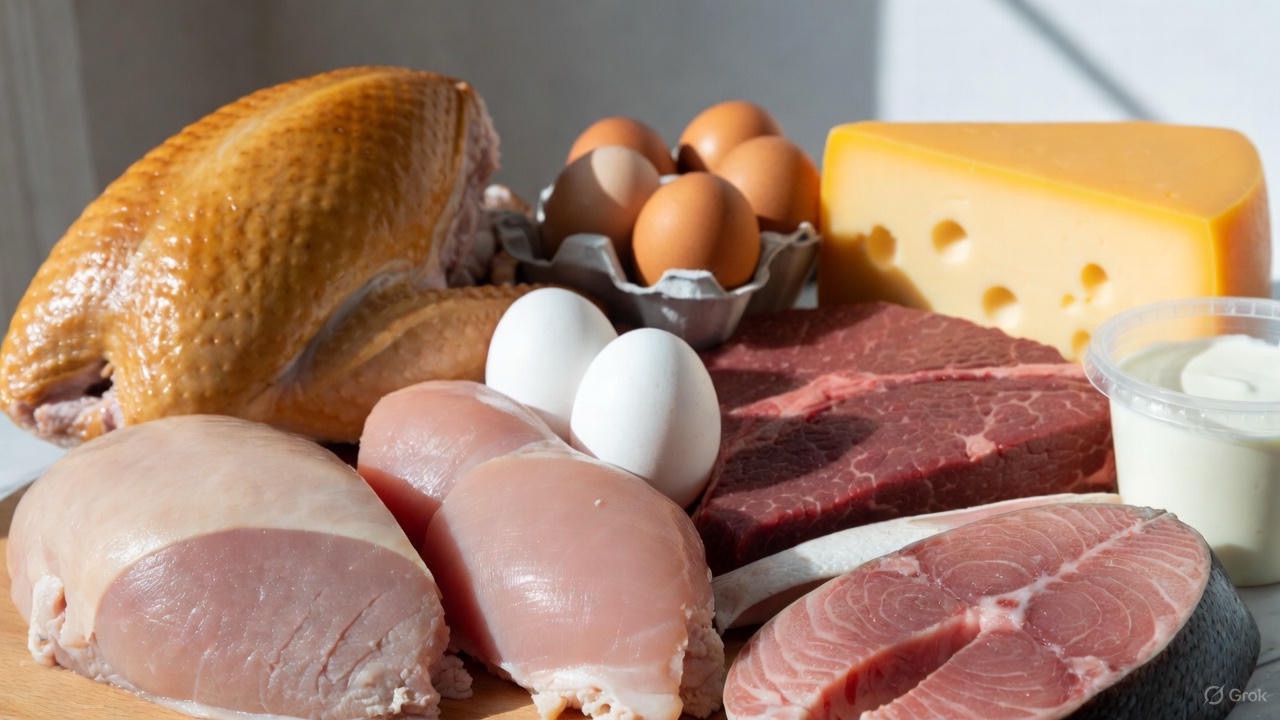
Ever wonder why after eating turkey or eggs you feel calm and even sleepy? The reason lies in an essential amino acid called tryptophan — a small but powerful nutrient that plays a big role in your mood, sleep, and metabolism.
💡 What Is Tryptophan?
Tryptophan is an essential amino acid, which means your body cannot make it on its own — you must get it from food. Once inside your body, tryptophan helps produce:
- Serotonin – the “feel-good” neurotransmitter that supports mood and emotional balance.
- Melatonin – the hormone that controls your sleep-wake rhythm.
- Niacin (Vitamin B3) – vital for energy metabolism and nerve function.
Without enough tryptophan, you may experience mood swings, fatigue, poor sleep, and even carb cravings — because your brain is asking for serotonin.
🍽️ Foods High in Tryptophan
Almost all protein-rich foods contain tryptophan, but some stand out for their higher content. Here’s a list of top foods and their approximate tryptophan content per 100 grams:
- Turkey breast: ~350 mg — one of the richest and most bioavailable sources.
- Chicken breast: ~290 mg — lean and excellent for everyday meals.
- Salmon: ~250 mg — provides tryptophan plus brain-boosting omega-3s.
- Tuna: ~310 mg — dense in protein and B vitamins that support conversion to serotonin.
- Eggs (whole): ~170 mg — especially from the yolk, which also provides vitamin B6 and fats needed for absorption.
- Cheddar cheese: ~320 mg — a comfort food rich in calcium and amino acids.
- Lamb and beef: ~220–250 mg — supply tryptophan with iron and zinc for optimal conversion.
- Pumpkin seeds: ~570 mg — one of the richest plant sources, but absorption is lower compared to animal protein.
- Chia seeds: ~330 mg — provides fiber, magnesium, and omega-3 fats.
- Tofu and soybeans: ~280–300 mg — high protein, but not as well absorbed due to anti-nutrients.
When it comes to efficiency, turkey, chicken, tuna, and cheese rank highest for usable tryptophan — meaning your body can actually convert them into serotonin and melatonin effectively.
🥩 Animal vs. Plant Tryptophan — Which Is Better?
Both animal and plant foods contain tryptophan, but not all tryptophan is created equal. Animal-based sources are generally more bioavailable, meaning your body can absorb and use them much more efficiently. Here’s why:
- Better Absorption: Animal proteins like eggs, meat, and fish deliver tryptophan in a highly absorbable form. Plant foods, while rich in tryptophan, contain compounds like phytates and tannins that can block absorption.
- Balanced Amino Acids: Tryptophan must compete with other amino acids to enter the brain. Animal proteins have a favorable amino acid ratio, allowing more tryptophan to reach the brain and convert to serotonin.
- Conversion Support: The transformation of tryptophan into serotonin requires cofactors like vitamin B6, iron, and zinc — all abundant in animal foods but often lacking in plant-based ones.
That doesn’t mean you need to skip plants altogether — foods like pumpkin seeds, chia seeds, and almonds are still valuable for their magnesium and healthy fats. But for stronger mood, better sleep, and hormone balance, animal protein should be your foundation.
🔥 Why a Low-Carb Lifestyle Enhances Tryptophan Use
Even if your diet is high in tryptophan, your body needs the right metabolic environment to use it effectively. This is where a low-carb, high-fat (LCHF) lifestyle helps.
- Stable Blood Sugar: Low-carb eating prevents the insulin surges caused by high-carb meals. These surges can disrupt the transport of tryptophan to the brain, reducing serotonin production.
- Less Inflammation: A low-carb diet lowers chronic inflammation, allowing more tryptophan to be used for serotonin and melatonin, rather than being diverted into stress-related pathways.
- Better Sleep and Energy: Steady insulin levels support melatonin balance, helping you fall asleep naturally and wake up refreshed.
- Healthier Gut: Your gut produces most of your serotonin. A low-carb, low-sugar diet supports beneficial bacteria that improve tryptophan conversion and mental clarity.
🌿 The Bottom Line
Tryptophan is far more than just a nutrient — it’s the foundation of emotional stability, restful sleep, and overall well-being. To get the most benefit:
- Focus on animal-based proteins such as turkey, fish, eggs, and cheese for high absorption.
- Use plant-based sources like pumpkin seeds and chia as supportive extras.
- Maintain a low-carb lifestyle to keep your body’s chemistry balanced and your mood stable.
Eat smart, sleep deeply, and let your body’s natural chemistry work for you — not against you.