For years, people thought the gut was mainly a digestive tube—break down food, absorb nutrients, move on. Modern science paints a very different picture. Your gut is an active metabolic engine, rich with microbes, chemical messengers, immune cells, and electrical signaling. It controls far more than digestion. It influences your brain, your hormones, your inflammation levels, your mood, and even your body weight.
This “silent engine” becomes even more important when we look at rising rates of chronic diseases, depression, metabolic dysfunction, and autoimmune conditions. All of them tie back—directly or indirectly—to the gut.
Low-carb and ketogenic nutrition add another layer. These diets shift fuel sources, change gut microbial populations, stabilize insulin, reduce inflammation, and—most importantly—improve the energy status of brain and mitochondrial function. When you put these pieces together, gut health becomes the foundation of metabolic resilience.
A scientific deep dive through the lens of the low-carb, high-fat lifestyle
Most people think the gut is a simple food chute: what goes in must come out.
That assumption couldn’t be further from the truth.
Inside your abdomen lies a 7-meter biochemical factory—a living system that extracts nutrients with precision, trains your immune system, detoxifies harmful compounds, regulates inflammation, produces neurotransmitters, and communicates directly with your brain.
If your gut works well, you feel sharper, leaner, calmer, and more energetic.
If your gut is inflamed or imbalanced, everything from your metabolism to your mood drifts off course.
And here’s the part that deserves attention:
What you eat—especially the balance between sugar, starch, and healthy fats—can make or break this system.
This is where the LCHF lifestyle shines, because it reduces the gut’s exposure to inflammatory triggers and supports the metabolic pathways your microbiome depends on.
Let’s explore this in detail.

Your Gut Isn’t a Single Pipe—It’s a Nutrient Customs Checkpoint
(Every nutrient has its own VIP lane… and if the gate is closed, it never gets in)
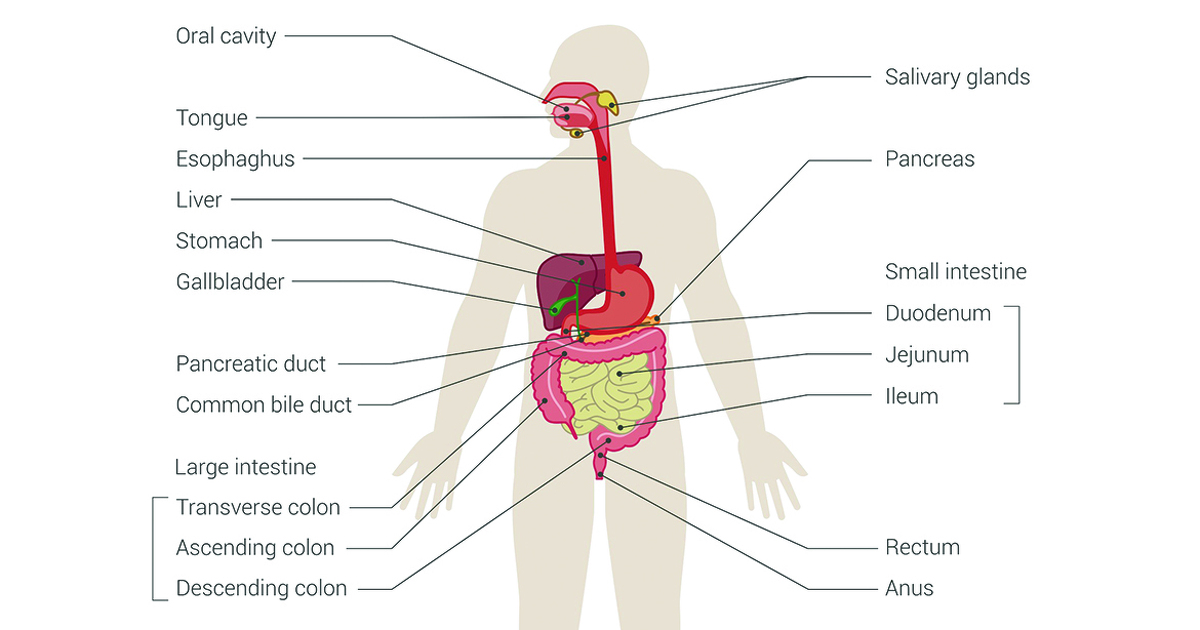
Most people think “food goes in → small intestine absorbs everything → done.” Nope. Your digestive tract is more like an international border with seven strictly staffed checkpoints. Miss your assigned gate? That nutrient gets deported straight to the toilet.
Let’s follow your meal on its passport-stamped journey:
1. Mouth + Stomach: The First “Rip-Open-the-Package” Station
- Carbs: Salivary amylase starts snipping starches
- Protein: Stomach acid + pepsin violently tear proteins apart
- Vitamin B12: Gets engaged to “intrinsic factor” right here; no ring, no entry later (Overusing acid blockers? B12 gets rejected at the border and you slowly go anemic.)
2. Liver & Gallbladder: The Fat-Only Detergent Station
- Bile blasts out like dish soap, turning fat globules into tiny absorbable droplets
- No bile = fats slide right through (hello, greasy stools and goodbye vitamins A, D, E, K) (Gallbladder-removal crew, you know the struggle: one rich meal and you’re bloated for days.)
3. Pancreas: The Enzyme SWAT Team
- Drops amylases, proteases, and lipases like tactical reinforcements
- Turns everything into Lego-sized pieces (Pancreatic issues = food exits looking exactly like it entered.)
4. Duodenum (First Part of Small Intestine): The Chemical Massacre Site
- Carbs → simple sugars
- Proteins → amino acids
- Fats → fatty acids + monoglycerides 90% of the actual chemical breakdown happens right here.
5. Jejunum (Middle Small Intestine): The Main Absorption Golden Zone
- This is the giant vacuum: sugars, amino acids, iron, calcium, folate, and fat-soluble vitamins A/D/E/K get sucked up
- Low stomach acid or missing bile? This gate slams shut even if the nutrients are lined up.
6. Ileum (Last Part of Small Intestine): The VIP-Only Booth
- Vitamin B12 + intrinsic factor finally clear customs
- Bile acids get recycled back to the liver (super-efficient loop) (Crohn’s patients often lose this section → lifelong B12 deficiency.)
7. Colon (Large Intestine): The Final Salvage & Water-Reclaim Station
- Desperately pulls back water, sodium, potassium, and leftover bile salts
- This is why severe diarrhea can send you to the ER with dehydration; the last floodgate failed.
Bottom Line:
Your body doesn’t work on “you eat it → you get it.” It works on “which checkpoint is actually open?”
Stomach acid, bile, pancreatic enzymes, healthy small-intestine villi, balanced colon bacteria… if any single station goes on strike, the nutrients that belong there are gone forever.
That’s exactly why some people swallow handfuls of supplements and still feel like crap. It’s not that they’re taking the wrong pills. It’s that customs is closed.

Your gut isn’t just a digestive tube…
It’s a hidden biochemical powerhouse quietly keeping you alive every single second.
Most people picture the colon as nothing more than the body’s “sewer.”
This one illustration proves how wrong that is.
Your colon is arguably the most underrated metabolic organ you own.
Inside this 5-foot miracle of plumbing, trillions of microbes are working 24/7 to:
🔥 Synthesize essential vitamins (K, B7, B12…)
🔥 Produce short-chain fatty acids—the primary fuel your colon cells burn
🔥 Neutralize toxins and carcinogens before they reach your blood
🔥 Convert dietary protein into the raw materials for serotonin, dopamine, GABA, and histamine
🔥 Train and regulate 70–80% of your immune system
🔥 Decide—literally—whether you feel calm and focused or inflamed and foggy
All of it invisible. All of it nonstop.
Zoom in on what actually happens in there:
🔹 Fiber → fermented into butyrate, acetate, and propionate
These molecules calm systemic inflammation, tighten your gut barrier, boost insulin sensitivity, cross the blood-brain barrier, and directly influence mood and cognition.
🔹 Protein → broken down into amino acids → neurotransmitter precursors
Up to 90% of your serotonin and a big chunk of your dopamine start life right here, thanks to your microbes.
🔹 Detox super-center
Ammonia, phenols, indoles, cresols, skatole—the nasty byproducts of protein metabolism—are transformed or bound by bacteria so your liver doesn’t have to handle everything alone.
🔹 Final salvage station
Water, sodium, potassium, leftover calories, trace metals—your colon rescues what the small intestine missed. That’s why the average stool is only ~135 g after all that heroic reclamation.
Gas production, pH balance, mucus renewal, heavy-metal excretion—every detail is orchestrated down here.
This is why “gut health” isn’t some wellness buzzword.
It’s the master control panel for digestion, immunity, skin, sleep, metabolism, inflammation, and even mental health.
Your colon isn’t a waste disposal unit.
It’s a living ecosystem, a high-tech chemical refinery, and—quite literally—your second brain sending signals that shape how you feel, think, and function every day.

Your Gut: A 7-Meter Precision Factory That Knows Exactly Which Molecule Belongs Where
It’s not one giant sponge. It’s a perfectly zoned assembly line where every centimeter of surface is specialized—like different departments in a high-tech refinery. Miss a single department, and that nutrient never makes it into your bloodstream.
Here’s the real map of where everything actually gets absorbed:
1. Stomach → The Prep & Fast-Track Lane
Mostly a demolition zone: acid and pepsin shred proteins into manageable chunks. But a few things sneak through early:
- Water, alcohol, caffeine
- Certain minerals: copper, iodide, fluoride, molybdenum (Everything else is still locked up—waiting for the next stations.)
2. Duodenum (First 25 cm of small intestine) → Mineral & Fat-Soluble Vitamin Gateway
Bile and pancreatic enzymes flood in. Suddenly fats become absorbable, and minerals finally dissolve. Prime real estate for:
- Calcium, magnesium, iron, zinc
- Vitamins A, D, E, K (they literally need bile as their Uber) If bile flow is sluggish or you have low acid upstream → these all get rejected here.
3. Jejunum → The Macronutrient Vacuum Cleaner
This is the superstar: miles of villi and microvilli (looks like velvet under a microscope) creating insane surface area. Main cargo:
- All monosaccharides (glucose, fructose, galactose)
- Amino acids & small peptides
- Most water-soluble vitamins: B1, B2, B3, B5, B6, folate
- Fats (now packaged into micelles) 80–90 % of total calories and nutrients are absorbed in this one section.
4. Ileum → The VIP & Recycling Lounge
Last chance saloon for anything that slipped past:
- Vitamin B12–intrinsic factor complex (only place it’s absorbed)
- Remaining bile salts (recycled back to liver—your body reuses them 6–15 times per day)
- Any leftover fat-soluble vitamins Damage here (Crohn’s, resection, SIBO) = classic B12 and bile-salt malabsorption problems.
5. Large Intestine → Salvage Crew & Microbial Biotech Lab
Most people think “nothing happens here.” Wrong.
- Reclaims 90 % of remaining water and electrolytes (that’s why diarrhea dehydrates you so fast)
- Bacteria ferment fiber → short-chain fatty acids (butyrate, propionate, acetate) that feed colon cells and calm inflammation
- Microbes synthesize vitamin K2, biotin, and small amounts of other B vitamins Final output: only ~100–200 g of stool from the liters of fluid that entered.
Your 7-meter gut isn’t randomly sucking up nutrients. It’s a sequence of hyper-specialized zones—each one precision-tuned for specific molecules. Break one zone (low acid, missing gallbladder, inflamed ileum, wrecked microbiome) and you don’t just “absorb a bit less.” You permanently lose entire categories of nutrients—no matter how perfect your diet is.
That’s why fixing digestion isn’t about eating more kale. It’s about reopening the right checkpoints.

When Your Gut Goes Rogue, It Sets Your Whole Body on Fire
(One diagram that shows exactly how “a little gut imbalance” turns into full-blown metabolic chaos)
You think leaky gut just gives you bloating and irregular bowels? Wrong. It’s the match that lights a slow-burning, body-wide fire, eventually fueling obesity, diabetes, infertility, depression, and brain fog.
Here’s the exact chain reaction mapped out:
1. From Harmony to Collapse: Good Bugs Starve, Bad Bugs Take Over
Healthy gut: Fiber-feeding microbes produce short-chain fatty acids (SCFAs) and secondary bile acids → stabilize blood sugar, signal fullness, calm immunity. Junk diet + stress + antibiotics → beneficial species die off, opportunists explode. Consequences:
- SCFA shortage → GLP-1 (the “I’m full” hormone) crashes → you’re hungry 24/7
- Gut barrier thins out → the castle wall now has cracks
2. Leaky Gut → Bacterial Toxins Flood the Bloodstream (Metabolic Endotoxemia)
Through those cracks slip fragments of dead bacteria, especially LPS (lipopolysaccharides). Your immune system treats them like an invasion and declares war. Result: TNF-α, IL-6, and other cytokines skyrocket → chronic, low-grade inflammation that never turns off.
3. Fat Tissue Becomes an Inflammation Factory, Hormones Go Haywire
Inflamed fat stops being a quiet storage tank and turns into a cytokine-spewing organ:
- Leptin resistance → brain can’t hear “stop eating” → endless hunger
- Insulin resistance → muscles and liver refuse glucose → blood sugar stays high, fat piles on
- Cortisol spikes → stress axis in overdrive, belly fat becomes your new best friend
4. The Fire Spreads to Every Major Organ
- Liver → non-alcoholic fatty liver disease
- Pancreas → beta cells burn out → prediabetes/diabetes
- Muscle → can’t store glycogen, stays insulin-resistant
- Brain → neuroinflammation → brain fog, depression, appetite dysregulation
- Ovaries/testes → sex-hormone chaos → PCOS, low T, infertility
5. The Vicious Cycle: Metaflammation
Gut inflammation → body-wide inflammation → more fat → leakier gut → worse inflammation… This is the hidden feedback loop behind why so many people “get fatter the harder they try,” “take hormones but still feel awful,” or “swallow antidepressants yet the fog never lifts.”
Gut dysbiosis doesn’t stay in the gut. It’s the root spark for almost every modern chronic disease: obesity, type 2 diabetes, heart disease, autoimmunity, infertility, Alzheimer’s… they all walk the same inflammatory highway.
Fixing your gut isn’t “wellness.” It’s putting out the fire that’s quietly burning you alive from the inside.
Reference: Tian, Y., et al. Metaflammation: Chronic low-grade inflammation in metabolic disorders. Pharmacological Research, 2023;187:106552.

The Gut-Brain Axis Isn’t “Woo-Woo.” It’s Four Hard-Wired Superhighways Running 24/7
Your gut and brain aren’t having a polite conversation. They’re linked by four high-bandwidth cables that never shut off. Mess up the gut, and the brain gets the memo instantly.
Here are the four real, measurable channels:
🧠 1. The Neural Superhighway – The Vagus Nerve Express
The vagus nerve is the direct fiber-optic cable from gut to brainstem. Inside your gut wall lives the enteric nervous system (the “second brain” with >500 million neurons). What travels upward:
- 90 % of your serotonin (made by gut cells + microbes)
- Dopamine, GABA, acetylcholine
- Instant mood and anxiety signals triggered by what the microbes see Specialized gut cells (enteroendocrine & enterochromaffin) act like tiny drug factories that release neurotransmitters the moment bacteria poke them.
🧬 2. The Hormone Highway – The HPA Axis + Appetite Hormones
Your microbes literally control your stress axis:
- Leaky gut → immune activation → cortisol spikes → anxiety, belly fat, brain fog
- Good microbes crank out GLP-1, PYY, CCK → “I’m full and calm” signals to the hypothalamus
- Bad microbiome → ghrelin stays high → you’re hangry and wired all day One altered meal can shift these hormones within hours.
🦠 3. The Immune Highway – Cytokines That Cross the Blood-Brain Barrier
Bacterial pieces (PAMPs, LPS) talk to gut immune cells → release traveling cytokines (TNF-α, IL-1β, IL-6). These molecules:
- Slip past or weaken the blood-brain barrier
- Activate microglia (brain’s immune cells)
- Directly cause depression, fatigue, and cognitive decline This is why infections, antibiotics, or chronic gut inflammation can trigger mood crashes in days.
🔁 4. The Metabolite Highway – Microbial Chemicals That Act Like Brain Drugs
Your bacteria run a 24/7 pharma lab, fermenting food into molecules that cross into the brain:
- Butyrate → fuels brain cells, grows new neurons, calms anxiety
- Propionate & acetate → tweak dopamine and GABA signaling
- Secondary bile acids → dial down neuroinflammation
- Tryptophan metabolites → become serotonin in the brain Starve the right bugs or feed the wrong ones, and you literally change your brain chemistry from the plate.
The gut-brain axis isn’t mystical. It’s four physical, measurable, bidirectional lanes: neural, hormonal, immune, and metabolic. What you eat, the antibiotics you take, the fiber you skip, the stress you carry: every choice sends traffic down all four lanes at once.
Change your gut, and you change your mind. It’s not philosophy. It’s physiology.
PMID: 37404311

MIT Just Dropped a Bombshell: One Single Amino Acid Can Turbocharge Gut Stem-Cell Repair by 30 %
…and it works through a completely unexpected immune mechanism.
In a study published in Nature (2025), researchers at MIT and the Whitehead Institute discovered that feeding mice a cysteine-enriched diet dramatically accelerated intestinal stem-cell regeneration after lethal doses of radiation or chemotherapy.
We’re not talking about vague “gut healing” claims.
This was hard, mechanistic data:
- After whole-body irradiation (the kind that normally wipes out the gut lining and kills the animal in days), cysteine-supplemented mice had 30 % higher intestinal stem-cell function and crypt regeneration.
- Survival rates jumped from near-zero to the majority of animals fully recovering their intestinal epithelium within a week.
- Same protective and regenerative effect seen with doxorubicin (a brutal chemo drug).
How it actually works (the part that shocked everyone)
Cysteine → ↑ glutathione → ↑ CD8+ T cells in the gut → ↑ IL-22 secretion → massive activation of the STAT3 pathway in Lgr5+ stem cells → stem cells go into overdrive and rebuild the lining like crazy.
Translation: It’s not the cysteine directly patching the cells.
It’s cysteine super-charging a specific subset of immune T-cells that then scream “REPAIR NOW!” at the stem cells via IL-22.
This is the first time any lab has ever identified a single dietary nutrient that can directly flip the switch on intestinal stemness through an immune-mediated pathway.
Why this is a big deal
- Radiation and chemotherapy patients often die not from the cancer itself, but from gut failure (mucositis, sepsis, inability to eat).
- A cheap, over-the-counter amino acid (cysteine or its stable form N-acetylcysteine) could, in theory, be given before or during treatment to protect the gut and speed recovery.
- The same pathway is active in inflammatory bowel disease (Crohn’s, ulcerative colitis) and possibly even aging-related stem-cell decline.
Caveats (because science)
- This is still rodent data (mice, not humans).
- Human translation needs clinical trials, but the mechanism is conserved and IL-22 therapies are already in trials for IBD, so the path is clear.
- Dose matters: too much cysteine long-term can be pro-oxidant; short, targeted pulses around damage seem to be the sweet spot.
Bottom line: For the first time we have proof-of-concept that a single, dirt-cheap nutrient can meaningfully crank up your gut’s own regenerative machinery, and it does so by hijacking your immune system in the best possible way.
Keep an eye on cysteine/NAC.
The next few years of clinical trials could change oncology and gastroenterology forever.
Reference:
Chi, F., Zhang, Q., Shay, J.E.S. et al. Dietary cysteine enhances intestinal stemness via CD8+ T cell-derived IL-22. Nature 647, 706–715 (2025). https://doi.org/10.1038/s41586-024-08345-8
Your Gut Microbes Are Secretly Running Your Body’s Second Biological Clock
(And when it falls out of sync with your brain, you get insomnia, weight gain, and chronic inflammation)
Most people think only the brain has a master clock (the famous SCN in the hypothalamus).
Wrong. Your gut microbiome is its own fully independent circadian clock, and it’s on the phone with your brain 24/7.
When these two clocks drift apart, you don’t just feel “off.” You get wrecked sleep, stubborn fat, brain fog, and low-grade inflammation everywhere.
Here’s the full wiring diagram:
1. Central Clock vs Peripheral Clock: The Brain Isn’t the Only One Watching the Sun
- Brain SCN sets the master rhythm using morning light through your eyes.
- Gut clock listens to the brain… but it also has its own cues: meal timing and what the microbes are fed.
Example: Chronic night shifts + random eating windows → gut clock desynchronizes from brain clock → microbiome composition flips → metabolism and immunity crash.
2. Hormone Lane: Your Bugs Remote-Control the Stress (HPA) Axis
Certain bacteria (Actinobacteria, Streptococcus, etc.) tweak cortisol rhythms via metabolites and cytokines.
- Morning cortisol stays flat → you wake up feeling dead
- Nighttime cortisol refuses to drop → wired at 2 a.m. staring at the ceiling
This is why stressed, dysbiotic people have inverted cortisol curves.
3. Immune Lane: Bad Bugs Light a Slow Fire in Your Brain at Night
Bacterial fragments (LPS and PAMPs) trigger gut immune cells → IL-1β, TNF-α spill into circulation → peak at night → directly disrupt sleep centers.
Result: You “sleep” 8 hours but wake up destroyed. Classic inflammatory insomnia.
4. Metabolic Lane: Microbes Decide When You Burn Fat vs Store Fat
SCFAs, secondary bile acids, and other metabolites oscillate on a perfect day–night schedule.
- Species like Ruminococcus bromii help burn fat during the day and repair at night.
- Circadian disruption → you store fat when you should be burning it, and metabolize sugar when you should be resting.
Hello, diet-resistant weight gain.
5. Neural Lane: The Vagus Nerve Speed-Dials the Brain
Microbial neurotransmitters and metabolites hit vagal nerve endings → signal reaches brainstem in seconds → instantly shifts alertness, mood, and stress.
Example: One high-junk-food meal → anxiety spikes in <30 min because this cable just lit up.
Your gut microbiome isn’t a passive passenger.
It’s a fully fledged peripheral clock that synchronizes (or desynchronizes) with your brain to control sleep, energy, mood, and inflammation.
If you want to truly fix your sleep, metabolism, or chronic health issues,
stop obsessing only over sunrise alarms and blue-blockers.
Get the second clock in your gut back on schedule first.
Source: doi:10.3389/fpsyt.2025.1697200