
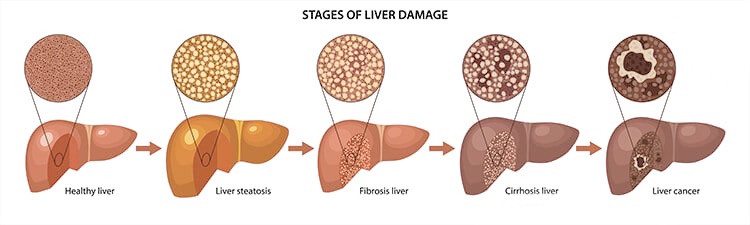
NAFLD (Non-Alcoholic Fatty Liver Disease) is a silent but dangerous epidemic, affecting nearly 1 in 3 adults worldwide — including those who never drink alcohol.
The disease is mainly driven by:
- Insulin resistance
- Fructose and sugar overconsumption
- Omega-6 seed oils
- Oxidative stress
But the hopeful truth is: NAFLD is often reversible, especially through nutrition. One of the most powerful interventions is a low-carb, high-fat (LCHF) diet that emphasizes whole, anti-inflammatory foods and restricts liver-toxic ingredients like sugar and seed oils.
🧬 NAFLD: Four Stages of Liver Damage
1. Simple Steatosis (Fatty Liver)
Fat accumulates in liver cells. No inflammation. Reversible.
2. NASH (Non-Alcoholic Steatohepatitis)
Fat triggers inflammation and cellular injury. Risk of progression.
3. Fibrosis
Scar tissue begins forming, impairing blood flow and liver repair.
4. Cirrhosis
Widespread scarring and permanent architectural distortion. Irreversible. Can lead to liver failure or cancer.
🧪 How Is NAFLD Diagnosed?
1. Liver Enzymes (ALT and AST)
- ALT (7–55 U/L)
- AST (8–48 U/L)
- Early NAFLD: ALT > AST Cirrhosis: AST > ALT, especially if AST/ALT ratio > 1
2. Ultrasound
Detects fat accumulation (bright liver). Widely available.
3. FibroScan
Measures liver stiffness (fibrosis) and fat content (CAP score).
4. Blood-based Scores
FIB-4 Index and NAFLD Fibrosis Score use age, platelets, enzymes to assess fibrosis risk.
5. Liver Biopsy
Gold standard for diagnosing NASH and staging fibrosis.
🍭 Fructose: The Metabolic Bomb in Your Liver
Fructose is metabolized exclusively in the liver, unlike glucose. Excess fructose:
- Is stored as fat (de novo lipogenesis)
- Generates oxidative stress
- Drives inflammation, fibrosis, and insulin resistance
Fructose comes mainly from:
- Sugary drinks
- Fruit juices
- High-fructose corn syrup
- Processed snacks and sauces
🧨 Fructose is a primary driver of fatty liver — even without calorie excess.
📚 Key Research:
- Stanhope KL, 2009 (PMID: 19381015) – Fructose raises liver fat & insulin resistance.
- Abdelmalek MF, 2010 (PMID: 20222092) – High fructose = more fibrosis.
- Lim JS, 2010 (PMID: 20034585) – Fructose promotes NAFLD even without overeating.
🌻 Omega-6 Oils + Oxidative Stress = Liver Destruction
Industrial seed oils — rich in omega-6 linoleic acid — are unstable, easily oxidized, and promote chronic inflammation.
Common sources:
- Soybean oil
- Corn oil
- Canola oil
- Sunflower, safflower oil
⚠️ Effects:
- Oxidized omega-6 produces toxic lipid peroxides
- Increases inflammation, mitochondrial damage, fibrosis
- Linked to NASH and liver cancer risk
📚 Supporting Research:
- Araya J, 2004 (PMID: 14999701) – Higher omega-6 & oxidative stress in NASH patients.
- Rinella ME, 2013 (PMID: 23371463) – Seed oils worsened fibrosis in animals.
- Kowdley KV, 2012 (PMID: 22036172) – Oxidative stress strongly correlates with NASH severity.
🥩 Why a Low-Carb Diet Works for NAFLD
Low-carb diets address:
- Insulin resistance
- Fatty liver
- High fructose load
- Excess omega-6 intake
✅ Benefits:
- Reduces liver fat
- Normalizes ALT & AST
- Reduces oxidative stress
- Triggers fat burning (ketosis)
- Improves insulin sensitivity
- Supports liver regeneration in early stages
📚 Clinical Evidence
- Tendler D, 2007 (PMID: 17658185) – 2-week keto diet reduced liver fat and ALT.
- Hallberg SJ, 2019 (PMID: 31151840) – 81% of diabetics improved liver markers after 1 year of low-carb.
- Mardinoglu A, 2018 (PMID: 30026054) – Liver fat reduced by 43–55% in just 2 weeks of carb restriction.
🍓 Low-Fructose Fruits for a Low-Carb Diet
Fruits can be part of a liver-friendly low-carb plan — but only low-fructose, low-glycemic options, in small portions.
✅ Recommended (Low Fructose & Low Carb):

⚠️ Avoid or Strictly Limit:
- Grapes, mangoes, apples, bananas, pears, dried fruit
- Fruit juice of any kind
- “Healthy” snacks with fruit paste
✔️ Keep fruit as a garnish or small side, not a main dish. Pair with fat (like cream or coconut) to blunt the glycemic impact.
Where Ketones & Blood Sugar Intersect: A Fatty Liver Twist
Here’s what often surprises people: in insulin-resistant states like NAFLD, fasting or low-carb eating can lead to both high blood glucose and high ketones—and it comes down to how the body mismanages fuel.
1. Insulin Resistance Lets Glucose Run Wild
Your liver is supposed to throttle down glucose production when insulin is present. In fatty liver, that mechanism fails. The liver keeps making and releasing sugar—even when you’re not eating.
2. Fat Turning Into Ketones Accelerates
Because insulin is low or ineffective, fat cells release fatty acids. The liver turns these into ketones—but can’t regulate the process well, leading to elevated ketone production.
The Unusual & Risky “Double High”
Instead of seeing low glucose + moderate ketones (a typical fasting pattern), you get high glucose + high ketones together. That light switch misfire is a hallmark of metabolic dysfunction.
Why it matters:
In people with type 2 diabetes and fatty liver, this combo signals poor metabolic control. In type 1 diabetics, it can herald ketoacidosis, a medical emergency. Even for non-diabetics, this pattern shows that the body’s fuel regulation is unstable.
Bottom line: Fatty liver doesn’t produce ketones—but it creates the conditions for both glucose and ketones to run high together by blocking insulin’s normal behavior.
🧠 Final Thoughts: NAFLD Is a Nutritional Disease — And Reversible
You can stop NAFLD in its tracks by:
- Cutting sugar and fructose
- Eliminating omega-6 seed oils Prioritizing whole animal-based fats and proteins
- Using a low-carb lifestyle to restore insulin function
- Focusing on liver regeneration before cirrhosis develops
🛡️ Don’t wait for symptoms. NAFLD is silent — but the solution is loud and clear: fix your food.