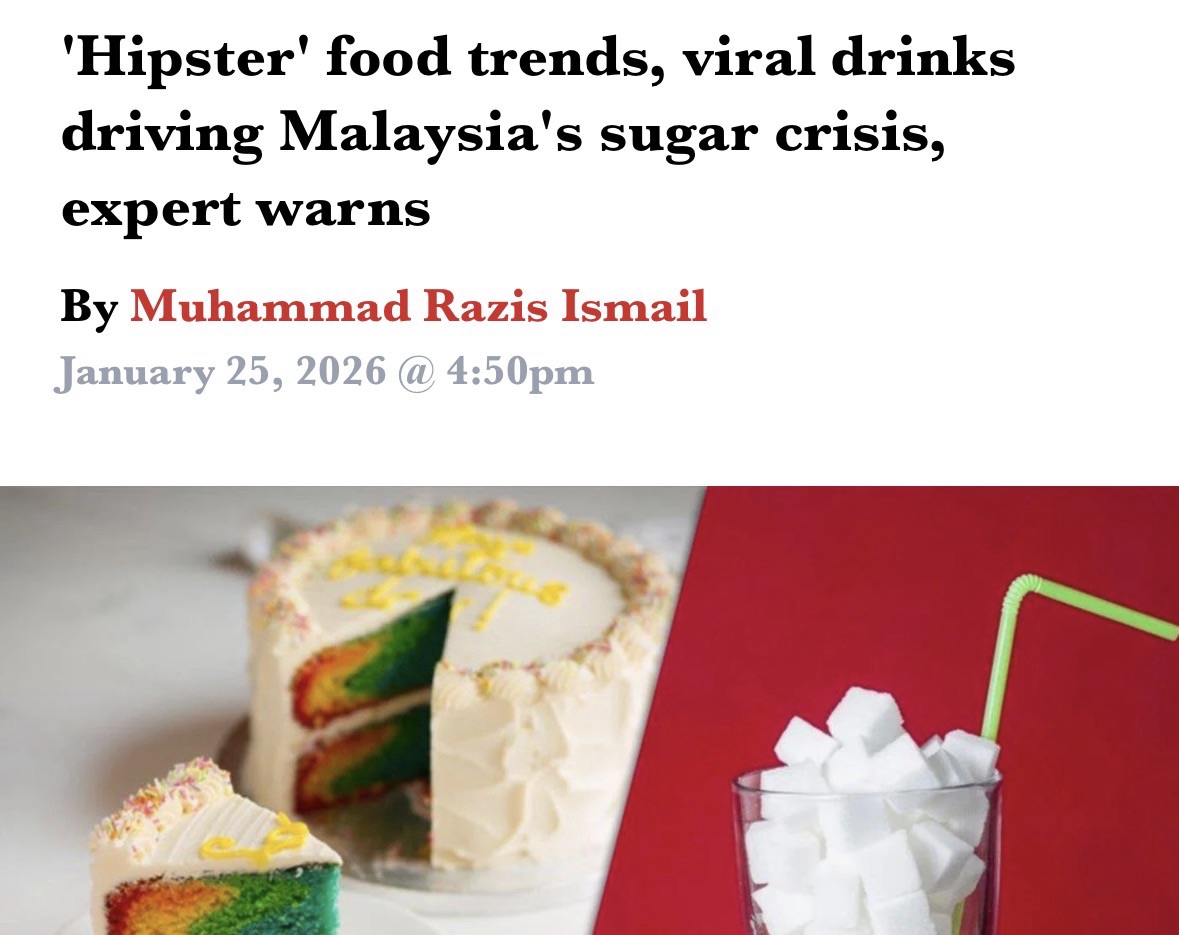
KUALA LUMPUR: Viral food trends driven by social media are key contributors to the nation’s high sugar intake, according to a nutrition expert.
Universiti Putra Malaysia (UPM) Faculty of Medicine and Health Sciences deputy dean Dr Barakatun Nisak Mohd Yusof said the appeal of “hipster” food and evolving digital trends causes Malaysians to unknowingly consume excessive sugar through sweetened drinks and items perceived as healthy.
“Studies show that exposure to viral food content on social media encourages spontaneous choices of high-sugar foods and beverages.
“The main sources of hidden sugar are sugar-sweetened beverages (SSBs), particularly iced tea, milk coffee, boba, and other viral drinks,” she said.
Dr Barakatun Nisak noted that hidden sugar is also prevalent in bottled fruit juices, flavoured yoghurts, breakfast cereals, modern pastries, and hipster desserts.
“Many are unaware of the sugar content because these foods may not taste overly sweet or are seen as part of a modern lifestyle,” she added.
Data from the 2024 National Health and Morbidity Survey (NHMS) reveals that 59 per cent of Malaysian adults now consume more than one serving of sugar-sweetened beverages daily.
Total sugar intake among adults averages nine teaspoons a day—with nearly half coming from beverages—while adolescents consume a staggering 11.5 teaspoons daily.
This far exceeds the World Health Organisation (WHO) recommendation to limit free sugar intake to less than 10 per cent of total energy, or approximately 50g (10 teaspoons) for an average adult, with a conditional recommendation of 25g (five teaspoons) for additional health benefits.
Dr Barakatun Nisak warned that the term “less sweet” is often a trap, as it does not necessarily mean a product is low in sugar.
“While sugar and diabetes are not directly linked, excessive intake leads to weight gain and obesity, which increases insulin resistance and diabetes risk,” she said.
She urged the public to make it a habit to drink plain water and read nutrition labels.
At a policy level, she highlighted that initiatives like the Healthier Choice Logo, the newly increased SSB excise duty (raised to 90 sen per litre under Budget 2025), and the proposed Nutri-Grade labelling system are vital to combating the “war on sugar.”