
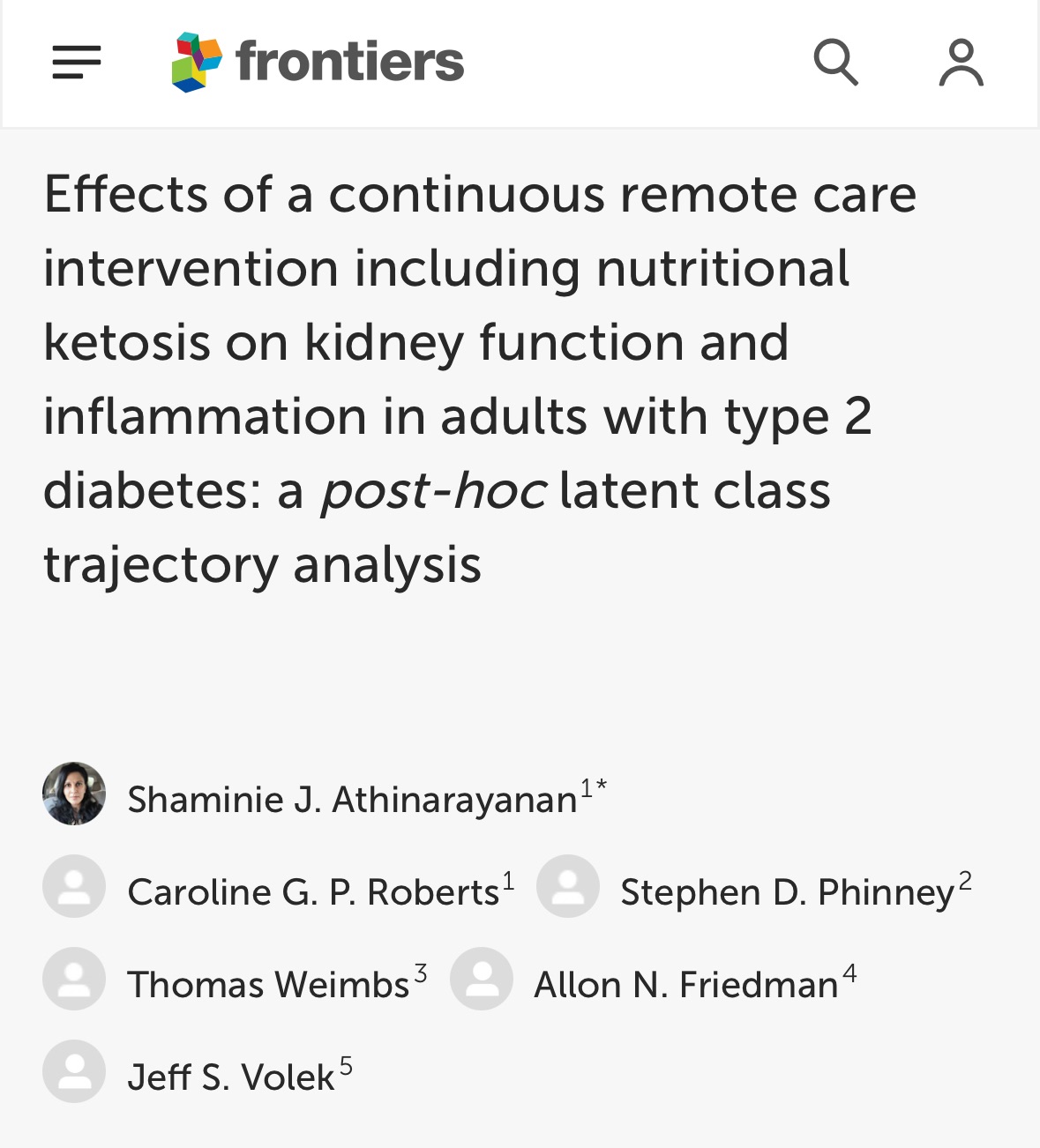
— A New Study Shows Low-Carb Nutrition and Remote Coaching May Help Protect the Kidneys in Type 2 Diabetes
📚 Published: June 6, 2025, in Frontiers in Nutrition
✅ What Was the Study About?
This research followed adults with type 2 diabetes for two full years, comparing two groups:
One group received remote medical support and followed a low-carb, high-fat ketogenic diet (aiming for nutritional ketosis). The other group continued their usual care with no special diet or coaching.
The goal:
To see whether long-term ketosis helps or harms kidney function — measured by eGFR (estimated glomerular filtration rate).
🔍 What Did They Find?
1️⃣ Kidney Function Improved on Ketosis
The group in nutritional ketosis had a positive annual eGFR change of +0.91 mL/min/1.73m² per year.
In contrast, the usual care group saw a slight decline of −0.68.
That means people on the ketogenic diet actually improved their kidney function, not worsened it — and that’s very important!
✅ Those who started with lower kidney function (eGFR < 90) saw the most improvement.
2️⃣ Higher Ketone Levels = Better Kidney Function
They also tracked ketone levels (β-hydroxybutyrate, or BHB) over time.
The results showed a clear pattern:
The more consistently people stayed in ketosis (BHB ≥ 0.3 mmol/L), the more their kidney function improved.
In other words:
The more committed people were to the ketogenic lifestyle, the bigger the kidney benefit.
3️⃣ It Wasn’t Just About Weight Loss or Medication
Even after adjusting for:
Weight loss Blood sugar improvements Medications (like SGLT2i, GLP-1, ACEi/ARBs)
…the researchers found that ketone levels remained an independent factor for kidney improvement.
This suggests nutritional ketosis helps in a way that goes beyond just losing weight or taking meds.
💡 Why This Study Matters
✔️ It Disproves the Myth: “Keto Damages the Kidneys”
For years, many people feared keto would stress the kidneys — this study shows the opposite may be true.
✔️ It May Help People with Early Kidney Decline
Even participants with stage 3 chronic kidney disease (CKD) saw improvements in eGFR when they followed the low-carb approach.
✔️ It Shows Remote Support Works
This wasn’t just about food — it was about tracking ketones, getting feedback, and staying supported.
People stuck with the plan longer and saw measurable health benefits.
📌 The Bottom Line
With proper guidance and consistent ketosis, a low-carb lifestyle may actually help protect or even improve kidney function in type 2 diabetes.
🗣️ What This Means for You (or Your Clients)
If you or someone you know has type 2 diabetes or early signs of kidney decline, this research offers hope:
Low-carb, high-fat eating doesn’t damage the kidneys. When done right (especially with support), it may help reverse early kidney damage. Daily ketone tracking (keeping BHB ≥ 0.3 mmol/L) is a simple but powerful tool.
🛠️ Pro Tips for Practitioners & Coaches
Encourage ketone tracking — aim for 0.3 to 1.0 mmol/L. Support clients with regular check-ins or digital tracking. Collaborate with their healthcare team for medication adjustments. Emphasize real food, healthy fats, and sustainable habits.
🔭 What’s Next?
This was a post-hoc observational analysis — it shows a strong link, but not 100% proof.
✅ The next step is to do randomized controlled trials (RCTs) to confirm cause and effect.
Still, this study adds to the growing body of evidence that ketogenic nutrition is more than just a weight-loss tool — it’s real metabolic therapy.