
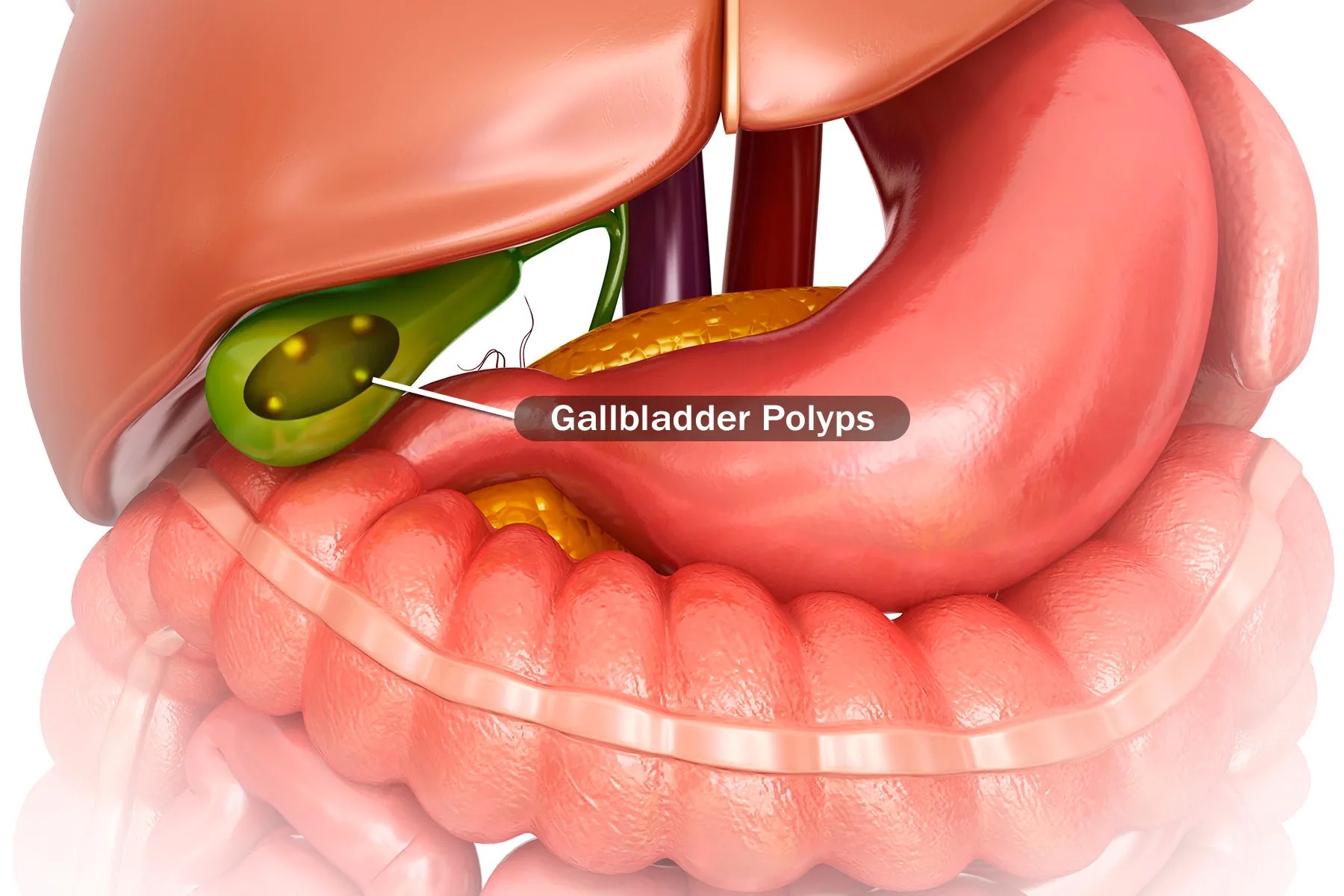
Many people discover they have gallbladder polyps during a routine health check. Often, the finding comes as a surprise because most people do not feel any symptoms.
This leads to common questions: Are gallbladder polyps dangerous? Can they turn into cancer? Do they require surgery?
Understanding what gallbladder polyps are and how they are managed can help reduce unnecessary anxiety and guide better health decisions.
What Are Gallbladder Polyps?
Gallbladder polyps are small growths that project from the inner lining of the gallbladder into its hollow space.
- They are usually discovered during abdominal ultrasound scans.
- Most people with polyps have no symptoms at all.
- The majority are benign (non-cancerous).
- A small number may carry a risk of becoming cancerous.
Because of this small risk, doctors usually monitor the size and appearance of the polyp over time.
How Common Are Gallbladder Polyps?
Medical studies estimate that about 4–7% of adults may have gallbladder polyps.
They are more commonly seen in:
- People between 30 and 50 years old
- Men slightly more than women
- Individuals undergoing routine imaging tests
In most cases, the condition is discovered incidentally during scans performed for other reasons.
Types of Gallbladder Polyps
1. Cholesterol Polyps (Most Common)
This is the most common type of gallbladder polyp. These growths occur when cholesterol accumulates in the gallbladder lining.
- Made of lipid-filled immune cells
- Usually small
- Generally harmless
2. Inflammatory Polyps
These polyps are linked to chronic inflammation of the gallbladder lining.
3. Adenomatous Polyps
These are true tumors of the gallbladder lining and are considered pre-cancerous. They require closer monitoring.
4. Malignant Polyps
In rare cases, a polyp may represent early gallbladder cancer.
Why Do Gallbladder Polyps Form?
The exact cause is not always clear, but several factors may contribute:
- Cholesterol accumulation in gallbladder cells
- Chronic irritation or inflammation
- Abnormal growth of gallbladder lining tissue
- Genetic changes that may lead to tumor formation
Research has shown that certain characteristics increase cancer risk:
- Larger polyps
- Flat or sessile polyps
Symptoms of Gallbladder Polyps
Most people with gallbladder polyps experience no symptoms.
However, some individuals may notice:
- Discomfort in the right upper abdomen
- Symptoms similar to gallstones
If gallstones are present at the same time, symptoms may become more noticeable.
How Are Gallbladder Polyps Diagnosed?
The most common test used to detect gallbladder polyps is an abdominal ultrasound.
On ultrasound images, polyps usually appear as:
- A small growth attached to the gallbladder wall
- Immobile
- Without acoustic shadowing
If the polyp appears suspicious, doctors may recommend additional tests such as:
- Endoscopic ultrasound (EUS)
- CT scan
- MRI imaging
Risk Factors for Cancer
Although most gallbladder polyps are harmless, certain factors increase the risk of cancer:
- Polyp size 10 mm or larger
- Flat (sessile) shape
- Age over 50 years
- Presence of primary sclerosing cholangitis
When these factors are present, doctors may recommend surgical removal of the gallbladder.
Treatment and Management
Management usually depends on the size of the polyp.
- Polyps smaller than 6 mm: periodic ultrasound monitoring
- Polyps 6–9 mm: closer follow-up with regular imaging
- Polyps 10 mm or larger: surgical removal of the gallbladder (laparoscopic cholecystectomy) is often recommended
Patients who develop symptoms may also be advised to consider surgery.
Possible Complications
Although uncommon, complications may include:
- Cancer development in adenomatous polyps
- Chronic gallbladder inflammation
- Association with gallstones
- Anxiety related to cancer concerns
Prognosis and Follow-Up
The good news is that most gallbladder polyps are benign and have an excellent long-term outlook.
Regular follow-up imaging helps doctors monitor for any changes in size or shape.
If cancer is detected early, surgical treatment often leads to much better outcomes.
Final Thoughts
Gallbladder polyps are increasingly detected today due to widespread use of imaging tests.
Fortunately, the majority are harmless and only require observation. However, monitoring their size and growth is important to identify the rare cases that may require treatment.
Regular health checkups and open communication with your doctor remain the best approach to managing gallbladder health.