
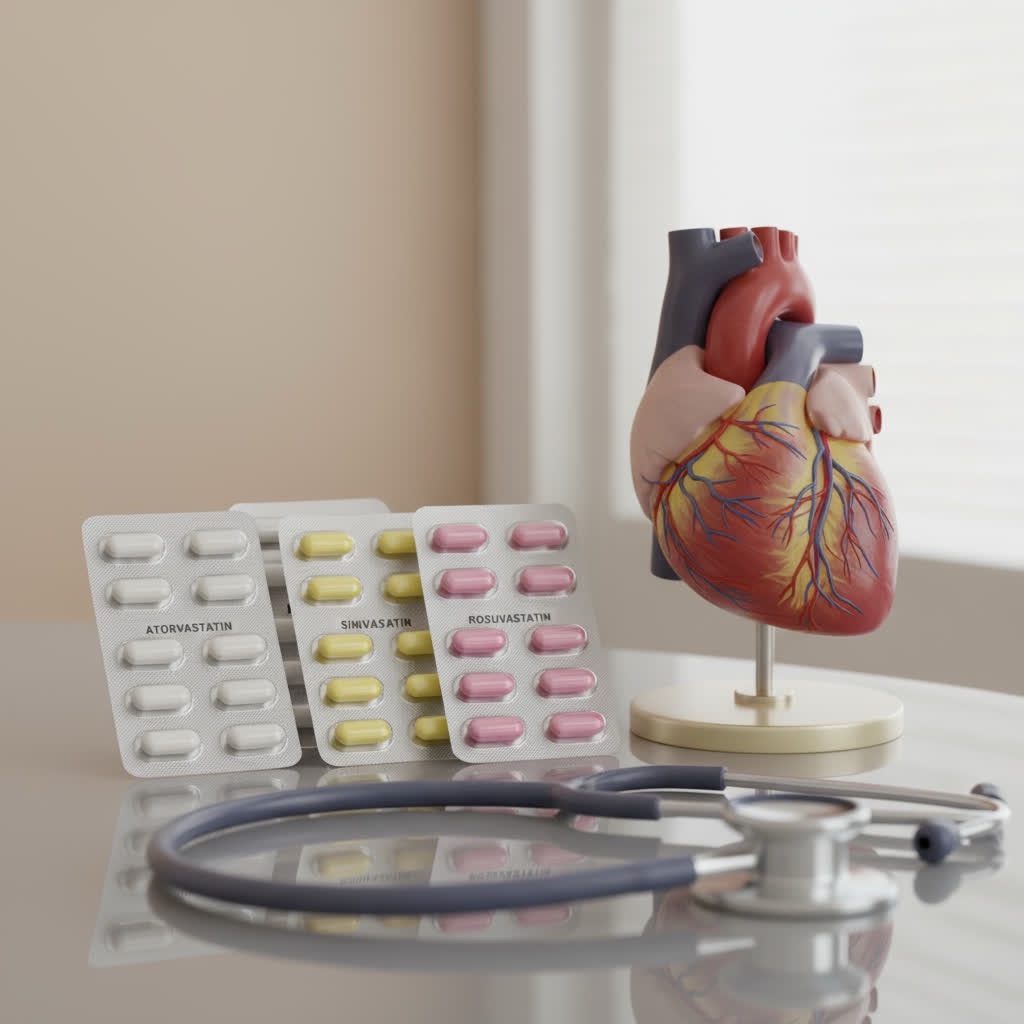
When your doctor says your cholesterol is high, chances are the next word you’ll hear is “statin.” These medications have become one of the most commonly prescribed drugs in the world. But what exactly do they do — and what should you know before taking them?
Let’s break down the science behind statins in simple, human language.
🔬 The Science of Medicine: What Are Statins?
Statins are a class of medications that lower cholesterol levels in the blood. Their main job is to block a liver enzyme called HMG-CoA reductase, which is crucial for producing cholesterol.
By slowing down this enzyme, the liver ends up making less cholesterol — and starts pulling more LDL cholesterol (“bad cholesterol”) out of your bloodstream.
That’s why statins are often prescribed to prevent cardiovascular diseases such as heart attacks and strokes, especially in people at higher risk.
In short: Statins tell your liver, “Stop making so much cholesterol — and start cleaning up what’s already in the blood.”
⚙️ Mechanism of Action: How Do They Work?
Here’s the science in plain English:
- Statins block the HMG-CoA reductase enzyme in the liver.
- This reduces cholesterol synthesis, forcing the liver to draw more cholesterol from the blood.
- The result: lower total and LDL cholesterol levels — and potentially fewer fatty plaques in your arteries.
Over time, this can slow down plaque buildup, helping to keep your arteries clearer and your heart healthier.
Think of it like fixing a clogged pipe — statins reduce the sludge that can block blood flow.
💊 Common Types of Statins
There isn’t just one statin. Doctors choose among several types depending on your age, risk level, and how your body responds. The most commonly prescribed include:
- Atorvastatin (Lipitor)
- Simvastatin (Zocor)
- Rosuvastatin (Crestor)
- Pravastatin (Pravachol)
- Lovastatin (Mevacor)
They all work in similar ways — but differ slightly in strength, metabolism, and how long they stay active in your system.
❤️ Indications: When Are Statins Used?
Statins are typically prescribed for:
- Hypercholesterolemia (high cholesterol levels)
- Prevention of heart attacks and strokes in high-risk patients
- After a heart attack to reduce the chance of another one
- As part of a comprehensive plan with diet and exercise to manage lipid levels
They aren’t a substitute for a healthy lifestyle — but rather a complement to it.
⚠️ Side Effects: What You Should Watch For
Like any medication, statins aren’t side-effect-free. While most people tolerate them well, some may experience:
- Muscle pain or weakness (known as myopathy)
- Liver enzyme elevation (which is why your doctor checks your blood)
- Digestive issues such as nausea, constipation, or bloating
- Headache or fatigue
If you feel unexplained muscle soreness or weakness while on statins, it’s worth discussing with your doctor. Though rare, a serious condition called rhabdomyolysis (severe muscle breakdown) can occur.
⚖️ Precautions: Staying Safe While on Statins
- Avoid excessive alcohol, as both alcohol and statins are processed by the liver.
- Regular liver function tests are recommended, especially during the first year of use.
- Elderly patients and those with kidney disease should use statins with caution.
- Pregnant or breastfeeding women should not use statins, since cholesterol is vital for fetal development.
🧠 Final Thoughts
Statins have saved countless lives — especially in people with established heart disease or very high cholesterol. But like any tool, they should be used wisely and with full awareness of both benefits and risks.
A statin can help reduce your risk of heart disease, but it doesn’t replace the foundation of good health:
Eat real food, move your body, manage stress, and sleep well — those are still the real heart protectors.
📚 References
- Stone NJ et al. 2018 AHA/ACC Guideline on the Management of Blood Cholesterol. Journal of the American College of Cardiology. 2019;73(24):e285–e350.
- Endo A. A historical perspective on the discovery of statins. Proceedings of the Japan Academy, Series B. 2010;86(5):484–493.
- Istvan ES, Deisenhofer J. Structural mechanism for statin inhibition of HMG-CoA reductase. Science. 2001;292(5519):1160–1164.
- Newman CB et al. Statin safety and associated adverse events: A scientific statement from the American Heart Association. Arteriosclerosis, Thrombosis, and Vascular Biology. 2019;39(2):e38–e81.
- Collins R et al. Interpretation of the evidence for the efficacy and safety of statin therapy. The Lancet. 2016;388(10059):2532–2561.