
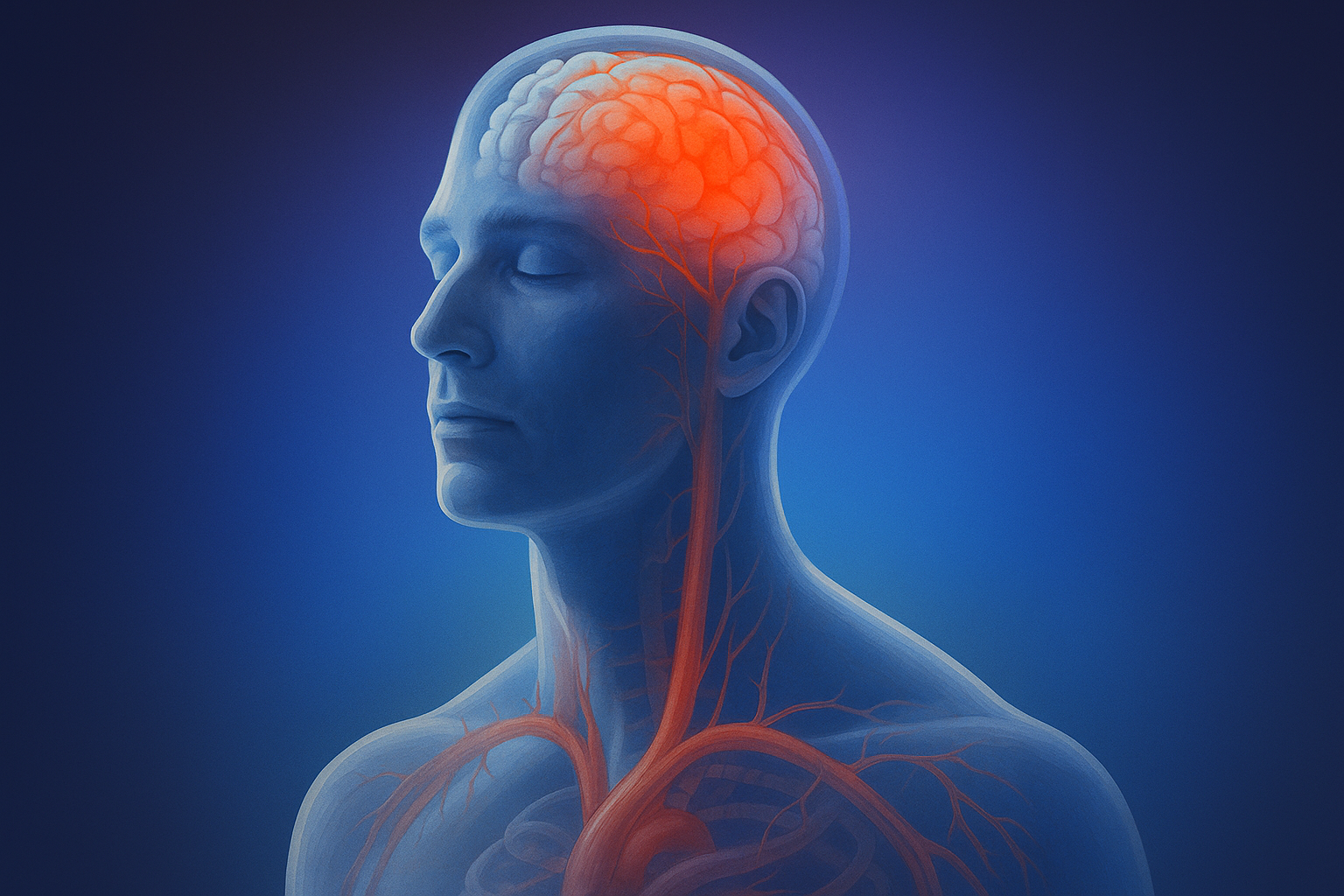
A stroke happens when the blood supply to part of your brain is interrupted or severely reduced. Without oxygen and nutrients delivered via the bloodstream, brain tissue starts to suffer — and brain cells begin to die within minutes. Immediate medical attention is absolutely critical to limit brain damage and improve outcomes.
Types of Stroke
- Ischaemic stroke: the most common type — caused by a blockage (often a blood clot) in an artery supplying blood to the brain.
- Haemorrhagic stroke: caused by bleeding in or around the brain due to a ruptured vessel.
- Transient Ischaemic Attack (TIA): a temporary blockage; symptoms resolve quickly but it often warns of a future major stroke.
Causes and Risk-Factors
Many factors increase stroke risk — some are modifiable and some are not:
- High blood pressure (hypertension) — the single most significant modifiable risk factor.
- Smoking, diabetes, and high cholesterol raise vascular risk.
- Obesity, lack of exercise, and excessive alcohol intake also contribute.
- Non-modifiable factors: older age and family history (genetics).
Signs and Symptoms You Must Not Ignore
- Sudden numbness or weakness of the face, arm, or leg — especially on one side.
- Sudden confusion, trouble speaking, or understanding speech.
- Sudden trouble seeing in one or both eyes.
- Sudden trouble walking, dizziness, loss of balance or coordination.
- Sudden, severe headache with no known cause.
FAST: Face drooping, Arm weakness, Speech difficulty — Time to call emergency services immediately.
Diagnosis
- CT scan or MRI to determine stroke type and location.
- Blood tests to check glucose, cholesterol, clotting and other factors.
- Physical and neurological exams to assess deficits.
- Carotid ultrasound or echocardiogram to find sources of clots or blockages when needed.
Treatment
- Ischaemic stroke: clot-dissolving drugs (tPA) if within the time window; mechanical thrombectomy may be possible.
- Haemorrhagic stroke: may require surgery to stop bleeding, repair vessels, or relieve pressure.
- Rehabilitation: physiotherapy, occupational therapy, and speech therapy are vital for recovery.
Prevention
- Control blood pressure through medication and lifestyle.
- Quit smoking and limit alcohol.
- Maintain a healthy diet and regular physical activity.
- Manage diabetes and cholesterol effectively.
- Regular health checkups to monitor risk factors.
How Does a Low-Carbohydrate Diet Fit In?
How might a low-carbohydrate (low-carb) dietary pattern relate to stroke risk and brain/vascular health? There is emerging evidence. By improving metabolic risk factors, a properly structured low-carb diet can help reduce the conditions that contribute to stroke.
- Improves blood sugar and insulin sensitivity — reduces glucose fluctuations and risk associated with diabetes.
- Lowers blood pressure — reduced insulin can lead to lower sodium and water retention.
- Reduces inflammation and oxidative stress — chronic inflammation damages arterial walls.
- Improves cholesterol profile — increases HDL, lowers triglycerides, and can reduce small dense LDL particles when done properly.
- Promotes healthy weight loss — even modest weight loss lowers stroke risk.
- Supports brain energy metabolism — ketones can be an efficient fuel and may have neuroprotective effects.
Practical Take-away
- Reduce refined carbohydrates (sugary drinks, sweets, refined flour) rather than eliminating all carbs.
- If adopting low-carb, make it balanced: plenty of vegetables, healthy fats (olive oil, nuts, seeds, oily fish), lean protein, and minimal processed meats.
- Monitor weight, waist circumference, blood pressure, fasting glucose/HbA1c, lipids (especially LDL), and kidney function.
- Work with your healthcare team — especially if you have had a stroke or have heart disease, high cholesterol, or complex medications.
- Diet is one element — pair it with exercise, smoking cessation, and medical management of blood pressure and diabetes.
Conclusion
Stroke is a serious medical emergency. Many strokes are preventable by addressing modifiable risk factors early. A low-carbohydrate approach, when well-constructed and monitored, can be one of the tools to improve metabolic health and reduce stroke risk. Always consult your healthcare team before major dietary changes — especially after a stroke or if you have complex health conditions.
References
- Feinman RD, et al. Dietary carbohydrate restriction as the first approach in diabetes management: critical review and evidence base. Nutrition. 2015;31(1):1–13.
- Santos FL, et al. Systematic review and meta-analysis of clinical trials of the effects of low carbohydrate diets on cardiovascular risk factors. Br J Nutr. 2012;108(5):791–800.
- Forsythe CE, et al. Comparison of low fat and low carbohydrate diets on circulating fatty acid composition and markers of inflammation. Metabolism. 2008;57(7):864–875.
- Volek JS, et al. Comparison of low-carbohydrate and low-fat diets on weight and cardiovascular risk factors: a meta-analysis. J Nutr. 2009;139(3):495–501.
- Mansoor N, et al. Effects of low-carbohydrate diets on weight and cardiovascular risk factors: a meta-analysis of randomized controlled trials. PLoS One. 2016;11(12):e0168735.
- Gasior M, et al. Neuroprotective and Disease-modifying Effects of the Ketogenic Diet. Epilepsia. 2006;47(9):1487–1491.