
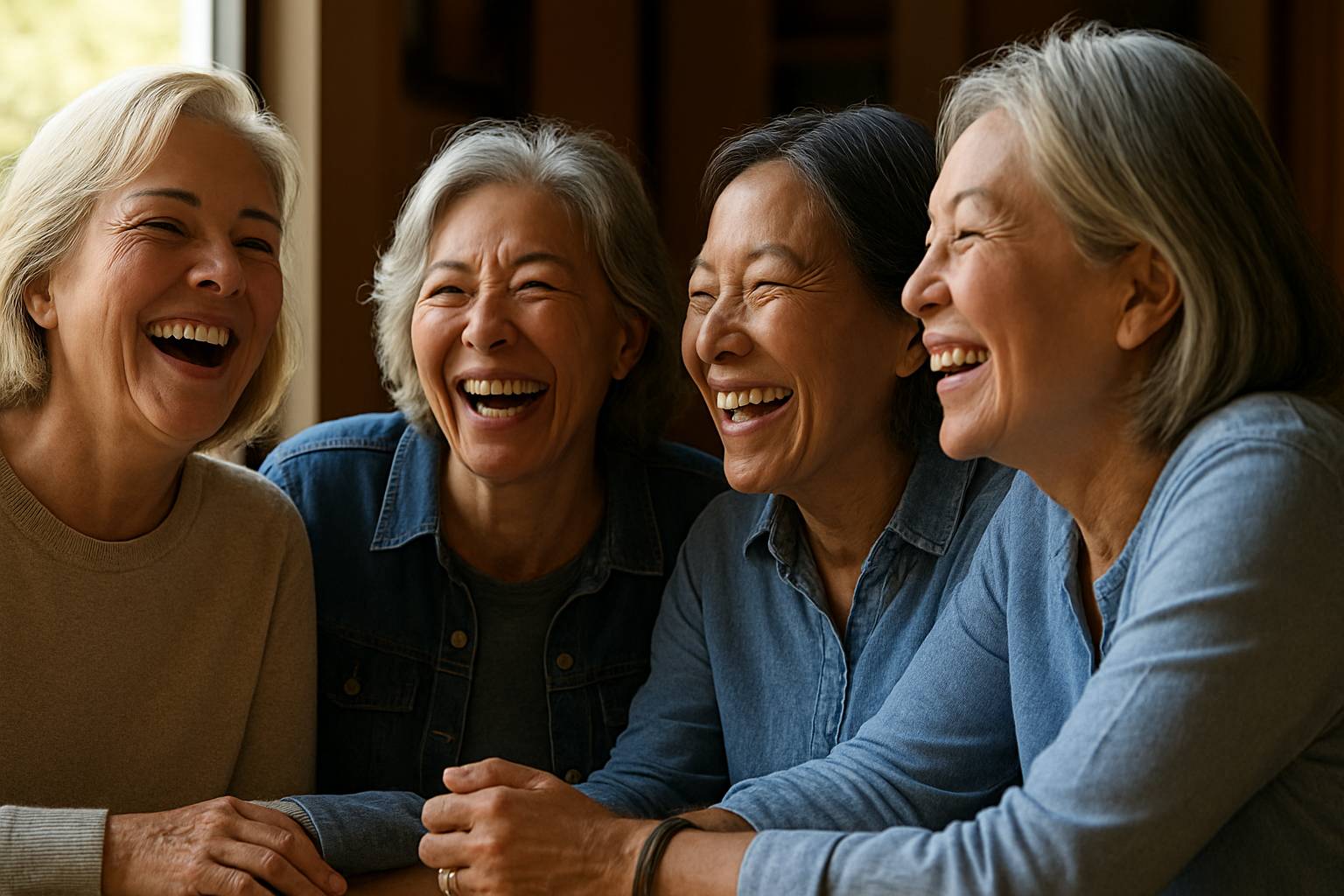
Menopause is a natural life stage — but globalization, cultural shifts, and research gaps mean many women face extra hurdles during this transition.
What really happens during menopause
Menopause marks the end of a woman’s reproductive years, typically between ages 45 and 55. Clinically it’s defined as 12 consecutive months without a menstrual period. But it’s far more than the end of cycles — it’s a hormonal transition that can bring hot flashes, sleep issues, mood swings, weight shifts, and cognitive changes. Experiences vary widely, shaped by biology, lifestyle, and cultural context.
Source: Peacock & Ketvertis, Menopause (National Library of Medicine, 2023).
Globalization, migration and added challenges
Research shows globalization and migration add layers of complexity to menopause. Women who migrate often face cultural displacement, language barriers, changes in diet and social support, and reduced access to culturally sensitive healthcare. These stressors may worsen symptoms or delay diagnosis and treatment.
Imagine a woman who moves from a community with strong family support into an urban environment where she feels isolated — that social shift can affect how she experiences menopause and whether she seeks care.
Source: Kirchengast S., Maturitas, 2024 (systematic review).
Inequality in menopause care
Not all groups receive the same level of attention and treatment. Studies of women veterans reveal racial and ethnic disparities in diagnosis and management of menopausal symptoms: some groups report symptoms but are less likely to receive diagnosis or appropriate treatment. This highlights the need for culturally attuned care and equity in healthcare access.
Source: Gold EB et al., Women’s Health Issues, 2022.
When research models don’t reflect real women
Another concern is that many preclinical or translational models of female aging don’t translate well to real-world women. Much biomedical research has historically relied on male models or on generalized models that overlook female-specific processes, making it harder to create treatments that truly reflect women’s physiology.
Source: Gilmer G. et al., Nature Aging, 2023.
A call for more women’s health research
There is growing recognition of the need to fund women’s health research — including menopause, reproductive aging, and post-menopausal chronic disease risk. Menopause affects half the world’s population and has profound implications for families, workplaces, and communities. Better funding and better research design will help close care gaps and produce interventions that reflect lived female experience.
Commentary: Nature Reviews Bioengineering (2024) emphasized funding priorities for women’s health research.
The way forward
Menopause should be seen as a life transition — not decline. To support women we need inclusive, culturally-sensitive clinical care, better research that includes female-specific models, and open conversations that remove stigma. As individuals we can help by speaking up, checking in with friends and family, and asking for respectful, evidence-based care.
References
- Kirchengast S. Maturitas. 2024;187:108045. doi:10.1016/j.maturitas.2024.108045
- Peacock K; Ketvertis KM. Menopause. National Library of Medicine. 2023. https://www.ncbi.nlm.nih.gov/books/NBK507826/
- Nature Reviews Bioengineering. Nat Rev Bioeng. 2024;2(10):797–798. doi:10.1038/s44222-024-00253-7
- Gilmer G, Hettinger ZR, Tuakli-Wosornu Y, et al. Nature Aging. 2023;3:1500–1508. doi:10.1038/s43587-023-00509-8
- Gold EB, Bromberger J, Crawford S, et al. Women’s Health Issues. 2022;32(3):180–187. doi:10.1016/j.whi.2022.03.005