
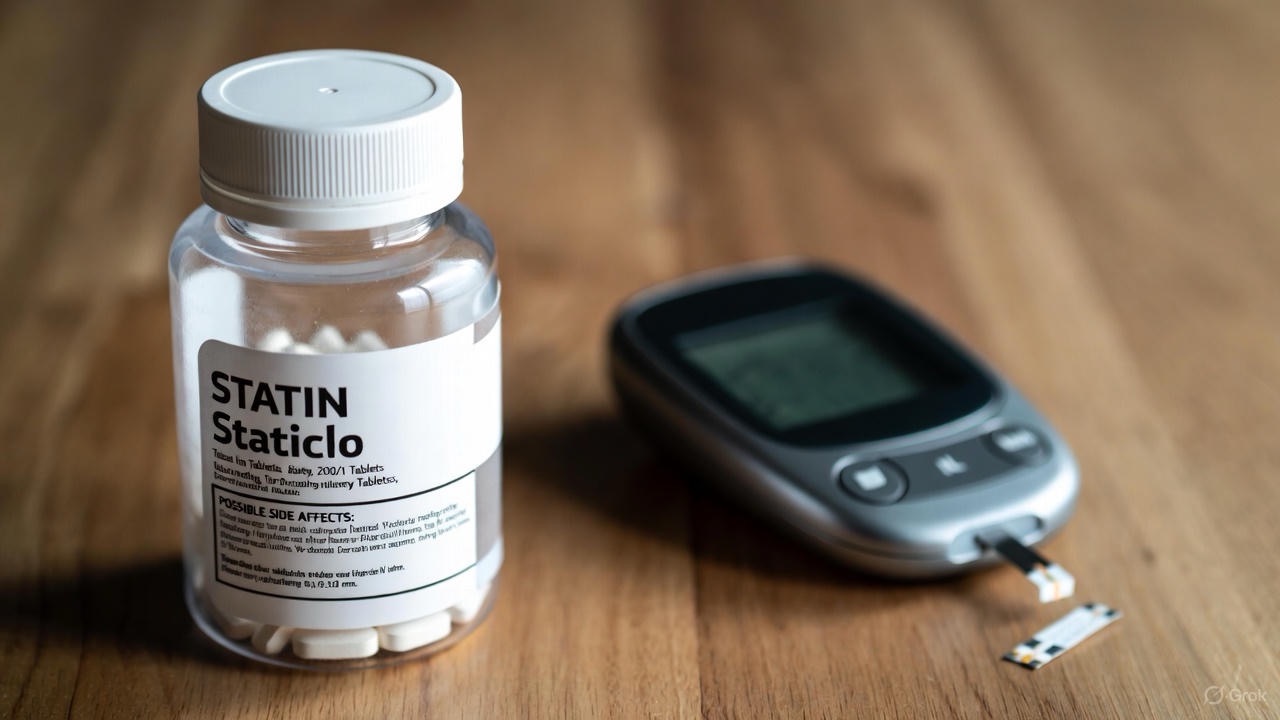
For years, statins have been promoted as the “heart protector.” They’re among the most prescribed drugs in the world, given to millions to lower cholesterol and prevent heart attacks. But behind the promise lies a growing concern — one backed by solid research. A large Korean study has shown that statins can significantly raise your risk of developing diabetes.
🔍 What the Korean Study Found
In 2017, researchers led by Dr. B. Park published a nationwide population-based study in Cardiovascular Diabetology titled “Statin use and risk of new-onset diabetes.” They analyzed health records from over 1,000,000 Korean adults using the National Health Insurance database — one of the most comprehensive datasets in Asia.
The team compared people who used statins with those who didn’t, following them for several years to monitor who developed diabetes. The results were striking and consistent:
- Statin users were significantly more likely to develop new-onset diabetes than non-users.
- The risk increased with longer duration and higher dosage of statin use.
- Older and overweight adults were especially vulnerable.
Even after adjusting for lifestyle factors such as smoking, diet, and exercise, the pattern remained. The researchers concluded that statins themselves were linked to elevated blood sugar and insulin resistance.
🧬 How Statins Can Lead to Diabetes
Statins work by blocking the liver enzyme HMG-CoA reductase to lower cholesterol. However, this same enzyme is also involved in how the body manages glucose and energy. By interfering with this process, statins may:
- Reduce the body’s insulin sensitivity, leading to insulin resistance.
- Disrupt normal pancreatic insulin production.
- Gradually raise fasting blood sugar levels.
Over time, these changes can tip a person with normal or borderline blood sugar into type 2 diabetes. Multiple international studies, not just in Korea, have confirmed this same pattern.
🩸 A Common Story: Lower Cholesterol, Higher Sugar
Many patients start statins to lower cholesterol — and they work. LDL numbers drop, and doctors are happy. But months later, fasting glucose or HbA1c levels quietly rise. The body’s metabolism has changed. That’s because statins don’t only target cholesterol; they affect how cells use energy. When that balance shifts toward insulin resistance, blood sugar starts to climb.
In short, statins can sometimes trade one health problem for another — lower cholesterol at the expense of higher blood sugar.
❗When the Risk Outweighs the Reward
If you’ve had a heart attack or stroke, statins can still save lives. But if you’re taking them only because your cholesterol is “a bit high,” the benefits may not justify the risk — especially if you have prediabetes, excess weight, or metabolic syndrome.
When a drug lowers cholesterol but increases diabetes risk, it’s time to ask: Is it truly protecting health — or just shifting the problem?
🥦 A Better Way to Protect Your Heart
Many people can naturally improve cholesterol and blood sugar together through a low-carb, real-food diet. Cutting refined carbs and including more healthy fats and nutrient-rich whole foods can:
- Improve insulin sensitivity
- Lower triglycerides and inflammation
- Raise protective HDL cholesterol
- Reduce dependency on medication
Fixing the root cause — insulin resistance — protects both the heart and the metabolism, without side effects.
🧩 Final Thoughts
The 2017 Korean study was a wake-up call. Statins don’t just lower cholesterol — they raise the risk of diabetes, especially with long-term use and higher doses. It’s time for personalized healthcare that focuses on metabolic health, not just cholesterol numbers. If you’re on statins, don’t stop suddenly, but talk to your doctor about checking your blood sugar and exploring lifestyle-based alternatives.
Your health deserves the full truth — not half of it.
Reference:
Park, B., Lee, H. S., Lee, Y. J., et al. (2017). Statin use and risk of new-onset diabetes: a nationwide population-based study in Korea. Cardiovascular Diabetology, 16(1), 111.