
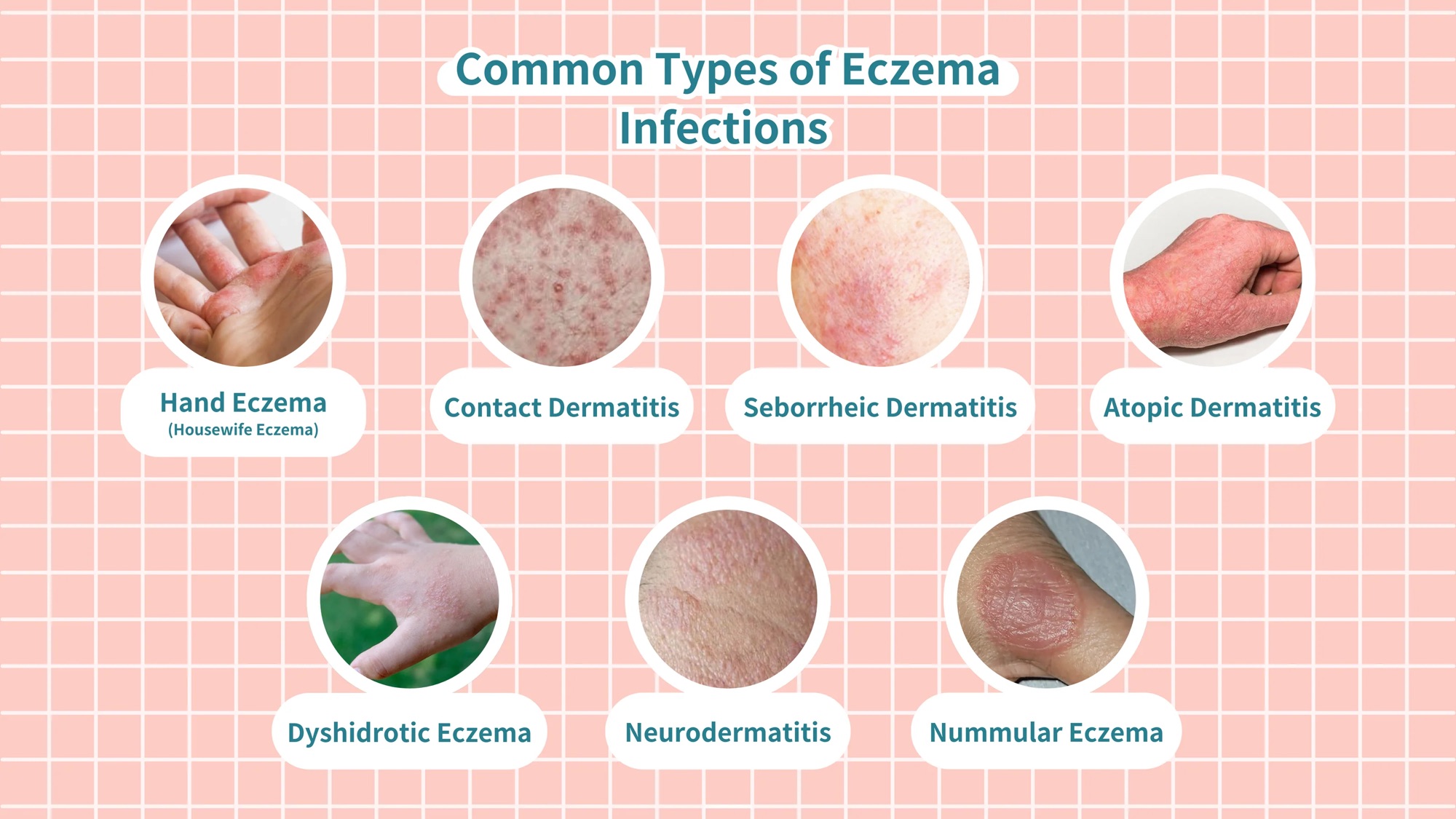
Eczema is a chronic inflammatory skin disorder characterized by itchy, inflamed skin. It commonly affects children but may persist or first appear in adulthood. The condition typically follows a relapsing and remitting course.
Definition
Eczema refers to a group of conditions that cause skin inflammation and irritation. The most common form is atopic dermatitis, which is associated with genetic and environmental factors.
Epidemiology
- Affects 15–20% of children worldwide
- Affects 1–3% of adults
- Higher prevalence in urban and industrialized regions
- Family history of atopy increases risk
Etiology
- Genetic predisposition causing impaired skin barrier
- Environmental triggers such as allergens and irritants
- Immune dysregulation involving Th2-mediated responses
Risk Factors
- Family history of eczema, asthma, or allergic rhinitis
- Exposure to harsh soaps, detergents, chemicals
- Dry and cold climates
Pathophysiology
- Defective skin barrier increases water loss
- Allergens and microbes penetrate easily
- Chronic inflammation due to immune activation
Clinical Features
- Intense itching (hallmark symptom)
- Red, dry, scaly skin lesions
- Lichenification in chronic cases
Distribution of Lesions
- Infants – face and extensor surfaces
- Children – flexural areas
- Adults – localized or generalized distribution
Types of Eczema
- Atopic dermatitis (most common)
- Contact dermatitis
- Dyshidrotic eczema
Diagnosis
Diagnosis is mainly clinical based on history and physical examination. No specific laboratory test confirms eczema. Allergy testing may help identify triggers.
Differential Diagnosis
- Psoriasis – well-demarcated plaques with silvery scales
- Fungal infections – central clearing
- Seborrheic dermatitis – oily scales
Complications
- Secondary bacterial infections
- Sleep disturbance
- Psychological stress
Management Principles
- Avoid triggers and irritants
- Restore skin barrier with emollients
- Control inflammation with medication
Pharmacological Management
- Topical corticosteroids (first-line)
- Topical calcineurin inhibitors
- Antihistamines for itch relief
Non-Pharmacological Management
- Daily moisturizers
- Short lukewarm baths
- Mild cleansers
- Patient education
Prognosis
- Many children improve with age
- Some experience recurrent disease
- Early treatment improves outcomes
Prevention and Patient Counseling
- Identify and avoid triggers
- Maintain consistent skincare routine
- Adhere to treatment plan